

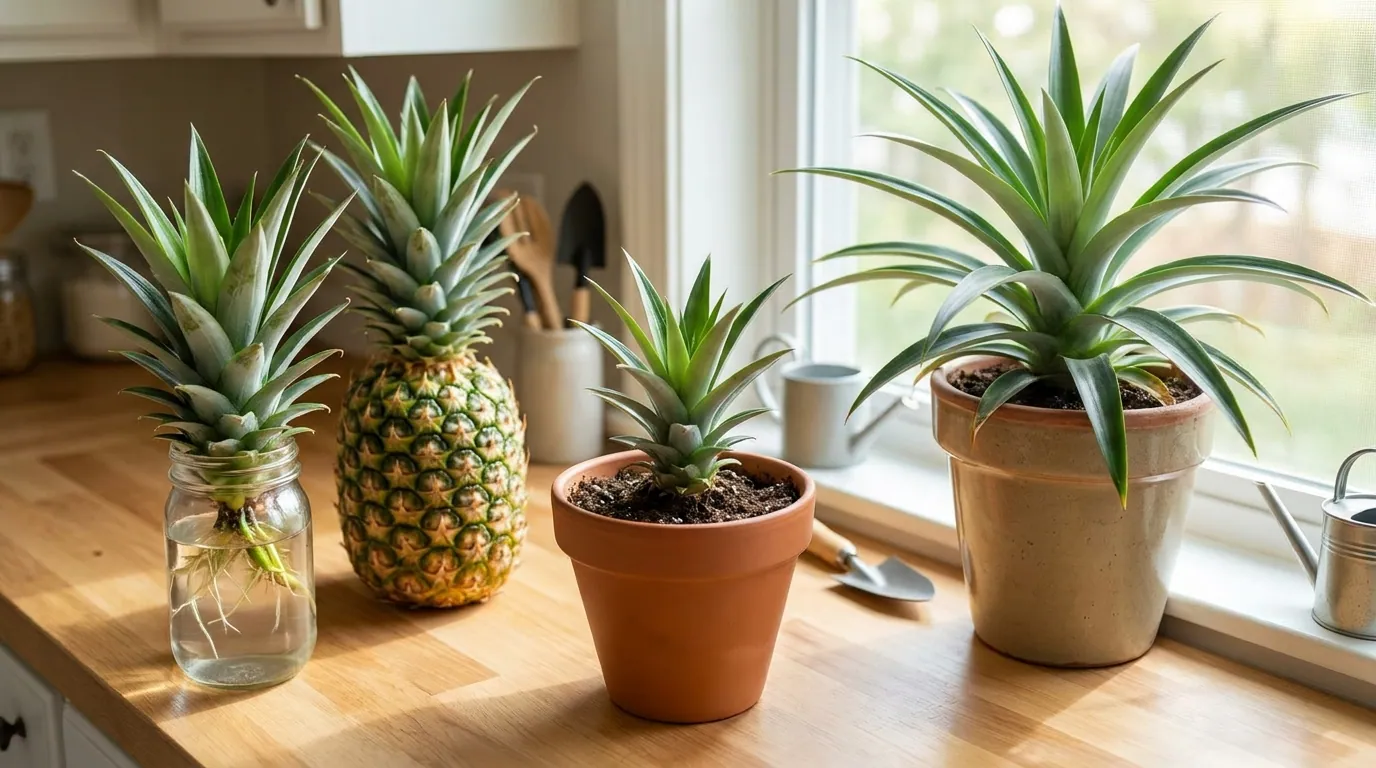
How to grow pineapple plant from the top is one of the easiest and most rewarding kitchen scrap gardening projects you can try at home. With one healthy store-bought pineapple, a little patience, and the right care, the leafy pineapple crown can turn into a beautiful tropical houseplant and may eventually produce a homegrown pineapple.
A pineapple plant, botanically known as Ananas comosus, belongs to the Bromeliaceae family. That means it is a bromeliad, not a typical fruit tree. It grows slowly, likes warmth, and needs well-draining soil, bright light, and careful watering. The process is simple, but fruiting takes time. In many home conditions, a pineapple plant may take 16 to 36 months to produce fruit, so the real secret is patience.
This complete guide explains how to grow pineapple from pineapple top, how to prepare the crown, whether to root it in water or soil, how to care for it indoors or outdoors, and how to fix common problems like root rot, yellow leaves, and brown leaf tips.
Quick Answer: How to Grow a Pineapple Plant From the Top
To grow a pineapple from a pineapple top, choose a fresh pineapple with a firm, green crown. Twist or cut off the pineapple top, remove all attached fruit flesh, peel away the lower leaves to expose the short stem, and let the base dry for a few days. Then either root the crown in a glass of water or plant it directly into a 6–8 inch pot filled with well-draining soil.
Keep the plant in bright indirect light or gentle direct sun, water only when the soil surface begins to dry, and avoid soggy soil. Roots may begin forming in about 2–3 weeks, but visible new leaf growth can take six to eight weeks or longer.
Here is the basic process:
- Choose a healthy ripe pineapple with firm green leaves.
- Twist or cut off the pineapple crown.
- Remove fruit flesh and peel off the lower leaves.
- Let the base dry and callus for a few days.
- Root it in water or plant it directly in soil.
- Place it in a warm, bright location.
- Water lightly and wait for roots and new growth.
Even if your pineapple plant never fruits indoors, it can still become a striking decorative houseplant.
What You Need Before Planting a Pineapple Top
You do not need expensive equipment to start pineapple crown propagation. Most supplies are simple gardening basics. The most important things are a healthy crown, clean tools, a pot with drainage holes, and a loose soil mix that does not stay wet for too long.
| Item | Why You Need It |
| Fresh pineapple with healthy crown | Gives the best chance of rooting |
| Sharp knife or scissors | Helps trim the crown cleanly |
| Cutting board | Makes preparation safer |
| Gloves or thick gloves | Protects hands from spiky leaves |
| Glass jar and toothpicks | Useful for water rooting |
| 6–8 inch pot | Good starter size for a young crown |
| Cactus mix, sand, or perlite | Improves drainage and prevents rot |
| Rooting hormone | Optional, may support rooting |
| Neem oil | Optional, useful for pests like scale or mealybugs |
A terracotta pot or clay pot can be helpful because it allows moisture to evaporate faster than plastic. This is useful for pineapple plants because they dislike waterlogged soil. If you grow indoors in a cool room, drainage matters even more.
How to Choose the Best Pineapple for Growing
The quality of the pineapple crown makes a big difference. A weak, dried-out, moldy, or damaged crown may never root. Choose a fresh pineapple with firm green leaves and a healthy center.
Look for a pineapple with golden-brown skin, a slightly sweet smell, and a crown that is not loose or mushy. The center leaves should be green and upright. Avoid pineapples with a rotten smell, slimy base, heavy browning, or visible insects such as scale insects.
A good pineapple for growing should have:
| Good Sign | Bad Sign |
| Firm green leaves | Brown, dry, or collapsing leaves |
| Sweet smell | Sour or fermented smell |
| Healthy crown center | Mushy or black center |
| Firm fruit body | Soft, leaking, or overripe fruit |
| No visible pests | Scale, mold, or sticky residue |
An organic pineapple can work well, but it is not required. A normal grocery store pineapple can grow as long as the top is healthy.
Step 1: Remove the Pineapple Top Correctly
There are two common ways to remove the pineapple top: twisting it off or cutting it off. Both methods can work.
To twist it off, hold the fruit firmly with one hand and grab the crown with the other. Twist until the crown separates from the fruit. This often leaves less fruit flesh attached to the base, which can reduce the risk of pineapple rot.
To cut it off, use a sharp knife and slice the crown away from the fruit. If you use this method, carefully trim away every bit of yellow fruit flesh from the bottom. Leftover fruit can hold moisture, attract bacteria, and cause crown rot.
Because pineapple leaves can be sharp, wear thick gloves if needed. If children are helping with this kids gardening project, an adult should handle the knife and trimming.
Step 2: Clean the Crown and Expose the Root Buds
After removing the crown, the next step is to prepare it for rooting. This is where many beginners make mistakes. The goal is to expose a short section of stem without damaging the growing center.
Peel away the lower leaves from the base of the crown. Remove enough leaves to expose about half an inch of stem, or slightly more if the crown is large. As you remove the lower leaves, you may see small brown dots or bumps. These are often called root buds or root nodules. They are the points where new roots may develop.
Trim away any remaining fruit flesh. The base should look clean, not wet or pulpy. If there are damaged leaves, remove only the worst ones. Do not cut into the center of the crown, because that is where new growth will emerge.
This preparation step helps with pineapple crown propagation because it gives roots room to form and reduces the chance of rot.
Step 3: Let the Pineapple Crown Dry Before Planting
Before you root or plant the crown, let the base dry for a few days. This drying stage is called callusing. It allows the cut tissue to seal slightly, which helps prevent crown rot, mold, and bacterial growth.
Place the prepared pineapple crown in a shaded, airy spot. Do not leave it in direct harsh sun during this stage. A kitchen counter, shelf, or dry indoor location works well. Some growers dry the crown for about a week, especially if the base is very wet after trimming.
The crown is ready when the base feels dry to the touch, not slimy or sticky. This small step can make a big difference because a freshly cut pineapple crown placed directly into wet soil or water may rot before it roots.
Water Rooting vs Soil Rooting: Which Method Is Better?
One of the biggest questions is whether it is better to root a pineapple top in water or soil. The truth is that both methods can work, but each has pros and cons.
| Method | Best For | Pros | Cons |
| Water rooting | Beginners who want to see roots | Easy to monitor root growth | Higher rot risk if water gets dirty |
| Soil rooting | Growers who want less handling later | Less transplant shock | Harder to see roots forming |
Water rooting is popular because you can watch the pineapple roots grow. It feels exciting and beginner-friendly. However, dirty water, too much submerged stem, or leftover fruit flesh can lead to bacterial growth, mold, or rot.
Soil rooting is often more natural. The crown goes straight into its growing medium, so there is less risk of damaging young roots during transplanting. The downside is that you cannot see what is happening below the soil, so you must rely on signs like new leaves or the gentle tug test.
If you are nervous about rot, choose soil rooting with a dry crown and a very airy mix. If you want to see roots form, use water rooting but change the water every few days.
Method 1: How to Root a Pineapple Top in Water
To root a pineapple top in water, place the dried crown above a glass jar so only the bottom base touches the water. You can use 3–4 toothpicks around the crown to hold it in place. The base should be lightly submerged, usually about 1/2–1 inch. Do not submerge the leafy part.
Use clean, fresh water. Change the water daily or every few days to prevent mold and bacterial growth. Keep the jar in a warm spot with bright light, but avoid intense direct sun that overheats the water.
You may see roots in 2 to 3 weeks, though some crowns take closer to four weeks. Wait until the roots are at least 2–3 inches long before planting in soil. Some growers wait for roots around 10 cm long.
When moving the rooted crown to soil, handle it gently. Young roots are delicate. Plant it in a 6–8 inch pot with a loose, well-draining mix.
Method 2: How to Plant a Pineapple Top Directly in Soil
To plant a pineapple top directly in soil, fill a pot with a fast-draining mix. A good blend is cactus mix with added perlite or sand. The pot must have drainage holes.
Place the exposed stem into the soil, but keep the leaves above the soil line. Do not bury the crown too deeply. The base should have good soil contact, but the lower leaves should not sit wet against the soil because that can encourage rot.
After planting, water lightly until the mix is evenly moist, then let extra water drain away. Never let the pot sit in standing water. Keep the plant warm and bright. New roots and new leaves may appear in six to eight weeks, though some plants take longer.
This method is a good choice if you want to avoid transplant shock and root damage.
How to Know Your Pineapple Top Has Rooted
A pineapple crown does not always show dramatic growth right away. In fact, it may sit quietly for several weeks. That does not always mean it has failed.
One simple way to check is the pineapple crown tug test. After several weeks, gently hold the crown and give it a very light tug. If it resists slightly, roots may be anchoring into the soil. Do not pull hard because young roots can snap easily.
Other positive signs include new leaves emerging from the center, firmer leaf growth, and a crown that stays green instead of collapsing. If the base turns black, soft, or smells bad, the crown may be rotting.
For soil-rooted plants, avoid digging up the crown too often. Constant root inspection can damage fragile new roots.
Best Soil, Pot, and Drainage for a Pineapple Plant
The best soil for a pineapple plant is light, airy, and fast draining. Pineapples do not like heavy, clay-like soil or soggy potting mix. A mix designed for cactus or succulents usually works well. You can also blend regular potting mix with sand, perlite, or bark to improve soil aeration and root oxygen.
Pineapple plants prefer slightly acidic soil, often around soil pH 4.5–6.5. Most home growers do not need to test soil constantly, but it helps to avoid alkaline, compacted, or poorly draining mixes.
| Growth Stage | Pot Size | Soil Type |
| Newly planted crown | 6–8 inch pot | Cactus mix or sandy potting mix |
| Young established plant | 10–12 inch pot | Loose, well-draining potting mix |
| Mature pineapple plant | 5-gallon container or 5–7 gallon pot | Coarse, airy mix with good drainage |
A terracotta pot can help reduce excess moisture. Always empty the saucer after watering so the plant does not sit in water.
Pineapple Plant Care After Planting
Once the crown is planted, the next goal is steady, healthy growth. Pineapple plant care is not difficult, but it does require the right balance of light, warmth, and water.
Light Requirements
Pineapple plants love bright light. Indoors, place the plant near a south-facing window or the brightest window you have. It should receive six to eight hours a day of bright light if possible. In very hot climates, gentle morning sun and filtered afternoon light may be better than harsh midday sun.
If your home is dark, use LED lights or an artificial grow light. Keep the light close enough to help growth but not so close that it burns the leaves.
Watering
Water when the top layer of soil feels dry. A simple finger test works well: press your finger into the soil. If it still feels damp, wait. If it feels dry, water thoroughly and let the extra water drain.
Overwatering is one of the most common reasons a pineapple top fails. Soggy soil, standing water, and poor drainage can cause root rot.
Temperature and Humidity
Pineapple plants prefer warmth. A good range is around 68–85°F. Growth may slow below 60°F, and cold drafts can damage the plant. Keep it away from air-conditioning vents, heating vents, and freezing windows.
Pineapples enjoy some humidity, but they do not need swampy conditions. Good airflow is more important than constant misting.
Fertilizer
Once the plant is established and showing new growth, feed lightly during spring and summer. A diluted water-soluble fertilizer, slow-release fertilizer, or balanced liquid houseplant fertilizer can work. Avoid overfeeding a young crown before roots are established.
Pineapple Top Propagation Timeline: From Crown to Fruit
Growing pineapple from the top is slow, but a timeline helps set realistic expectations.
| Stage | Approximate Time | What Happens |
| Crown preparation | Day 1 | Top is removed, cleaned, and trimmed |
| Drying/callusing | A few days | Base dries to reduce rot |
| Rooting begins | 2–4 weeks | Roots may start forming |
| New growth | Six to eight weeks | New center leaves may appear |
| Young plant stage | Several months | Leaves grow larger and stronger |
| Mature growth | After a year | Plant becomes more established |
| Fruiting maturity | 16 to 36 months | Plant may flower and form fruit |
| Fruit ripening | Five to seven months | Fruit turns yellow/golden |
Some plants fruit in about 2 years, while others take longer, especially indoors. Light, warmth, pot size, and plant health all affect the timeline.
Common Pineapple Growing Mistakes to Avoid
Many pineapple growing problems come from small beginner mistakes. The most common mistake is leaving fruit flesh attached to the crown. Fruit flesh holds moisture and can cause pineapple rot.
Another mistake is planting the crown before the base has dried. Skipping the callus stage increases the risk of crown rot. Using heavy soil is also risky because pineapple roots need oxygen. A compacted mix can stay wet too long and lead to root rot.
Avoid these common mistakes:
| Mistake | Why It Hurts the Plant |
| Leaving fruit flesh attached | Causes mold and rot |
| Burying leaves in soil | Encourages crown rot |
| Using heavy soil | Reduces drainage and root oxygen |
| Watering too often | Causes soggy soil and root rot |
| Keeping plant in low light | Slows growth and weakens the plant |
| Expecting fruit quickly | Pineapples often take 16 to 36 months |
The best approach is simple: clean crown, dry base, loose soil, bright light, and careful watering.
Troubleshooting: Why Your Pineapple Top Is Not Growing
If your pineapple top is not growing, do not panic immediately. Pineapple plants are naturally slow. However, certain symptoms show that something needs to change.
| Problem | Likely Cause | Fix |
| Crown turns black | Rot or overwatering | Remove damaged tissue if possible and reduce moisture |
| Leaves turn yellow | Too much water, poor light, or stress | Improve drainage and increase light |
| Brown leaf tips | Dry air, underwatering, or stress | Adjust watering and protect from drafts |
| No roots forming | Crown too cold, too wet, or damaged | Keep warmer or restart with a healthier crown |
| White fuzzy mold | Poor airflow or dirty water | Improve airflow and change water often |
| Sticky leaves or insects | Scale or mealybugs | Wipe leaves and use neem oil if needed |
| Plant collapses | Crown rot or dead roots | Check base; restart if mushy and foul-smelling |
A blackening base is usually more serious than a few brown leaf tips. Brown tips can happen from dry indoor air or stress. A soft, smelly base usually means rot.
Growing Pineapple Indoors vs Outdoors
Growing pineapple indoors is possible, especially if you have a bright window or grow light. Indoors, the biggest challenges are low light, cold drafts, and overwatering during winter. Keep the plant in the brightest spot available and water less during colder months.
Outdoor growing is easier in warm, frost-free climates. Pineapples can grow outdoors year-round in warm regions such as USDA Zones 10–12. In cooler areas, grow the plant in a container and move it outside only during warm months.
For apartment growers, a pineapple plant can live on a sunny windowsill, balcony, patio, or screened-in porch during warm weather. Bring it indoors before temperatures fall below 60°F, and protect it from freezing temperatures.
If you use a grow light, place the plant where it receives steady light for several hours daily. This helps prevent weak, stretched growth.
How to Encourage a Pineapple Plant to Flower and Fruit
A pineapple plant needs maturity before it can fruit. If the plant is small, stressed, or newly rooted, do not try to force fruiting. Focus first on strong leaves, good roots, and steady growth.
Once the plant is mature, some growers use ethylene gas to encourage flowering. This is sometimes done by placing a ripe banana or apple near the plant and loosely covering the plant with a plastic bag for a short period. This is often called the banana-in-bag method or apple method for pineapple flowering.
This method does not guarantee success. It works best on healthy plants that are already mature enough to flower. If the plant does respond, you may notice a central pinecone-shaped bud, colorful bracts, and eventually a small pineapple fruit.
When and How to Harvest a Homegrown Pineapple
A homegrown pineapple is ready to harvest when the fruit turns mostly yellow or golden and gives off a sweet smell. One useful harvest clue is when the fruit is around 90% yellow. If it is still mostly green, it may need more time.
Fruit ripening after flowering can take five to seven months, so patience is important. When harvesting, wear gloves because pineapple leaves can be stiff and sharp. Use a sharp knife to cut the fruit from the stalk.
Do not expect huge supermarket-sized fruit from every homegrown plant. Indoor pineapples are often smaller, but the experience is still rewarding.
What Happens After the Pineapple Fruits?
A pineapple plant usually produces one main fruit. After fruiting, the mother plant may gradually decline, but it often produces pups, ratoons, or side shoots. These baby plants can be removed and grown into new pineapple plants.
This is part of the pineapple plant life cycle. Instead of throwing the plant away after harvest, inspect the base for new shoots. Once pups are large enough, they can be separated and planted in their own containers.
This means one pineapple top can eventually lead to more plants if cared for well.
Pineapple Plant Care Calendar
A care calendar makes long-term pineapple plant care easier.
| Season | Care Focus |
| Spring | Increase light, check for new growth, begin light feeding |
| Summer | Provide strong light, water when soil dries, fertilize monthly |
| Fall | Reduce feeding and prepare indoor plants for lower light |
| Winter | Water less, avoid cold drafts, use grow light if needed |
During spring and summer, feeding once a month or every four to six weeks is usually enough for a healthy established plant. During winter, growth slows, so reduce fertilizer and watering.
Repot only when the plant becomes root-bound or top-heavy. Moving gradually from a 6–8 inch pot to a 10–12 inch pot, then eventually to a 5-gallon container, is better than placing a small crown in a huge pot right away.
Safety Tips for Handling Pineapple Plants
Pineapple leaves can be stiff, pointed, and sometimes sharp. Some varieties have serrated leaves, while others are smoother. Wear thick gloves when trimming, repotting, or harvesting.
Keep large pineapple plants away from narrow walkways where people may brush against the leaves. If children help with the project, let them assist with safe tasks like filling soil or watering, but keep knives and sharp tools handled by adults.
FAQ: Growing a Pineapple Plant From the Top
Can you grow a pineapple from a store-bought pineapple?
Yes, you can grow a pineapple plant from a store-bought pineapple if the crown is healthy. Choose one with firm green leaves and no mold, rot, or pest damage.
Should I root a pineapple top in water or soil?
Both methods can work. Water rooting lets you see the roots, while soil rooting reduces transplant shock. If you choose water, change it often. If you choose soil, use a light, well-draining mix.
How long does it take a pineapple top to root?
Roots may begin forming in 2–3 weeks, but some crowns take closer to four weeks or longer. New leaf growth can take six to eight weeks.
How long does it take to grow a pineapple from the top?
A pineapple grown from the top may take 16 to 36 months to fruit. In many homes, it takes around 2 years or more, depending on light, warmth, and care.
Why is my pineapple top turning brown or black?
Brown tips may come from dry air, stress, or inconsistent watering. A black, mushy, or smelly base usually means crown rot or root rot, often caused by too much moisture.
What is the best soil for pineapple plants?
The best soil is loose and fast draining. Use cactus mix, sandy potting mix, perlite, or a coarse potting blend. Avoid soggy soil and always use a pot with drainage holes.
Can pineapple plants grow indoors?
Yes, pineapple plants can grow indoors as houseplants. Give them bright light, warmth, and careful watering. A south-facing window or LED grow light can help.
How many pineapples does one pineapple plant produce?
A pineapple plant usually produces one main fruit, then may produce pups, ratoons, or shoots that can be grown into new plants.
Conclusion: Start With One Pineapple Top and Grow From There
Learning how to grow pineapple plant from the top is a fun, low-cost way to turn kitchen scraps into a living tropical plant. The process is simple: choose a healthy pineapple, prepare the crown, let it dry, root it in water or soil, and give it bright light, warmth, and careful watering.
The plant may take 16 to 36 months to fruit, but it can still be beautiful long before harvest. With well-draining soil, patience, and steady pineapple plant care, one leftover crown can become a strong houseplant and possibly the beginning of many more pineapple plants.
Disclaimer: This article is for general informational and home-gardening purposes only and does not constitute professional horticultural, agricultural, or plant-care advice. Plant growth, rooting success, and fruit production can vary based on climate, light, temperature, soil conditions, and individual plant health. Always follow safe gardening practices and adjust care to your specific growing environment.