

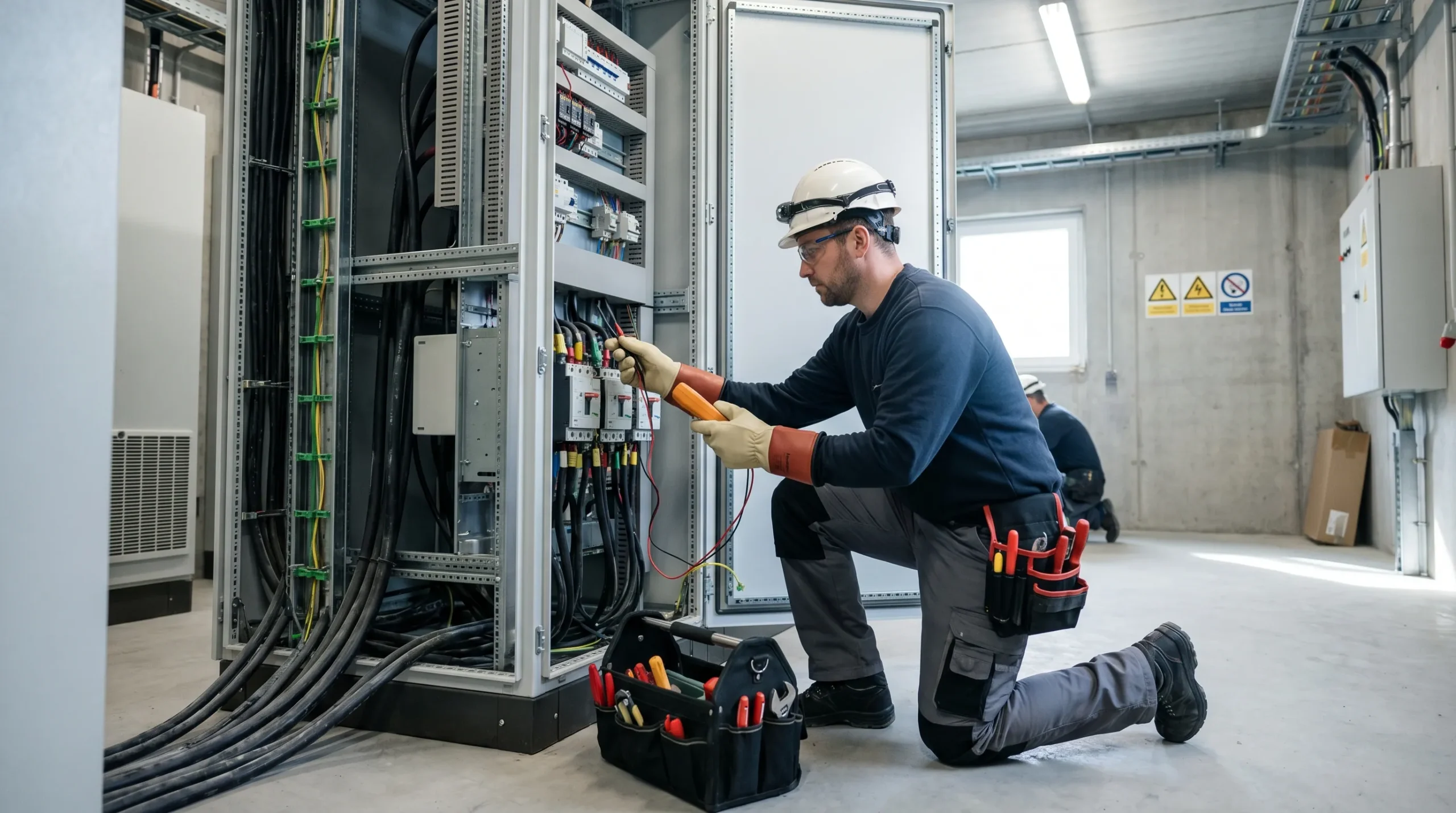
The main need for electrical equipment maintenance is to protect people and systems from avoidable danger. Electrical equipment carries power, and power can become hazardous when systems are damaged, overloaded, poorly installed, or poorly maintained.
Regular maintenance helps identify problems such as faulty wiring, damaged insulation, loose connections, circuit overloads, short circuits, and overheating. These issues may seem small at first, but they can quickly lead to equipment damage, fire risk, or electric shock.
Another reason why electrical equipment needs regular maintenance is reliability. Homes depend on electricity for lighting, appliances, security systems, and comfort. Businesses depend on it for computers, machines, communication, production, cooling, heating, and safety systems. If electrical equipment fails suddenly, the result can be unplanned downtime, lost productivity, customer disruption, and emergency repair costs.
Maintenance also supports cost savings. Fixing a small loose connection is usually much cheaper than replacing a damaged panel, motor, transformer, or generator. A well-maintained system also wastes less energy, runs more smoothly, and lasts longer.
In short, electrical maintenance is necessary because it helps achieve four major goals: safety, reliability, efficiency, and longer equipment life.
Electrical Maintenance Improves Safety
The most important benefit of electrical equipment maintenance is electrical safety. Poorly maintained electrical systems can create serious hazards, including electric shock, electrocution, electrical fires, and arc flash risks.
Many electrical accidents begin with small warning signs. A loose terminal may create heat. A damaged cable may expose live conductors. A weak insulation layer may allow current leakage. A faulty breaker may fail to trip during an overload. Without regular inspection, these problems can remain hidden until they become dangerous.
Maintenance helps prevent safety problems by checking critical areas such as wiring, grounding systems, circuit breakers, GFCI protection, AFCI protection, outlets, switches, and panels. It also helps confirm that surge protection is working correctly, especially in areas exposed to voltage spikes or lightning.
For homes, safety maintenance can protect family members from shock hazards, overheated outlets, and electrical fires. For workplaces, it protects employees, customers, contractors, and visitors. In industrial environments, proper maintenance also supports worker protection, PPE use, safe isolation, and lockout/tagout procedures.
A useful safety principle is:
Electrical equipment should be treated as safe only after it has been inspected, tested, isolated when required, and maintained by qualified people.
That is why complex systems, high-voltage equipment, and commercial electrical infrastructure should not be handled casually. Licensed electricians, certified electricians, and trained maintenance technicians are often needed to perform safe and compliant work.
It Prevents Downtime, Breakdowns, and Costly Repairs
One of the biggest reasons to maintain electrical equipment is to prevent sudden breakdowns. Electrical systems often fail when small problems are ignored for too long. A minor issue like a loose connection, overloaded circuit, or worn insulation can eventually damage equipment and stop operations.
In a home, electrical failure may mean lights stop working, appliances shut down, breakers trip repeatedly, or backup power fails during an outage. In a business, the impact can be much larger. A failed motor, control panel, transformer, or power distribution system can stop production, delay service, damage products, and create lost revenue.
For factories, hospitals, hotels, schools, offices, and commercial buildings, equipment reliability is essential. A sudden electrical failure can affect HVAC systems, elevators, data infrastructure, security systems, lighting, machinery, and communication systems.
Preventive maintenance helps reduce these risks by finding issues before they become failures. For example, if a technician finds overheating inside an electrical panel during a thermal imaging inspection, the problem can be repaired before it causes a shutdown or fire.
Regular maintenance also reduces emergency repair costs. Emergency repairs are usually more expensive because they happen suddenly, require fast response, and may involve damaged equipment replacement. Planned maintenance is usually safer, cheaper, and easier to manage.
It Improves Energy Efficiency and Extends Equipment Life
Well-maintained electrical equipment performs better. When equipment is dirty, loose, overloaded, or worn, it often uses more energy than necessary. This creates energy waste, higher utility bills, and unnecessary stress on electrical components.
For example, loose electrical connections can increase resistance. Increased resistance creates heat. Heat wastes energy and damages equipment. Similarly, a motor with poor connections, poor ventilation, or voltage imbalance may run hotter and less efficiently. Over time, this can shorten the motor’s life.
Regular electrical maintenance improves energy efficiency by keeping equipment clean, properly connected, correctly loaded, and safely operated. It can also reveal problems such as poor power quality, phase imbalance, voltage drop, or harmonic distortion.
Maintenance also extends equipment lifespan. Electrical assets such as transformers, generators, circuit breakers, switchgear, and control panels are costly. Replacing them early can be expensive. But when they are regularly inspected, cleaned, tested, and serviced, they can remain reliable for much longer.
This is especially important for businesses that rely on critical assets. A strong electrical maintenance program protects the value of equipment and reduces the chance of premature equipment failure.
Types of Electrical Maintenance
There are several types of electrical maintenance. Each one has a different purpose, and a good maintenance plan may use more than one type.
Preventive maintenance of electrical equipment is planned maintenance performed before a failure happens. It includes scheduled inspections, cleaning, tightening, testing, and replacement of worn parts. This is one of the most common and useful approaches because it helps prevent equipment failures before they occur.
Predictive maintenance uses data, monitoring tools, and equipment condition indicators to predict when a fault may happen. For example, thermal imaging, vibration monitoring, or power quality data can show early signs of failure.
Corrective maintenance is performed after a problem is found. If an inspection reveals a damaged wire, weak breaker, loose terminal, or faulty relay, corrective maintenance fixes that issue.
Breakdown maintenance happens after equipment has already failed. This is usually the most expensive and risky type because it often causes downtime, emergency repair costs, and operational disruption.
Condition-based maintenance is performed based on the actual condition of equipment. Instead of following only a fixed schedule, technicians use test results, usage levels, operating environment, and fault history to decide when maintenance is needed.
For high-value or critical equipment, many facilities also use risk-based maintenance, where the most important and highest-risk assets receive the most attention.
Electrical Equipment That Needs Regular Maintenance
Many types of electrical equipment need regular maintenance. Some are found in homes, while others are used in commercial and industrial environments.
Common equipment includes electrical panels, breaker boxes, circuit breakers, fuses, wiring systems, outlets, switches, and lighting systems. These are important in homes and commercial buildings because they distribute electricity safely.
In industrial and large commercial settings, maintenance may also include transformers, switchgear, motors, motor control centers, VFD control panels, MCC panels, generators, UPS systems, and backup power systems. These systems often carry higher loads and may operate continuously, so they need closer attention.
The following table shows common equipment and why it needs maintenance:
| Equipment | Why Maintenance Is Needed |
| Electrical panels | To check overheating, loose connections, labels, and corrosion |
| Circuit breakers | To confirm they trip correctly during faults |
| Transformers | To prevent overheating, oil degradation, and insulation failure |
| Motors | To reduce heat, vibration, and electrical stress |
| Generators | To ensure backup power works during outages |
| Switchgear | To protect power distribution and prevent serious faults |
| UPS systems | To maintain battery health and backup reliability |
| Control panels | To protect automation and machine operation |
The more critical the equipment, the more important regular maintenance becomes.
Electrical Maintenance Checklist and Testing Methods
A good electrical maintenance checklist should include both visual checks and technical tests. Simple inspections can catch obvious problems, while advanced testing can detect hidden faults before they become dangerous.
A basic checklist may include checking for burning smells, damaged covers, loose wiring, exposed connections, dust buildup, water leaks, corrosion, tripping breakers, overheating, and unusual sounds. Electrical panels should be kept dry, clean, accessible, and free from stored items. Blocking access to panels can slow emergency response and create safety risks.
Professional maintenance may include more advanced tests, such as:
| Testing Method | What It Detects |
| Thermal imaging inspection | Overheating, loose connections, overloaded circuits |
| Insulation resistance testing | Weak or damaged insulation |
| Ground resistance testing | Poor grounding or unsafe earth connections |
| Circuit breaker testing | Breakers that may not trip correctly |
| Power quality analysis | Voltage imbalance, harmonics, poor power factor |
| Transformer oil testing | Oil degradation and transformer health issues |
| Battery load testing | Weak batteries in UPS or backup systems |
These tests are especially useful in commercial and industrial systems where hidden faults can cause major downtime or safety hazards.
Good maintenance should also include proper maintenance records, inspection reports, digital logs, and asset history. These records help track recurring electrical issues and support future decision-making.
How Often Should Electrical Equipment Be Maintained?
There is no single maintenance schedule that fits every electrical system. The right electrical maintenance schedule depends on equipment type, age, load, environment, manufacturer recommendations, safety requirements, and previous inspection results.
For example, a low-risk household outlet may only need periodic visual checks, while an industrial control panel may need monthly or quarterly inspection. High-voltage systems, critical production equipment, and backup power systems may need more frequent professional maintenance.
A simple guide looks like this:
| Equipment or Situation | Suggested Maintenance Approach |
| Home electrical systems | Periodic visual checks and professional inspection when needed |
| Electrical panels and breakers | Routine inspection by qualified personnel |
| Commercial buildings | Monthly, quarterly, or annual checks based on risk |
| Industrial equipment | Risk-based or condition-based maintenance |
| Generators and UPS systems | Scheduled testing and servicing |
| Harsh environments | More frequent inspections due to heat, dust, moisture, or corrosion |
Terms like monthly inspections, quarterly inspections, and annual inspections are useful, but the best schedule should be based on risk. Equipment that is old, heavily loaded, exposed to moisture, or critical to operations should be maintained more often.
Compliance, Records, and Professional Maintenance
Electrical maintenance is also important for regulatory compliance, insurance, warranty protection, and workplace safety. In many commercial and industrial settings, maintenance records may be required during audits, inspections, insurance reviews, or incident investigations.
Standards and safety references such as NFPA 70B, NFPA 70E, OSHA, and the National Electrical Code are important entities in electrical safety and maintenance discussions. Local electrical codes and manufacturer guidelines may also affect how equipment should be inspected and maintained.
Good documentation can include a maintenance logbook, inspection report, asset register, test results, repair history, and digital maintenance records. These records show what work was done, when it was done, who performed it, and what problems were found.
Professional maintenance is especially important for complex equipment. A homeowner may visually notice flickering lights or a warm outlet, but they should not open electrical panels or work on live circuits without proper training. Commercial and industrial systems should be handled by qualified electrical workers, licensed electricians, or trained maintenance technicians.
Before maintenance work begins, workers may need to follow safety steps such as electrical isolation, de-energized work, PPE use, and lockout/tagout procedures. These steps help prevent accidental energization and protect workers from serious injury.
Environmental Factors and Warning Signs
Electrical equipment maintenance needs can change depending on the environment. In hot climates, equipment may face more stress from heat and poor ventilation. In humid or coastal areas, moisture and salt air can cause corrosion in electrical panels and damage connections. In dusty industrial locations, dust accumulation can affect cooling and increase fire risk.
Seasonal conditions also matter. During storm seasons, electrical systems may face lightning strikes, voltage spikes, water intrusion, and power surges. In monsoon or flood-prone areas, flood-damaged electrical equipment must be treated very carefully and inspected by professionals before use.
Common warning signs that electrical equipment needs maintenance include burning smell, flickering lights, frequent breaker trips, buzzing sounds, hot outlets, sparks, discolored sockets, damaged insulation, and sudden machine shutdowns.
These signs should not be ignored. For example, a breaker that trips again and again may be warning you about a circuit overload, faulty appliance, damaged wire, or internal panel issue. A burning smell near an outlet or panel may indicate overheating and should be treated as urgent.
The safer approach is simple: when warning signs appear, stop using the affected equipment and call a qualified professional.
Common Electrical Maintenance Mistakes to Avoid
Many electrical problems become serious because of small maintenance mistakes. One common mistake is waiting until equipment fails before taking action. This reactive approach often leads to higher repair costs, longer downtime, and greater safety risks.
Another mistake is ignoring warning signs such as flickering lights, overheating, buzzing sounds, or tripping breakers. These signs often appear before a larger failure.
Using unqualified workers is also risky. Electrical systems can be dangerous, especially when they involve panels, high-voltage equipment, generators, switchgear, or industrial machinery. Complex work should be done by licensed professionals.
Other mistakes include skipping lockout/tagout procedures, failing to follow manufacturer guidelines, using poor-quality replacement parts, blocking access to electrical panels, and not keeping maintenance records.
A strong maintenance culture avoids these mistakes by using proper planning, safe work practices, trained people, and clear documentation.
Conclusion
To explain the need of maintenance of electrical equipment, the answer is clear: maintenance keeps electrical systems safe, reliable, efficient, and long-lasting. It prevents electric shock, electrical fires, short circuits, power failures, equipment breakdowns, and costly emergency repairs.
Regular electrical equipment maintenance also improves energy efficiency, reduces downtime, supports compliance, protects warranties, and extends equipment lifespan. Whether the system is residential, commercial, or industrial, maintenance should never be treated as optional.
The best approach is to inspect equipment regularly, fix small problems early, follow safety standards, keep proper records, and use qualified professionals for technical electrical work. In the long run, good maintenance protects people, property, productivity, and money.
FAQs About Maintenance of Electrical Equipment
Why is maintenance of electrical equipment necessary?
Maintenance of electrical equipment is necessary because it prevents electrical hazards, equipment failure, energy waste, downtime, and expensive repairs. It also improves electrical safety, reliability, and equipment lifespan.
What happens if electrical equipment is not maintained?
If electrical equipment is not maintained, it may develop faulty wiring, loose connections, overheating, short circuits, damaged insulation, power failures, or fire risks. In commercial and industrial settings, poor maintenance can also cause lost productivity and compliance problems.
How often should electrical equipment be maintained?
The frequency depends on the equipment type, usage, age, environment, and manufacturer recommendations. Some systems may need monthly inspections, others may need quarterly inspections or annual inspections. Critical or high-load systems may require condition-based maintenance.
What are the main types of electrical maintenance?
The main types are preventive maintenance, predictive maintenance, corrective maintenance, breakdown maintenance, and condition-based maintenance. Preventive maintenance is usually the most useful because it helps stop problems before failure occurs.
Who should perform electrical equipment maintenance?
Simple visual checks may be done by trained responsible persons, but technical electrical work should be handled by a licensed electrician, certified technician, or qualified electrical worker. High-voltage, commercial, and industrial systems should always be maintained by trained professionals.
Disclaimer:
This article is for informational purposes only. Maintenance procedures may vary by equipment, environment, and regulations. Readers should consult qualified professionals and follow manufacturer guidelines before performing any electrical maintenance to ensure safety and compliance.