

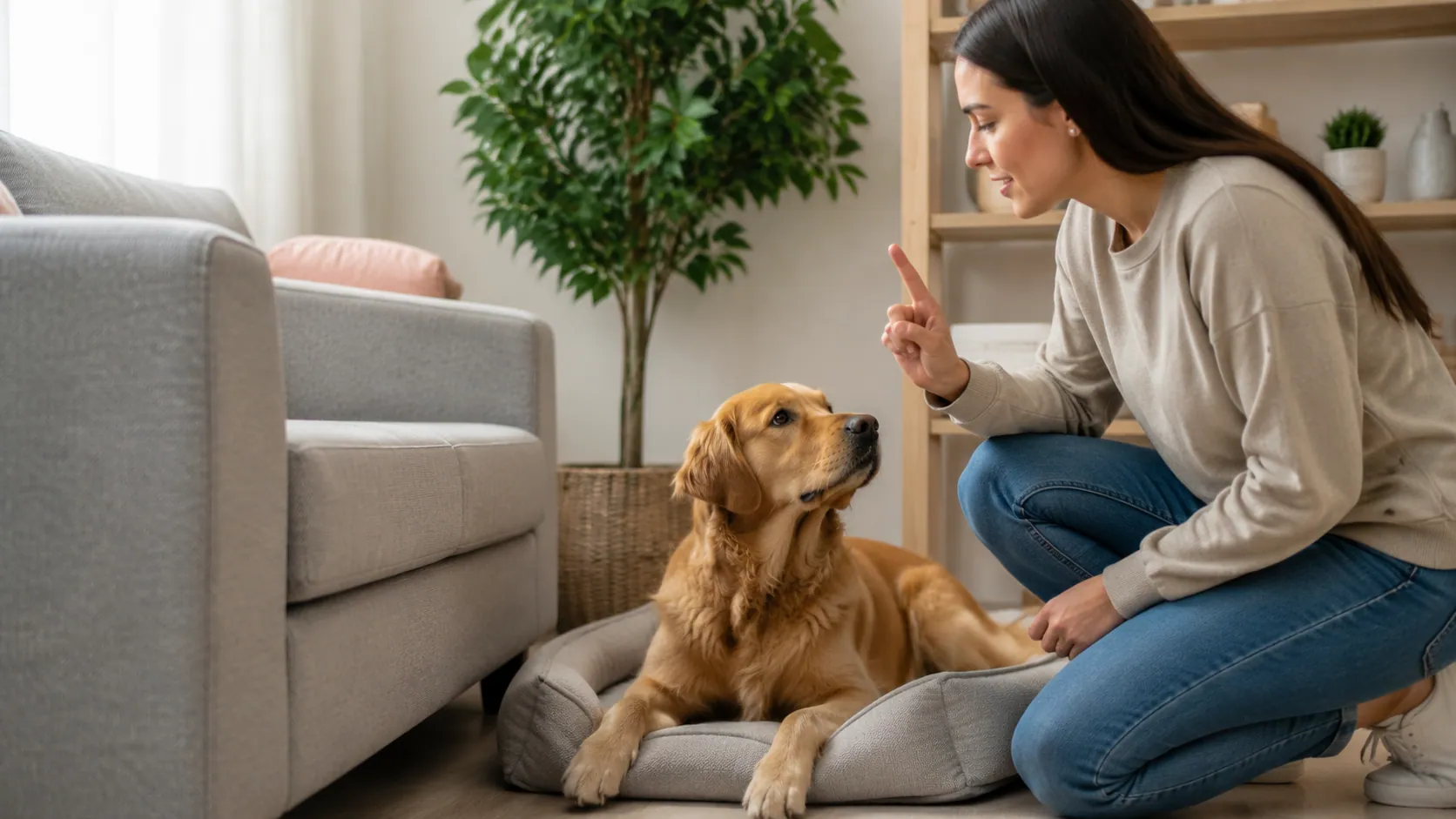
How to keep a dog off the sofa is a common question for dog owners who love their pets but also want clean, comfortable, damage-free furniture. The good news is that you do not need to yell, punish, or make your dog feel rejected. The best approach is simple: set a clear rule, give your dog a better place to rest, and reward the behavior you want.
Dogs get on the sofa because it is soft, warm, high up, and often smells like their favorite people. So instead of only saying “no,” your goal is to teach your dog, “This is where you relax instead.” With positive reinforcement, a comfortable dog bed, and consistent household rules, you can train your dog to stay off the couch in a kind, realistic way.
Why Dogs Love Getting on the Sofa
Before you can keep a dog off the sofa, it helps to understand why the sofa is so tempting. Dogs do not usually jump on furniture to be stubborn. They do it because the sofa gives them something they enjoy.
For many dogs, the couch is the most comfortable spot in the room. It has soft cushions, warmth, and your scent. A dog that wants to feel close to you may choose the sofa because it smells familiar and makes them feel secure. This is especially common with dogs that follow their owners from room to room or like sleeping near family members.
The sofa also gives dogs a better vantage point. If your couch is near a window, door, or busy living room area, your dog may use it as a lookout spot. They can watch people, cars, other dogs, or guests arriving. For some dogs, that can turn into window barking, guarding behavior, or constant alertness.
Sometimes, sofa jumping becomes a habit. If your dog has been allowed on the couch for weeks, months, or years, they have learned that the sofa is rewarding. That does not mean training is impossible. It simply means you need consistency, patience, and a better alternative.
Boredom and anxiety can also make the behavior worse. An under-stimulated dog may climb on the couch because there is nothing else to do. A dog with separation anxiety may rest on the sofa because it smells like you when you are gone. This is why good dog furniture training should include exercise, enrichment, and calm routines, not just commands.
Decide the Sofa Rule Before You Start Training
The first step is deciding what rule you actually want. Some people want a strict no-sofa rule. Others are happy with couch time by invitation. Some allow dogs on one piece of furniture but not another.
All of these can work, but the rule must be clear.
If you want no sofa access at all, the message is simple: the dog rests on their bed, mat, crate, or designated lounge spot instead of the sofa. This is often best for homes with allergies, expensive furniture, muddy paws, resource guarding, or strict cleanliness goals.
If you prefer invitation-only sofa access, use a clear permission cue such as “up” or “come up.” You can also use a specific blanket as a visual permission cue. When the blanket is on the sofa, your dog may be invited. When it is gone, the sofa is off-limits.
If some furniture is allowed and some is not, you need to be even more consistent. Dogs can learn flexible furniture rules, but only when people apply them the same way every time. If one family member lets the dog on the sofa and another scolds them for the same behavior, the dog receives mixed signals.
A simple rule works best:
“The dog stays on their bed unless invited onto the sofa.”
That one sentence gives everyone in the house the same standard to follow.
Set Clear Rules Everyone in the House Follows
Consistency is one of the biggest factors in learning how to keep dogs off furniture. Dogs do not understand “not today,” “not when guests are here,” or “not after you got muddy” unless you train those rules clearly.
Everyone in the home should follow the same plan. That includes adults, children, regular guests, and anyone who cares for your dog. If children invite the dog onto the couch during movie time but adults push the dog off later, the dog may become confused or frustrated.
It also helps to avoid rewarding sneaky sofa behavior. If your dog jumps up and you laugh, cuddle them, or give attention before asking them to move, the sofa behavior still gets rewarded. Even negative attention can feel rewarding to some dogs.
Instead, calmly redirect your dog to the correct place. Use your off command, guide them to the floor, and then reward them when all four feet are on the ground or when they settle on their bed.
A consistent rule does not need to be harsh. It simply needs to be predictable.
Give Your Dog a Better Place Than the Sofa
If you want to train a dog to stay off the sofa, you need to offer a better option. A thin mat in a cold corner probably will not compete with a warm couch beside the family. Your dog’s alternative resting place should feel comfortable, safe, and rewarding.
Choose a dog bed that matches what your dog likes about the sofa. If your dog likes leaning against cushions, a bolster bed or raised-side bed may work well. If your dog is older, stiff, or large, an orthopedic dog bed may be better. If your dog curls up tightly, a donut bed may feel cozy. If your dog overheats easily, a cooling bed or flat mat may be more comfortable.
Placement matters. One of the biggest mistakes owners make is putting the bed too far away. If your dog loves the sofa because it keeps them close to the family, place the bed near the sofa, not isolated in another room. A dog bed near the sofa lets your dog feel included while still following the rule.
Make the bed more rewarding by adding treats, praise, safe chews, a favorite toy, or a blanket that smells like you. An old T-shirt can help some dogs settle because it carries your scent. Keep the bed clean, soft, and easy to access. A washable cover is helpful if your dog sheds, drools, or comes inside with muddy paws.
The goal is not only to keep your dog off the couch. The goal is to make their own spot worth choosing.
Teach the “Off” Command Calmly
The off command is one of the most useful tools for dog sofa training. It tells your dog to get down from the couch, bed, chair, or other furniture. It should be taught calmly, not shouted in frustration.
Start when your dog is not overly excited. If your dog is on the sofa, say “off” once in a calm voice. Hold a treat near their nose and lure them down to the floor. The moment all four feet touch the floor, mark the behavior with “yes” or a clicker, then reward with a treat and praise.
Do not grab your dog by the collar, harness, or body unless there is an emergency. Pulling a dog off furniture can create fear, resistance, or even growling. It also does not teach the dog what you want them to do instead.
After your dog gets down, send them to their bed. This is important. If you only teach “off,” your dog may jump down, take the treat, and jump right back up. Pairing “off” with “go to bed” or “place” gives your dog a complete behavior chain.
A simple routine looks like this:
| Step | What You Do | What Your Dog Learns |
| 1 | Say “off” once | The cue means move from sofa to floor |
| 2 | Lure calmly with a treat | Getting down is safe and rewarding |
| 3 | Reward all four feet on floor | The correct behavior pays |
| 4 | Send dog to bed | There is a better resting place |
| 5 | Reward calm settling | Staying off the sofa is worthwhile |
Practice before the problem happens. Do a few short sessions each day when your dog is relaxed. This makes the cue easier to use when the sofa is more tempting.
Teach “Go to Bed” or “Place” as the Better Choice
The command “go to bed” or “place” teaches your dog where to relax instead of the sofa. This is one of the best long-term solutions for dog furniture rules.
Start with the dog bed or mat close to the couch. Toss a treat onto the bed and say “bed” or “place.” When your dog steps on it, praise and reward. At first, reward any interest in the bed: looking at it, stepping on it, sitting, or lying down.
Once your dog understands the location, begin rewarding calm behavior. If they lie down, give a treat. If they stay for a few seconds, reward again. Slowly increase the time. You can add a chew toy, safe chew, or food puzzle to help your dog settle.
This is called teaching an incompatible behavior. Your dog cannot be lying calmly on their bed and jumping on the sofa at the same time. Instead of constantly correcting the wrong behavior, you are building a stronger habit.
Use this command during normal life. When you sit down to watch TV, ask your dog to go to bed. When guests arrive, send your dog to place before they get excited. After walks, use the bed as part of a calm settling routine.
Use Positive Reinforcement, Not Fear or Punishment
A humane plan for how to keep a dog off furniture without punishment works better than fear-based methods. Punishment may stop the behavior in the moment, but it can also create stress, confusion, and mistrust.
Yelling, shoving, collar grabbing, or using scary deterrents can make some dogs anxious around the sofa or around people. In worse cases, a dog may begin guarding the couch because they expect conflict when someone approaches.
Positive reinforcement dog training focuses on rewarding the behavior you want. That means you reward your dog for lying on their bed, getting off the sofa calmly, staying on the floor, and relaxing near the couch without jumping up.
This does not mean you let your dog do whatever they want. Boundaries are still clear. The difference is that you teach the boundary in a way your dog can understand.
A good rule to remember is:
Reward the dog for choosing the right place before they choose the sofa.
That is prevention-based training, and it is much easier than correcting the same mistake over and over.
How to Keep a Dog Off the Sofa When You Are Not Home
One of the hardest parts of how to keep a dog off the sofa when you are not home is that you cannot reward or redirect your dog in real time. This is where management becomes essential.
If your dog jumps on the couch every time you leave, do not leave the sofa available. Use a baby gate, pet gate, closed door, crate, exercise pen, or dog-safe room. This is not cheating. It is smart training. Dogs cannot rehearse a behavior they cannot access.
You can also make the sofa less available by flipping cushions, placing safe boxes on the sofa, or using furniture blockers. Choose options that are stable and safe. Avoid anything sharp, unstable, or likely to scare your dog.
Before leaving, give your dog something better to do. A food puzzle, stuffed toy, safe chew, or enrichment toy can help them settle. Make sure their bed is comfortable and placed in a calm area.
Pet cameras, motion alerts, and two-way audio can be helpful, but they are not a full training solution. Some dogs become more anxious when they hear their owner’s voice and cannot find them. Use smart tools carefully, and focus first on access management and enrichment.
How to Stop Your Dog Sleeping on the Sofa at Night
Some dogs stay off the couch during the day but sneak onto it at night. This usually happens because the living room is quiet, the sofa is available, and no one is there to redirect the dog.
Create a predictable bedtime routine. Take your dog outside for a toilet break, offer water, guide them to their bed, and give a calm chew if appropriate. Use the same cue each night, such as “bedtime” or “go to bed.”
Then remove access to the sofa. Close the living room door, use a pet gate, or have your dog sleep in a dog-safe room, crate, or bedroom area. If your dog struggles with nighttime separation, make the change gradually and keep their bed close enough that they feel secure.
In the morning, reward success. If your dog stayed in their bed or dog-safe area overnight, praise them calmly. Training is not only about stopping mistakes; it is also about noticing and rewarding progress.
How to Keep a Puppy Off the Sofa From Day One
It is easier to prevent a puppy sofa habit than to break an adult dog’s long-term routine. If you have a new puppy, start puppy couch boundaries immediately.
Use baby gates, closed doors, and supervision so your puppy does not practice climbing onto furniture. Puppies learn quickly, and even a few fun sofa sessions can become a habit.
Watch for signs that your puppy is about to jump: crouching, putting paws on the cushion, bouncing near the couch, or staring at the seat. Redirect before the jump. Call your puppy to their bed, toss a toy, or reward them for staying on the floor.
Puppies also chew, dig, and scratch more than adult dogs. Keep chew toys available and rotate them often. If your puppy is chewing sofa cushions, they may need more teething outlets, exercise, naps, or supervision.
A puppy-proof living room should make the right choice easy and the wrong choice hard.
What to Do If Your Dog Jumps on the Sofa After Walks, Guests, or Zoomies
Some dogs jump on the sofa most often when they are excited. This can happen after walks, during zoomies, when guests arrive, or when the family sits down together.
Build a post-walk routine. After a walk, wipe muddy paws, offer water, and send your dog to their bed with a chew. This helps your dog shift from excitement to calm behavior.
Before guests arrive, set your dog up for success. Ask them to go to bed before the doorbell rings if possible. Reward calm behavior with treats or praise. If your dog gets too excited, use a baby gate or leash management until they settle.
For attention-seeking sofa behavior, reward calm floor behavior before your dog jumps up. If your dog lies quietly near the sofa, praise them. If they choose their bed, reward them. This is called capturing calm behavior, and it helps your dog learn that calm choices get attention.
Use Barriers, Deterrents, and Covers Safely
Barriers and covers can help, but they should support training, not replace it. A sofa cover may protect furniture, but it will not teach your dog to stay off the couch by itself.
The safest management tools are usually simple: baby gates, pet gates, closed doors, crates, exercise pens, and dog-safe rooms. These prevent access without frightening your dog.
Furniture protectors, couch covers, washable layers, and non-slip covers are useful while training is in progress. They help protect against dog hair, muddy paws, scratches, and odor. If you use a cover, choose one that is stable and does not slide dangerously when your dog moves nearby.
Be careful with deterrent sprays, double-sided tape, aluminum foil, or motion-activated mats. Some dogs ignore them. Others become scared or stressed. If you use any deterrent, make sure it is pet-safe and does not create fear, pain, or panic.
A helpful way to think about tools is this:
| Tool | Best Use | Limitation |
| Baby gate | Blocks room access | Does not teach the cue alone |
| Dog bed | Gives a better option | Must be rewarding |
| Sofa cover | Protects furniture | Does not stop the habit |
| Pet camera | Helps monitor behavior | Not a replacement for training |
| Food puzzle | Encourages settling | Must be used safely |
Keep Dog Hair, Mud, and Smell Off the Sofa During Training
Even with a good training plan, your dog may still jump on the sofa sometimes. A simple cleaning and prevention routine can protect your furniture while your dog is learning.
Brush your dog regularly to reduce shedding. Keep a towel near the door for muddy paws. After rainy walks, wipe paws and belly fur before your dog enters the living room. This is especially helpful in rainy regions or during muddy seasons.
Trim your dog’s nails to reduce scratches. Long nails can snag fabric, mark leather, and damage cushions. If you are not comfortable trimming nails yourself, ask a groomer or vet clinic for help.
Use washable covers or pet throws during the training period. Vacuum with an upholstery attachment and keep a lint roller or pet hair remover nearby. A quick 10-minute clean a few times a week can prevent fur, odor, and dirt from building up.
Training and cleaning work best together. Training changes the habit. Cleaning protects the sofa while that habit changes.
Senior Dogs, Small Dogs, and Sofa Jumping Safety
For some dogs, sofa jumping is not just a furniture issue. It can also be a health and safety concern. Senior dogs, small dogs, long-backed breeds, arthritic dogs, and dogs with joint pain may strain themselves jumping on and off furniture.
If your dog is older or stiff, consider whether they are climbing onto the sofa because they want comfort. A warm, supportive orthopedic dog bed near the family may be a better choice. Place it on a non-slip surface so your dog can get in and out easily.
Small dogs may also be at risk if they jump from high furniture to hard floors. Large dogs can stress joints with repeated jumping. If your dog suddenly starts guarding the sofa, refusing to move, or acting uncomfortable, pain may be part of the problem.
When mobility issues, arthritis, or pain-related behavior are possible, ask your vet for guidance. Sometimes the solution is not stricter training; it is a more comfortable, joint-safe resting area.
What If Your Dog Growls, Snaps, or Guards the Sofa?
If your dog growls, snaps, freezes, or guards the sofa, treat it as a safety issue. Do not physically move a growling dog. Do not grab the collar, pull the harness, or push them off. Growling is communication, and punishing it can make the situation more dangerous.
Instead, create distance and trade. Toss a treat away from the sofa so your dog chooses to get down. Then block access and rethink your training plan.
Sofa guarding can be a form of resource guarding. The dog may be guarding the comfortable space, the person sitting nearby, or the room. This is not a problem to solve through confrontation.
If your dog growls on furniture, snaps when moved, or guards the couch repeatedly, contact a qualified professional such as a certified dog trainer, certified behavior consultant, or veterinary behaviorist. Look for someone who uses reward-based, force-free behavior modification.
This is especially important if children live in the home.
A Simple 7-Day Dog Sofa Training Plan
A 7-day dog couch training plan gives you a clear starting structure. Some dogs need more than a week, especially if the sofa habit is old, but this plan helps you build momentum.
| Day | Focus | What to Practice |
| Day 1 | Choose the rule | Decide no-sofa or invitation-only access. Tell everyone in the house. |
| Day 2 | Set up the dog bed | Place it near the sofa, add soft bedding, and reward your dog for using it. |
| Day 3 | Teach “off” | Say “off,” lure down, reward when all four feet are on the floor. |
| Day 4 | Teach “go to bed” | Reward your dog for stepping onto, sitting on, and lying on their bed. |
| Day 5 | Add management | Use gates, closed doors, or a dog-safe room when unsupervised. |
| Day 6 | Practice real triggers | Train during TV time, after walks, or when guests visit. |
| Day 7 | Review consistency | Fix weak spots and keep rewarding calm behavior. |
Think of this as the first week of a new routine, not a guaranteed finish line. Some dogs improve quickly. Others need several weeks of repetition, especially if they have spent years sleeping on the sofa.
Common Mistakes That Make Sofa Training Harder
Many sofa training problems come from small mistakes that accidentally reward the wrong behavior.
The biggest mistake is inconsistency. If your dog is allowed on the sofa sometimes and scolded other times, they will keep trying because the rule is unclear.
Another mistake is repeating “off” again and again without teaching what it means. A cue only works if your dog understands the action and has been rewarded for doing it.
Avoid punishing after the behavior has already happened. If you come home and find dog hair on the sofa, your dog will not connect your anger with the earlier couch visit. Instead, improve management next time.
Also avoid pulling, yelling, shoving, or using harsh corrections. These can damage trust and may make your dog anxious around the sofa.
Finally, do not forget the alternative. If the sofa is soft and your dog’s bed is boring, the sofa will keep winning. Make the dog bed comfortable, rewarding, and close to the family.
When Is It Okay to Let Your Dog on the Sofa?
It is okay to let your dog on the sofa if you want to, your dog behaves safely, and everyone in the house agrees. The goal is not to make every dog stay off furniture. The goal is to create a rule your dog can understand.
Invitation-only access works well for many homes. Use a cue like “up” when your dog is allowed and “off” when it is time to get down. A blanket can also act as a visual cue. When the blanket is on the sofa, your dog may come up. When it is removed, the sofa is not available.
However, avoid sofa access if your dog guards the couch, growls at people, snaps when moved, or becomes possessive around family members. In those cases, safety comes first.
FAQs About Keeping Dogs Off the Sofa
How long does it take to train a dog to stay off the sofa?
Some dogs improve in a few days, while others need several weeks. It depends on age, habit strength, anxiety, training history, and household consistency. A 7-day dog sofa training plan is a good start, but long-term success comes from repetition.
What can I put on my couch to keep my dog off?
You can use safe barriers such as flipped cushions, boxes, baby gates, pet gates, or furniture blockers. Sofa covers protect the couch but do not train the dog. Always choose safe tools that do not scare or hurt your dog.
Should I use spray to keep my dog off the sofa?
Pet-safe sprays may help in some cases, but they should not be your main strategy. Some dogs ignore sprays, and some dislike them so much that they become stressed. Training, management, and a better dog bed are usually more reliable.
Why does my dog only get on the sofa when I leave?
Your dog may enjoy the comfort, your scent, or the quiet space when unsupervised. They may also have learned that the sofa is available when no one is watching. Use gates, closed doors, a dog-safe room, or crate training to prevent the habit while you are away.
Can I let my dog on one sofa but not another?
Yes, but the rule must be clear. Use a permission cue, blanket, or specific furniture rule. If the dog seems confused, simplify the rule.
How do I keep a puppy off the sofa?
Prevent access early, redirect before the jump, reward the puppy’s bed, and use baby gates when you cannot supervise. Puppy-proof the living room and provide safe chew toys.
What should I do if my dog growls when I ask them to get off?
Do not physically move them. Toss a treat away from the sofa, create distance, and contact a qualified trainer or behavior professional. Growling, snapping, and guarding need careful, reward-based behavior support.
Conclusion: Build a Sofa Rule Your Dog Can Understand
Learning how to keep a dog off the sofa is really about teaching clear, kind boundaries. Decide the rule, make sure everyone follows it, teach the off command, reward your dog for using their own bed, and block sofa access when you cannot supervise.
Your dog is not being bad for wanting the couch. They are choosing comfort, closeness, and habit. When you offer a comfortable dog bed, consistent training, and positive reinforcement, you give them a better choice. With patience, your dog can learn to relax near the sofa without being on it.