

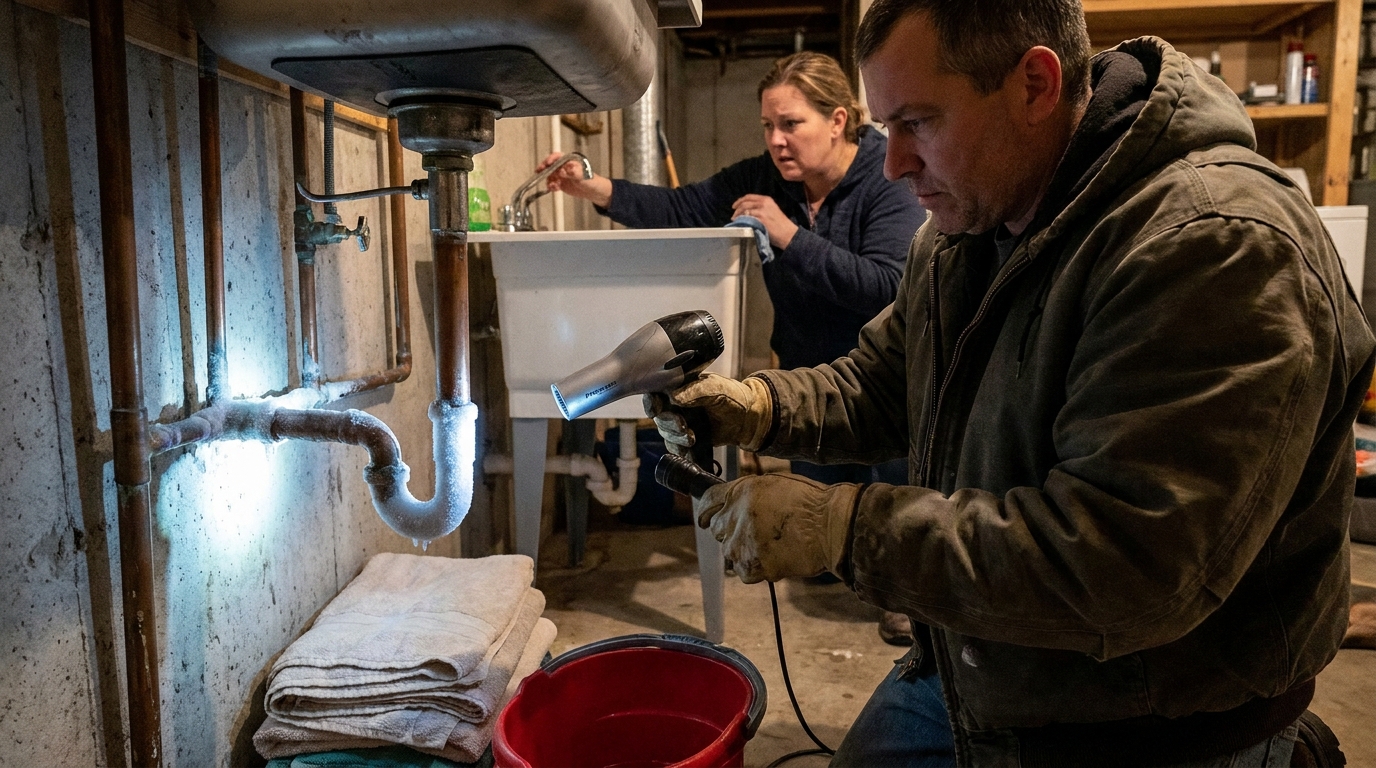
What to do when pipes freeze starts with staying calm, opening the affected faucet, checking for leaks, and warming the frozen pipe slowly if it is safe and visible. Frozen pipes can feel like a sudden home emergency because one minute your faucet works normally, and the next minute there is no water, only a weak trickle, or a strange sound in the plumbing. The biggest risk is not just the frozen water itself. The real danger is pipe pressure, which can lead to a cracked pipe, burst pipe, flooding, and expensive water damage.
The good news is that many frozen pipe situations can be handled safely if you act quickly and avoid risky shortcuts. This guide explains how to identify frozen water pipes, how to thaw them safely, what not to do, when to call an emergency plumber, and how to prevent pipes from freezing again.
Frozen Pipe Emergency Checklist: What to Do First
When you suspect frozen pipes, your first goal is to reduce pressure and prevent damage. Start by turning on the faucet connected to the frozen line. If only a small trickle comes out, leave the faucet open. An open faucet gives melting ice and trapped water somewhere to go, which can reduce pressure inside the pipe.
Next, look for obvious signs of trouble. Check exposed pipes in the basement, crawl space, garage, attic, under sinks, and along exterior walls. If you see frost on the pipe, bulging, cracking, dripping, or pooling water, treat it seriously. A pipe may look frozen from the outside, but damage can appear once the ice starts melting.
If there is any leaking, flooding, or visible pipe damage, shut off the main water shut-off valve immediately. This valve may be in the basement, garage, utility room, crawl space, or near where the water line enters your home. Knowing the main shut-off valve location before winter can save you from major water damage.
Here is a quick emergency checklist:
| Situation | What to Do |
| No water or weak trickle | Open the faucet and check nearby pipes |
| Visible frost on pipe | Apply gentle heat if the pipe is accessible |
| Pipe is cracked or leaking | Shut off the main water supply |
| Pipe is behind a wall | Call a licensed plumber |
| Water is near outlets | Avoid the area and consider electrical safety |
| You smell burning or gas | Stop and call a professional |
A useful rule from many plumbing professionals is: “If you cannot safely see and reach the pipe, do not force a DIY thaw.”
How to Know If Your Pipes Are Frozen
The most common sign of frozen water pipes is no water from the faucet in winter, especially when temperatures have dropped sharply overnight. Sometimes you may get only a small trickle, which means ice may be blocking part of the line.
You may also notice frost on exposed pipes, unusual gurgling sounds, banging noises, or reduced water pressure. In some cases, a strange smell may come from a drain or faucet because the blocked pipe is preventing normal flow. If one faucet has no water but others work, the frozen section may be near that specific fixture. If several faucets stop working, the freeze may be closer to the main line or in a larger section of the plumbing system.
The areas most likely to freeze are spaces with poor insulation or cold airflow. These include crawl spaces, unheated basements, garages, attics, under-sink cabinets, exterior walls, and outdoor hose bibs. Pipes in older homes, mobile homes, vacation homes, and rural properties can be especially vulnerable.
Do not assume that only one pipe is frozen. If one pipe freezes, other locations may also be frozen, especially during a hard freeze, winter storm, or long period of below-freezing temperatures.
Why Pipes Freeze and Why Frozen Pipes Can Burst
Water freezes at 32°F, but pipes do not always freeze the moment outdoor temperature reaches freezing. The risk becomes much higher when temperatures stay low for several hours, especially around 20°F or lower, or when pipes are exposed to wind, drafts, or poor insulation.
When water freezes, it expands. This creates an ice blockage inside the pipe. The pressure often builds between the frozen section and the closed faucet. That pressure can stretch the pipe, weaken joints, and eventually cause a burst pipe. Sometimes the pipe does not burst at the frozen spot. It may crack at a weaker point somewhere else along the line.
This is why opening the faucet matters. It helps relieve pressure and gives water a path to flow as the ice melts. It is also why you should keep watching the pipe after water pressure returns. A frozen pipe may seem fine at first, but a slow leak can appear later as the pipe fully thaws.
Common reasons pipes freeze include poor pipe insulation, cold air leaks, open crawl space vents, unheated garages, exterior wall plumbing, and outdoor water lines that were not drained before winter.
Should You Turn Off the Water If Pipes Freeze?
Many homeowners ask, should you turn off water if pipes freeze? The answer depends on what you see.
If the pipe is frozen but not leaking, and you can safely monitor it while thawing, you may leave the main water supply on and keep the affected faucet open. This allows water to move once the ice begins to melt. However, if you see a crack, bulge, leak, dripping water, soaked flooring, or wall damage, shut off the main water supply valve right away.
You should also consider turning off the water if you cannot stay home to watch the pipe, if the frozen section is hidden behind a wall, or if you suspect a pipe has already burst. Shutting off the water can reduce the amount of flooding if the pipe opens up after thawing.
After shutting off the water main, open nearby faucets to drain remaining water and relieve pressure. If you live in an apartment or rental property and cannot access the shut-off valve, contact your landlord, property manager, or building maintenance immediately.
How to Thaw Frozen Pipes Safely
The safest way to thaw frozen pipes is to use slow, gentle heat. First, keep the faucet open. Then start warming the pipe near the faucet and move gradually toward the frozen area. This helps water and steam escape as the ice melts.
Safe thawing methods include using a hair dryer, electric heating pad, warm towels, warm damp rags, or a safe portable space heater placed away from flammable materials. If using a hair dryer, make sure the area is dry and there is no standing water nearby. Electricity and water are a dangerous mix.
Warm towels can work well for small sections of exposed pipe. Soak towels in hot water, wring them out, and wrap them around the frozen area. Replace them as they cool. A heating pad can also help if it wraps safely around the pipe.
Continue applying gentle heat until full water pressure returns. Once water starts flowing, keep the faucet open for a while and check the pipe carefully for leaks. Look underneath the pipe, around joints, near fittings, and in nearby walls or flooring.
Here is a simple safe-thawing comparison:
Thawing Method |
Safe Use |
| Hair dryer | Good for visible pipes in dry areas |
| Heating pad | Good for controlled, gentle warmth |
| Warm towels | Good for small frozen areas |
| Space heater | Useful for warming a room, but must be watched |
| Heat tape | Best for prevention when installed correctly |
If the pipe is hidden inside a wall, ceiling, or floor, call a licensed plumber instead of cutting into surfaces or overheating one area.
What Not to Do When Pipes Freeze
Knowing what not to do when pipes freeze is just as important as knowing how to thaw them. Never use an open flame, blowtorch, propane heater, kerosene heater, charcoal stove, or naked flame to thaw a pipe. These methods can damage the pipe, start a fire, or release poisonous gases.
Do not overheat one section of pipe. Rapid heating can stress the pipe and increase the chance of cracking. Do not leave space heaters unattended, especially near cabinets, insulation, curtains, cardboard boxes, or wood framing.
Avoid pouring boiling water on fragile or hard-to-reach pipes. It may seem like a fast fix, but sudden temperature changes can damage some materials. Also, do not ignore a pipe that looks swollen, split, or wet. A frozen pipe can become a leaking pipe quickly once the ice melts.
Another common DIY mistake is assuming everything is safe once water starts flowing. After thawing, keep checking the area for at least a little while. Look for slow dripping, damp drywall, ceiling stains, or the sound of running water when faucets are off.
What to Do If a Frozen Pipe Bursts
If a frozen pipe bursts, act fast. First, shut off the main water shut-off valve. This is the most important step to limit flooding. Then open faucets to drain water left in the pipes.
If water is near electrical outlets, appliances, extension cords, or the breaker panel, stay away from the area. Only turn off electricity if you can do it safely from a dry location. If you are unsure, call an electrician or emergency service provider.
Move furniture, electronics, rugs, and valuables away from the water if it is safe to do so. Use towels, buckets, and a wet/dry vacuum for small amounts of water. For larger flooding, call a water damage restoration company. Fast drying can reduce the risk of mold growth, damaged drywall, soaked flooring, and structural problems.
Take photos and videos before cleanup if possible. Document the damaged pipe, wet floors, stained walls, standing water, and any personal property damage. Save plumber invoices, restoration receipts, and repair estimates. This can help if you need to file a homeowners insurance or water damage claim.
A realistic homeowner example: a family leaves a garage door open during a cold snap. A water line in the garage freezes overnight and bursts after thawing. Because they know where the main valve is, they shut off the water quickly, take photos, call a plumber, and use fans and a dehumidifier to begin drying. Their quick action reduces damage from thousands of dollars to a much smaller repair.
How to Tell If a Frozen Pipe Has Burst or Started Leaking
Sometimes a pipe does not spray water dramatically. A slow leak after a frozen pipe thaws can still cause serious damage. Look for water stains, damp drywall, bubbling paint, soaked flooring, ceiling spots, or musty smells. Listen for running water when all faucets are turned off.
Check under sinks, in cabinets, behind appliances, in basements, crawl spaces, and rooms below bathrooms or laundry areas. A leak inside a wall may show up as a stain, soft drywall, or a sudden drop in water pressure.
If you suspect hidden moisture, a plumber or restoration professional may use a moisture meter or thermal camera to find wet areas behind walls or flooring. This matters because trapped moisture can lead to mold growth even after the visible water is gone.
If the pipe was frozen and then thawed, keep inspecting it for a while. Some cracks only leak once full water pressure returns.
When to Call a Plumber for Frozen Pipes
You should call a plumber for frozen pipes when the pipe is hidden, damaged, inaccessible, or not thawing with safe methods. A professional plumber is also the better choice if multiple fixtures have no water, the frozen section is behind a wall, ceiling, slab, crawl space, or exterior line, or you notice any signs of cracking or leaking.
Call an emergency plumber immediately if there is flooding, a burst pipe, water near electrical systems, or no way to shut off the water. Plumbers may use specialized pipe-thawing equipment and can inspect the pipe for damage after it thaws.
This section has a transactional search intent because the reader may need service right away. However, the advice should still be practical, not sales-heavy. A helpful way to say it is: if thawing requires guesswork, demolition, or unsafe heat, it is time to call a licensed plumber.
Where Pipes Are Most Likely to Freeze
Pipes freeze most often in areas that are cold, drafty, exposed, or poorly insulated. Common problem spots include basements, crawl spaces, attics, garages, exterior walls, under kitchen sinks, under bathroom sinks, and near outdoor faucets.
Outdoor plumbing is also vulnerable. This includes outdoor hose bibs, garden hoses, sprinkler lines, irrigation systems, swimming pool supply lines, and exterior spigots. If hoses stay connected during winter, water can remain trapped and freeze back into the pipe.
Homes in warmer climates can be surprisingly vulnerable during rare freezes. In regions where hard freezes are uncommon, pipes may be installed with less insulation or placed in exposed areas. Older homes may have insulation that has settled or degraded. Mobile homes and cabins may have water lines closer to outdoor air or frozen ground.
If you are checking your home before a cold snap, focus first on pipes near exterior walls, unheated spaces, and areas where cold air can enter through cracks, vents, windows, or gaps.
How to Prevent Pipes From Freezing Again
The best way to handle frozen pipes is to stop them from freezing in the first place. Start with pipe insulation. Foam pipe sleeves, fiberglass insulation, and properly installed heat tape or heat cables can help protect exposed pipes in basements, crawl spaces, garages, and attics.
Seal air leaks around doors, windows, dryer vents, utility openings, and exterior walls. Even a small draft can freeze a pipe during a severe cold snap. Keep garage doors closed if water lines run through the garage. Open kitchen and bathroom cabinet doors so warmer indoor air can reach pipes under sinks.
During very cold weather, let faucets drip slightly, especially those served by pipes along exterior walls. Moving water is less likely to freeze than standing water. Keep the thermostat steady day and night. Many guides recommend keeping indoor temperatures at least around 55°F when you are away, though some homeowners choose 60°F for extra protection in vulnerable homes.
Before winter, disconnect outdoor hoses, drain outdoor lines if possible, and cover outdoor faucets with insulation covers. If you use heat tape or heat cables, follow manufacturer instructions carefully and choose products designed for your pipe type.
A simple winter prevention checklist includes:
- Insulate exposed pipes.
- Seal cracks and drafts.
- Open cabinet doors during cold snaps.
- Let vulnerable faucets drip.
- Keep heat on when away.
- Disconnect and drain outdoor hoses.
- Know where your main water shut-off valve is.
How to Protect Pipes During a Power Outage or Winter Storm
Frozen pipes become more likely during a power outage, especially if the heat stops working during a winter storm or arctic blast. If your home is losing heat, protect vulnerable pipes as early as possible.
Open cabinet doors under sinks, close garage doors, and block drafts where safe. If water is still running, let a small trickle flow from faucets connected to vulnerable pipes. If you need to leave the home and temperatures are dropping, consider shutting off the main water supply and draining lines if it is safe and practical.
Never use outdoor fuel-burning devices indoors. Charcoal grills, camping stoves, and outdoor heaters can create carbon monoxide and fire hazards. Safe heat matters just as much as warmth.
Smart tools can also help. A smart water leak detector, freeze alarm, temperature sensor, or smart shut-off valve can warn you before a small freeze becomes a major flood.
Frozen Pipes in Apartments, Rentals, Mobile Homes, and Vacation Homes
Frozen pipes are not only a single-family home problem. In apartments and rentals, tenants should report frozen pipes to the landlord or property manager quickly. Avoid opening walls, using unsafe heat, or attempting repairs that could create more damage. Take photos if there is leaking or water damage, and keep written records of your communication.
Mobile homes and manufactured homes often need extra pipe protection because some lines may be exposed to outdoor air beneath the structure. Insulation, skirting, heat tape, and regular winter checks can make a big difference.
Vacation homes and unoccupied homes should be winterized before freezing weather. That may include shutting off the water, draining lines, keeping heat on, insulating exposed pipes, and asking someone to check the property during long cold spells. A vacant home with a burst pipe can flood for days before anyone notices.
Tools and Supplies That Help Before the Next Freeze
A small winter plumbing kit can help you respond faster. Useful supplies include foam pipe sleeves, outdoor faucet covers, heat tape, a flashlight, towels, buckets, a wet/dry vacuum, and a basic label for the main shut-off valve.
For prevention, consider a freeze alarm, smart thermostat, temperature sensor for pipes, or smart water leak detector. These tools are especially helpful for vacation homes, basements, crawl spaces, rental properties, or homes with past frozen pipe problems.
You do not need every tool on the market. The most important preparation is simple: know where vulnerable pipes are, know where the shut-off valve is, and have safe thawing supplies ready before the next hard freeze.
Quick FAQ About Frozen Pipes
Can frozen pipes thaw on their own?
Yes, frozen pipes can sometimes thaw on their own when temperatures rise. However, waiting can be risky because pressure may build inside the pipe, and a hidden crack may leak once the ice melts.
How long does it take frozen pipes to thaw?
It depends on the pipe location, insulation, outdoor temperature, and thawing method. Some exposed pipes may thaw in a few hours, while hidden pipes behind walls may take longer and may require a plumber.
At what temperature do pipes freeze?
Water freezes at 32°F, but many household pipes are most at risk around 20°F or lower, especially if they are exposed, uninsulated, or in drafty areas.
Should I leave faucets open if pipes are frozen?
Yes. Leaving the faucet open helps relieve pressure and allows water to flow as the ice melts. This is one of the safest first steps when dealing with frozen pipes.
Can I use a hair dryer on frozen pipes?
Yes, a hair dryer can be used on a visible, accessible pipe if the area is dry and safe. Do not use electrical devices near standing water.
Will a frozen pipe always burst?
No. A frozen pipe does not always burst, but the risk increases when pressure builds or the pipe is weak, old, poorly insulated, or exposed to freezing temperatures for too long.
Does homeowners insurance cover frozen pipes?
It may cover sudden water damage from a burst pipe, but coverage depends on your policy and whether the home was properly maintained. Document damage with photos and keep repair receipts.
Conclusion: What to Do When Pipes Freeze and How to Stay Prepared
When deciding what to do when pipes freeze, remember the safest order: open the faucet, check for leaks, locate the frozen area, apply gentle heat only if the pipe is visible and accessible, and shut off the main water supply if there is damage or flooding. Avoid open flames, watch for leaks after thawing, and call a licensed plumber when the pipe is hidden, cracked, or difficult to reach.
Frozen pipes are stressful, but fast and careful action can reduce the chance of a burst pipe, water damage, mold growth, and expensive repairs. Before the next cold snap, insulate exposed pipes, seal drafts, disconnect outdoor hoses, keep your thermostat steady, and make sure everyone in the home knows where the main water shut-off valve is. A few minutes of preparation can protect your home when freezing weather arrives.
Disclaimer
This article is for general informational purposes only and is intended to help readers understand common steps for handling and preventing frozen pipes. Individual homes, plumbing systems, weather conditions, and repair needs may vary. For serious leaks, burst pipes, electrical risks, or hidden plumbing issues, contact a qualified professional.