

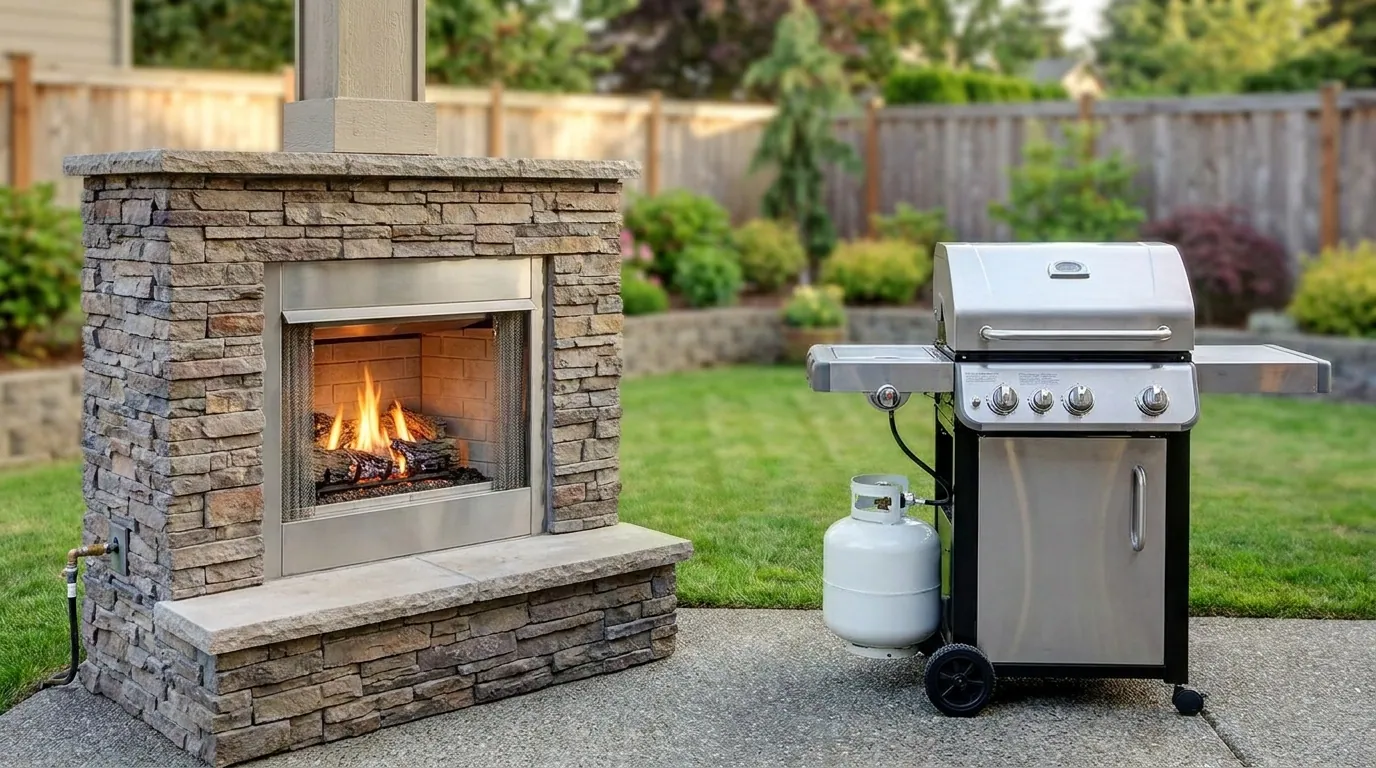
Is natural gas the same as propane? No, natural gas and propane are not the same, even though both are common gas fuels used for home heating, cooking, water heaters, fireplaces, grills, and generators. The biggest difference is that natural gas is mostly methane, while propane is a separate hydrocarbon fuel often stored as LPG, or liquefied petroleum gas.
At first, the two fuels can seem almost identical because they power many of the same appliances. But when you compare natural gas vs propane, you will find major differences in chemical makeup, storage, delivery, energy efficiency, cost, safety, environmental impact, and appliance compatibility.
This guide explains the difference between natural gas and propane in simple terms so you can understand which fuel may be better for your home, grill, furnace, water heater, or backup generator.
Quick Answer: Is Natural Gas the Same as Propane?
No, natural gas is not the same as propane. Natural gas is a fuel made mostly of methane, also known by the chemical formula CH4. It is usually delivered to homes through an underground natural gas pipeline or utility line.
Propane, on the other hand, is commonly stored as a liquid under pressure in propane tanks or propane cylinders. Its chemical formula is C3H8, and it is often called LPG, which stands for liquefied petroleum gas.
Both fuels are hydrocarbons and both are considered fossil fuels, but they are not interchangeable. A natural gas appliance cannot safely run on propane unless it has been properly converted with the correct conversion kit, burner orifice size, and gas regulator pressure. The same is true for propane appliances.
In simple terms, propane and natural gas are similar in use, but different in fuel type, pressure, delivery, storage, and heat output.
What Is Natural Gas?
Natural gas is a naturally occurring gas fuel found underground. It is made mostly of methane, along with smaller amounts of other gases such as ethane, butane, and natural gas liquids. Because methane is the main component, natural gas is often described as a methane-rich fuel.
Most homes that use natural gas receive it through a pipeline system. The gas travels through underground pipelines, utility lines, and local distribution networks before reaching stoves, furnaces, dryers, fireplaces, and water heaters.
Natural gas is especially common in urban and suburban areas where gas infrastructure already exists. For many city homes, it is convenient because homeowners do not need an on-site storage tank. The fuel comes directly through a gas line, and the customer pays a monthly natural gas bill based on usage.
Common natural gas appliances include gas furnaces, natural gas stoves, gas water heaters, gas fireplaces, and clothes dryers. Because it is supplied continuously through a utility connection, natural gas is often seen as a convenient option for homes already connected to a gas service line.
What Is Propane?
Propane is also a hydrocarbon fuel, but it is different from natural gas. It is commonly produced during natural gas processing and crude oil refining. Propane is stored as a liquid under pressure and becomes a gas when released from the tank. This is why it is often called liquid propane or LPG.
Unlike natural gas, propane is usually not delivered through a city utility pipeline. Instead, it is stored on-site in a propane tank, portable cylinder, or larger stationary storage tank. A propane company may deliver fuel by truck, or homeowners may refill smaller cylinders for grills, RVs, camping, and outdoor appliances.
Propane is especially useful in rural areas, remote locations, cabins, farms, off-grid homes, and places where natural gas infrastructure is unavailable. Many people also use propane for backyard grilling, RV appliances, outdoor kitchens, patio heaters, pool heaters, and backup generators.
So, when people ask “is propane a natural gas?”, the answer is no. Propane may be produced partly from natural gas processing, but it is not the same fuel as natural gas.
Natural Gas vs Propane: Main Differences at a Glance
The easiest way to understand natural gas vs propane is to compare them side by side.
| Feature | Natural Gas | Propane |
| Main component | Mostly methane | Propane / LPG |
| Chemical formula | CH4 | C3H8 |
| Delivery method | Underground pipeline | Tank, cylinder, or delivery truck |
| Storage | Usually not stored at home | Stored on-site in tanks |
| Energy output | Lower BTU per cubic foot | Higher BTU per cubic foot |
| Common locations | Urban and suburban homes | Rural homes, RVs, cabins, off-grid homes |
| Appliance setup | Natural gas appliances only | Propane appliances only |
| Leak behavior | Lighter than air | Heavier than air |
| Billing method | Often measured by cubic foot or therm | Often measured by gallon |
The key point is that natural gas and propane are not interchangeable without proper appliance conversion. They burn differently, operate at different pressures, and require different equipment settings.
Energy Efficiency and BTU Output: Which Fuel Produces More Heat?
One of the biggest differences between propane vs natural gas is BTU output. A BTU, or British Thermal Unit, measures heat energy. The higher the BTU value, the more heat a fuel can produce.
In general, propane contains more energy per cubic foot than natural gas. A common comparison is that 1 cubic foot of natural gas produces about 1,030 BTU, while 1 cubic foot of propane can produce about 2,490 BTU. That means propane has roughly 2.5 times the energy per cubic foot and can produce more than double the BTU rating by volume.
This does not automatically mean propane is always cheaper or better. Real-world efficiency depends on the appliance, local fuel rates, and how the fuel is measured. A propane furnace, natural gas furnace, water heater, or stove must be designed for the correct fuel to operate safely and efficiently.
For example, a propane appliance is built to handle propane’s higher energy content and different fuel pressure. A natural gas appliance is designed for a different fuel flow. This is why burner orifice size, gas regulator pressure, and manufacturer instructions matter so much.
When comparing heating efficiency, do not look only at fuel price. Look at cost per BTU, appliance efficiency, and total monthly usage.
Cost Comparison: Is Natural Gas Cheaper Than Propane?
Many homeowners ask, “Is natural gas cheaper than propane?” In many areas with existing pipeline service, natural gas is often cheaper on a monthly bill. However, the answer depends on your location, local utility rates, propane delivery costs, appliance efficiency, and seasonal demand.
Natural gas is often billed by cubic foot, therm, or another utility measurement. Propane is usually sold by the gallon. This makes a direct price comparison tricky. A gallon of propane and a cubic foot of natural gas are not equal units, so the smarter comparison is cost per BTU.
Propane has higher energy content, but it may also have a higher delivered price. Natural gas may have a lower unit cost, but it requires access to a utility pipeline. If your home is in a rural area without a gas line, propane may be the more practical choice even if the delivered price changes throughout the year.
Seasonal factors also matter. During the residential heating season, especially from October through March, propane demand can increase in colder regions. This may affect tank refill timing, delivery schedules, and local propane rates.
A useful way to compare cost is to ask:
| Cost Factor | Why It Matters |
| Fuel price | Propane is often priced per gallon; natural gas by cubic foot or therm |
| Appliance efficiency | A high-efficiency furnace may reduce total fuel use |
| Delivery fees | Propane may include delivery or tank-related costs |
| Utility fees | Natural gas bills may include service charges |
| Seasonal demand | Winter heating can increase fuel use and prices |
| Infrastructure | Natural gas requires pipeline access; propane requires storage |
For many city homes, natural gas may be more affordable. For rural homes, propane may be more available and flexible.
Storage and Delivery: Pipeline Gas vs Propane Tanks
Another major difference between natural gas and propane is how each fuel reaches your home.
Natural gas is usually delivered through a natural gas pipeline. This includes larger transmission pipelines, local distribution lines, and the gas line connected to your house. Because the fuel comes through a utility system, homeowners usually do not store natural gas on-site.
Propane works differently. It is delivered and stored in propane tanks, propane cylinders, or larger stationary tanks. Some tanks are aboveground, while others are installed underground. A delivery truck refills the tank when fuel levels get low.
This makes propane especially useful for locations without natural gas infrastructure. A rural home, farm, cabin, RV site, or off-grid property can still use gas appliances as long as there is a propane storage system.
However, propane storage also requires planning. Homeowners must monitor tank levels, schedule refills, and follow propane tank safety guidelines. Natural gas users do not usually think about refills, but they depend on utility service and pipeline availability.
In short, natural gas offers continuous pipeline delivery, while propane offers flexible on-site storage.
Can You Use Propane Instead of Natural Gas?
No, you should not use propane instead of natural gas unless the appliance is approved and properly converted. Natural gas and propane appliances are not interchangeable without modification.
This is one of the most important safety points in the entire comparison. A natural gas stove, grill, furnace, or water heater is designed for natural gas pressure and flow. A propane appliance is designed for propane’s higher energy content and different pressure requirements.
Using the wrong fuel can cause poor combustion, large flames, soot, appliance damage, fire risk, explosion risk, or carbon monoxide problems. A propane grill cannot use natural gas unless it is designed or converted for it. A natural gas grill cannot use propane unless the manufacturer allows conversion.
The same rule applies to furnaces, fireplaces, dryers, ovens, and water heaters. Always check the appliance fuel rating plate and manufacturer instructions before making any fuel change.
A good rule is simple: if the appliance says natural gas, use natural gas. If it says propane, use propane. If you want to switch fuels, call a licensed gas technician.
Natural Gas to Propane Conversion: What Homeowners Should Know
Some gas appliances can be converted from natural gas to propane or from propane to natural gas, but not all appliances are convertible. Conversion must be done carefully because propane and natural gas use different pressures, different orifice sizes, and different regulator settings.
A proper natural gas to propane conversion may require a manufacturer-approved gas appliance conversion kit. This kit may include burner orifices, regulator parts, labels, and specific instructions. The burner orifice size is important because it controls how much fuel enters the burner. The gas regulator pressure also needs to match the fuel type.
This is not a place for guesswork. A wrong conversion can create unsafe combustion, yellow flames, soot buildup, gas leaks, or carbon monoxide risk. Even if a DIY video makes the process look simple, gas work should be handled by someone trained and qualified.
Before converting an appliance, check:
- Whether the manufacturer allows conversion
- Whether the correct conversion kit is available
- Whether the appliance fuel rating plate supports the fuel type
- Whether local codes require professional installation
- Whether a licensed gas technician can test the system after conversion
When done correctly, conversion can be safe. When done incorrectly, it can be dangerous.
Safety Differences Between Natural Gas and Propane
Both natural gas and propane can be used safely, but both require proper installation, ventilation, and leak awareness.
Natural gas and propane are naturally odorless gases, so an odorant such as ethyl mercaptan is added to help people detect leaks. This creates the familiar rotten egg smell often associated with gas leaks.
One key safety difference is how the gases behave during a leak. Natural gas is lighter than air, so it tends to rise toward ceiling level and disperse upward. Propane is heavier than air, so it can sink and collect in low areas, basements, crawl spaces, or near the floor. This makes leak detection and ventilation especially important.
Another safety concern is carbon monoxide. Carbon monoxide can form when fuel does not burn completely. Poor ventilation, damaged equipment, blocked vents, or incorrect fuel conversion can increase this risk. Every home with gas appliances should have working carbon monoxide alarms and follow maintenance recommendations.
If you smell gas, do not ignore it. Avoid turning lights or appliances on or off, leave the area, and contact your gas provider or emergency service from a safe location.
A simple safety quote to remember is: “Gas appliances are safe when installed correctly, maintained regularly, and used with the fuel they were designed for.”
Propane vs Natural Gas by Appliance Type
The better fuel often depends on the appliance and where it is used.
For a stove or oven, both fuels can work well, but the appliance must match the fuel. A propane stove needs propane settings, while a natural gas stove needs natural gas settings. Many cooks like gas cooking because of quick heat control, but fuel compatibility is more important than preference.
For a furnace, location matters. A home already connected to a natural gas utility may benefit from steady pipeline service. A rural home without gas infrastructure may use a propane furnace and on-site storage tank. Efficiency also depends on the furnace’s AFUE rating, not just the fuel.
For a water heater, both propane and natural gas models are available, including tankless water heaters. Again, the unit must be designed for the correct fuel.
For a grill, propane is popular because portable cylinders are easy to move and refill. Natural gas grills are convenient for built-in outdoor kitchens with a fixed gas hookup, but they are not portable.
For a backup generator, both fuels have advantages. A natural gas generator can run from a utility line if service is available. A propane generator can run from stored fuel, which may be helpful for rural homes, cabins, farms, or storm season backup power.
Environmental Impact: Is Propane Cleaner Than Natural Gas?
Both propane and natural gas are fossil fuels, so neither is completely carbon-free. However, they are often described as clean-burning fuels compared with heavier fuels such as coal or some fuel oils.
Natural gas is mostly methane, and methane emissions are a major environmental concern because methane is a powerful greenhouse gas when released before combustion. Leaks from pipelines, production systems, or equipment can contribute to methane leakage and climate impact.
Propane does not have the same methane leakage issue in the same way, but it is still a hydrocarbon fuel. When burned, propane releases carbon dioxide, also known as CO2. Its environmental impact depends on production, transportation, combustion efficiency, and how it compares with other available energy options.
Some users also search for renewable propane and renewable natural gas. These fuels may lower lifecycle emissions in certain applications, but availability varies by region.
The best environmental choice depends on more than fuel type. Appliance efficiency, home insulation, fuel leakage, and total energy use all matter. For some homes, lower-carbon alternatives such as electric heat pumps may also be worth comparing.
Which Is Better for Your Home: Natural Gas or Propane?
The best choice depends on your home, location, fuel access, appliances, and budget.
Choose natural gas if your home already has a utility gas line, local rates are affordable, and you want continuous pipeline delivery without managing fuel storage. It is often a good fit for city homes and suburban homes with established natural gas infrastructure.
Choose propane if your home is rural, remote, off-grid, or not connected to a natural gas pipeline. Propane is also practical for RVs, cabins, farms, portable grills, patio heaters, and backup generators.
| Choose Natural Gas If… | Choose Propane If… |
| Your home has a gas utility line | Your home is rural or off-grid |
| You want continuous pipeline delivery | You need on-site fuel storage |
| Local utility rates are low | Natural gas service is unavailable |
| You use fixed home appliances | You need fuel for grills, RVs, or cabins |
| You do not want tank refills | You want flexible fuel delivery |
There is no single winner for every home. Natural gas vs propane is really a question of access, cost, safety, appliance setup, and personal needs.
FAQs About Natural Gas and Propane
Is propane natural gas?
No. Propane is not natural gas. Propane is a separate fuel often stored as LPG, while natural gas is mostly methane.
Is LPG the same as natural gas?
No. LPG, or liquefied petroleum gas, usually refers to propane or butane mixtures. Natural gas is mainly methane and is usually delivered by pipeline.
Can natural gas appliances run on propane?
Only if the appliance is approved for conversion and fitted with the correct conversion kit, burner orifice, and gas regulator pressure. Otherwise, it is unsafe.
Can propane appliances run on natural gas?
Some can, but only with proper manufacturer-approved conversion. Never connect a propane appliance to natural gas without checking compatibility.
Which is cheaper, propane or natural gas?
Natural gas is often cheaper where pipeline service is available, but propane may be more practical for rural homes. Compare cost per BTU, not just price per gallon or price per cubic foot.
Which burns hotter, propane or natural gas?
Propane has more energy per cubic foot. A common comparison is about 2,490 BTU for propane versus about 1,030 BTU for natural gas per cubic foot.
Is propane safer than natural gas?
Both can be safe when installed and maintained correctly. Propane is heavier than air and can collect in low areas, while natural gas is lighter than air and tends to rise.
Do propane and natural gas smell the same?
Both are naturally odorless, but odorants such as mercaptan are added to help detect leaks. That is why both can smell like rotten eggs.
Final Words: Natural Gas and Propane Are Similar, Not the Same
So, is natural gas the same as propane? No. They are both useful gas fuels, but they are different in important ways. Natural gas is mostly methane and is usually delivered through a pipeline system. Propane is stored as LPG in tanks or cylinders and is often used where pipeline gas is unavailable.
Propane generally has more BTU energy per cubic foot, while natural gas is often cheaper where utility service already exists. Natural gas is common in city and suburban homes, while propane is popular for rural homes, RVs, grills, cabins, farms, and backup power.
The most important safety takeaway is this: propane and natural gas appliances are not interchangeable without proper conversion. Before switching fuels, always check the appliance rating plate, use the correct conversion kit, and work with a licensed gas technician.
Disclaimer: This article is for general informational purposes only. Natural gas and propane systems involve safety risks and technical differences. Always consult a licensed gas technician or qualified professional before installing, converting, or using any gas appliances to ensure safe and correct operation.