

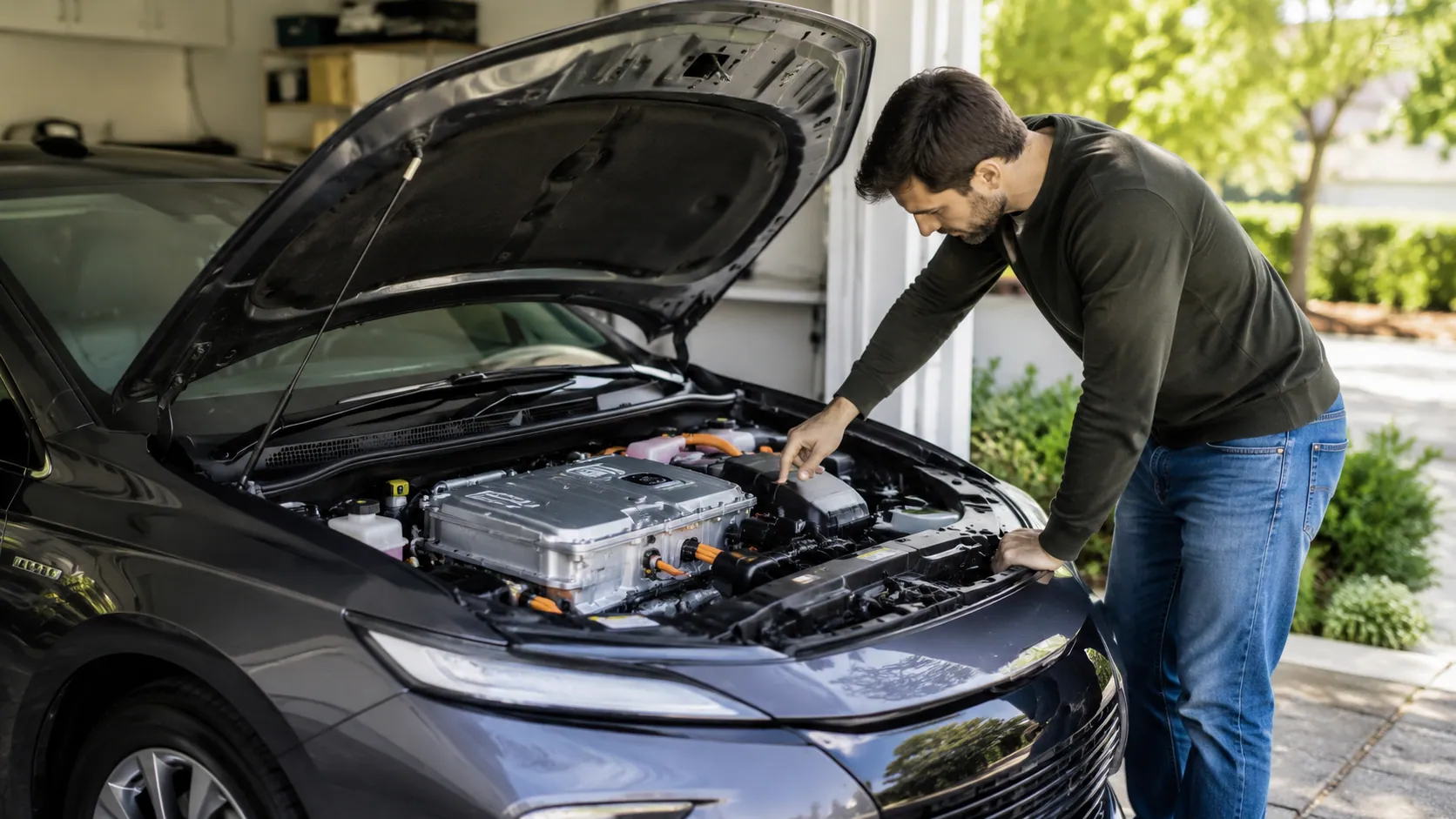
How to extend the life of a hybrid car battery starts with understanding how your driving habits, temperature control, maintenance routine, and battery health all work together. A hybrid battery is built to last for many years, but it is not something you can completely ignore. Like tires, brakes, engine oil, and coolant, the hybrid battery system performs best when the whole vehicle is cared for properly.
Most hybrid owners want the same thing: better fuel economy, fewer warning lights, lower repair bills, and a battery that lasts as long as possible. The good news is that you do not need to be a technician to protect your hybrid battery life. Small habits like driving smoothly, keeping vents clear, avoiding extreme heat, and getting regular checks can help improve hybrid battery longevity and reduce the risk of expensive hybrid battery replacement cost later.
This guide explains how to make a hybrid battery last longer in a simple, practical way.
How Long Does a Hybrid Car Battery Usually Last?
A common question is, how long does a hybrid battery last? In many vehicles, a hybrid car battery lifespan is often estimated around 8–15 years or roughly 100,000 to 150,000 miles, depending on the model, climate, maintenance history, and driving style. Some batteries fail earlier, while others last much longer.
Popular models like the Toyota Prius, Toyota Camry Hybrid, Honda Accord Hybrid, Honda Insight, Lexus RX 450h, and Ford Fusion Hybrid have built strong reputations for long battery life when maintained well. However, no battery lasts forever. Over time, every high-voltage battery experiences some level of battery degradation, meaning it slowly loses part of its original storage capacity.
The type of battery also matters. Many older hybrids use nickel-metal hydride batteries, also called NiMH, while newer hybrids and plug-in hybrids often use lithium-ion batteries. Both types can last a long time, but both are affected by heat, deep discharge, poor cooling, and neglect.
Age and mileage should be considered together. A car with high mileage but regular use and good maintenance may have a healthier battery than a low-mileage hybrid that sat unused for months in a hot climate. That is why battery health checks, service records, and driving history matter when judging real battery condition.
What Affects Hybrid Battery Life the Most?
Several factors influence hybrid battery lifespan, but the biggest ones are temperature, driving habits, battery cooling, state of charge, and regular maintenance. A hybrid battery is not just a simple power source. It is part of a smart hybrid system that constantly balances power between the electric motor and the gasoline engine.
Extreme heat is one of the most damaging conditions for a hybrid vehicle battery. Heat speeds up chemical aging inside the battery cells and can increase the battery degradation rate. Cold weather can also reduce temporary performance and fuel economy, although heat is usually the bigger long-term threat.
Driving style also matters. Rapid acceleration, hard braking, and aggressive driving can place more stress on the battery and powertrain. On the other hand, smooth acceleration, gentle braking, and steady speeds help reduce unnecessary battery strain.
Maintenance is another major factor. A dirty battery cooling fan, clogged battery fan filter, poor tire pressure, old fluids, or a weak 12-volt battery can affect how well the hybrid system performs. The high-voltage battery may be the expensive part, but the entire vehicle supports its performance.
In simple terms, a hybrid battery lasts longer when the car is driven regularly, cooled properly, protected from extreme temperatures, and serviced before small problems become expensive repairs.
Drive Smoothly and Use Regenerative Braking Properly
One of the easiest ways to improve hybrid battery health is to drive smoothly. Hybrid cars are designed to manage energy efficiently, but aggressive driving forces the system to work harder. Fast starts, sudden acceleration, and heavy braking can increase battery stress and reduce fuel economy.
Try to accelerate gradually instead of flooring the pedal. Let the electric motor and internal combustion engine work together naturally. Many hybrids also have Eco mode, which softens throttle response and encourages smoother driving. It will not magically double your battery life, but it can help you avoid habits that waste energy.
Regenerative braking is another important part of hybrid driving. Instead of wasting all braking energy as heat, the hybrid system captures some of that kinetic energy and sends it back into the battery as useful energy. This is one reason hybrids often perform well in city driving and stop-and-go traffic.
To use regenerative braking properly, look ahead and brake early. If you wait until the last second and brake hard, the car may rely more on friction brakes instead of energy recovery. Gentle braking gives the system more time to capture energy and create small “micro-charges” for the battery.
A good rule is simple: drive like you are trying to keep a glass of water from spilling. Smooth inputs protect the battery, improve comfort, and help maintain better fuel efficiency.
Keep the Battery Charge in a Healthy Range
The state of charge means how full the battery is at a given moment. In regular hybrids, the car’s battery management system usually controls this automatically. The driver does not normally plug in the vehicle or manually manage the high-voltage battery.
In plug-in hybrids, also called PHEVs, owners have more control over charging behavior. This is where the common 20% and 80% guideline becomes useful. Many battery care guides suggest avoiding repeated deep discharge and avoiding constant 100% charge when it is not needed. Staying within a moderate charge range can reduce stress on lithium-ion batteries over time.
For regular HEV models, you usually do not need to worry if the dashboard battery bars move up and down. That is normal. The hybrid system is designed to charge and discharge the battery within a safe operating range. However, if the battery charge drops unusually fast, swings wildly, or refuses to hold a charge, that may be a sign of battery aging or weak cells.
Avoid forcing EV-only driving when the car is not designed for it. Some drivers try to keep the car in electric mode as much as possible, but the hybrid system is usually smarter than manual guessing. Let the vehicle decide when to use the battery and when to use the engine.
Healthy charge behavior is not about keeping the battery full all the time. It is about avoiding extremes and letting the hybrid system do its job.
State of Charge vs State of Health: What Owners Should Know
Many drivers confuse state of charge with state of health. They sound similar, but they mean different things.
State of charge, or SOC, is the current battery level. It tells you whether the battery is partly charged, nearly full, or low at that moment. This is what you usually see on your dashboard display.
State of health, or SOH, describes the long-term condition of the battery. A battery may show charge on the dashboard but still have reduced capacity because of age, heat damage, weak modules, or internal resistance. That is why a battery can appear to charge and discharge normally but still deliver poor fuel economy or weak performance.
A professional battery health check can look beyond the dashboard. Technicians may check battery capacity percentage, voltage imbalance, cell voltage difference, and battery internal resistance. These values help show whether the battery is aging evenly or whether certain modules are becoming weak.
For everyday drivers, the key point is simple: a full-looking battery icon does not always mean a healthy battery. If you notice reduced MPG, warning lights, or sudden charge swings, a proper diagnostic test is more useful than guessing.
Protect the Battery from Extreme Heat and Cold
Temperature control is one of the most important parts of hybrid battery maintenance. Batteries do not like extreme conditions. Extreme heat can speed up chemical degradation, while extreme cold can temporarily reduce power output and fuel economy.
In hot climates, avoid leaving your hybrid parked in direct sunlight for long periods when better options are available. Garage parking, shaded parking, sunshades, and reflective car covers can help reduce cabin heat. This matters because many hybrid battery cooling systems pull air from inside the cabin. If the cabin is extremely hot, the battery cooling system has to work harder.
In cold climates, expect fuel economy to drop during winter. The engine may run more often to warm the cabin and maintain system temperature. This does not automatically mean your battery is failing. However, if cold weather reveals weak starting behavior or electrical problems, the 12-volt battery may need attention.
Humidity and wet conditions also matter. Moisture can contribute to corrosion, especially around electrical connections, vents, and neglected areas. In monsoon regions or flood-prone areas, water damage is a serious risk for hybrid vehicles because of their high-voltage components.
Whether you drive in Pakistan, Canada, the UK, the United States, Australia, or another region, climate-specific care matters. In hot areas, focus on shade and cooling. In cold areas, focus on regular driving and battery checks. In humid areas, watch for moisture, corrosion, and blocked vents.
Keep the Hybrid Battery Cooling System Clean
A hybrid battery produces heat during normal use, so it needs proper airflow. Many hybrids use a battery cooling fan, vents, ducts, or a battery cooling intake filter to move air around the battery pack. When this system gets dirty or blocked, the battery can run hotter than it should.
This is especially important if you carry pets. Pet hair, dust, lint, and debris can collect around rear-seat vents, cargo-area vents, and fan filters. Over time, poor airflow can cause the battery fan to work harder and may contribute to overheating.
Do not block hybrid battery vents with bags, seat covers, blankets, or cargo. In many vehicles, vents are located near the rear seat or side panels. If airflow is restricted, the cooling system cannot protect the battery properly.
You can safely keep visible vents clear and vacuum around accessible areas, but avoid opening high-voltage battery components yourself. Hybrid batteries can be dangerous without proper training. If the fan is loud, the cabin smells dusty, or the vehicle has high mileage, ask a qualified hybrid technician to inspect and clean the battery fan or filter.
Clean airflow is one of the most overlooked ways to extend hybrid battery life. It is simple, low-cost, and especially important in dusty climates, hot regions, and vehicles used by families or pet owners.
Follow the Manufacturer’s Maintenance Schedule
A hybrid battery does not work alone. It depends on the entire vehicle being in good condition. That is why following the owner’s manual and manufacturer service schedule is one of the smartest ways to protect hybrid battery performance.
Regular maintenance includes oil changes, fluid checks, tire rotations, air filter replacement, brake inspections, and cooling system checks. In hybrids, you may also need to pay attention to inverter coolant, transmission fluid, brake fluid, and other hybrid-specific items depending on the model.
Correct tire pressure is more important than many drivers realize. Underinflated tires increase rolling resistance, which makes the vehicle work harder. That can reduce fuel economy and increase load on the hybrid system. Poor wheel alignment can have a similar effect.
The 12-volt battery should also be checked. Many hybrid problems start with a weak auxiliary battery, not the high-voltage battery. A failing 12-volt battery can cause warning messages, starting problems, and confusing electronic behavior.
For older hybrids, an annual inspection or battery health check is a smart idea. Some service centers also recommend checking cooling fans and filters around certain mileage points, such as 30,000 miles, especially in dusty or pet-heavy use. The exact interval depends on your vehicle, so always follow the service guide for your model.
Drive Your Hybrid Regularly, Especially If It Sits for Long Periods
Hybrid cars are meant to be driven. Letting one sit unused for weeks or months can create problems, especially with the 12-volt battery. The high-voltage hybrid battery is usually well managed, but long-term storage can still affect battery balance, charge level, and overall vehicle condition.
If you travel often, work from home, or own a hybrid as a second car, try to drive it regularly. A short start-up in the driveway is not always enough. A real drive allows the engine, battery, brakes, fluids, and charging system to operate properly.
This is also why a low-mileage old hybrid is not always better than a higher-mileage car. A 10-year-old hybrid with very low mileage may have spent long periods sitting unused. Time, temperature, and inactivity can still contribute to battery degradation.
Before storing a hybrid for a long time, check the owner’s manual. Some manufacturers provide specific storage instructions. In general, it is wise to park in a cool, dry place, avoid flood-prone areas, maintain tire pressure, and make sure the 12-volt battery is healthy.
A hybrid battery can last a long time, but regular use helps keep the whole system active.
Warning Signs Your Hybrid Battery Needs Attention
A weak hybrid battery does not always fail suddenly. It often gives warning signs first. The most common sign is reduced fuel economy. If your car normally gets strong MPG but suddenly uses more fuel without a clear reason, the battery may not be supporting the engine as well as before.
Another sign is unusual charge behavior. If the dashboard battery level rises and falls quickly, drains faster than normal, or struggles to hold a charge, you may have weak cells or module imbalance.
You may also notice the gasoline engine running more often, even during low-speed driving. Acceleration may feel sluggish, and the car may rely less on electric power. A loud battery cooling fan can also be a warning sign because the system may be trying to control excess heat.
Dashboard warnings should not be ignored. Messages like check hybrid system, a check engine light, or model-specific warnings such as the Toyota Prius Red Triangle Warning Light need proper diagnosis. These warnings do not always mean the battery needs full replacement, but they do mean the car needs attention.
The earlier you respond to symptoms, the better. A simple battery health test may reveal whether the issue is the hybrid battery, 12-volt battery, cooling system, sensor, or another part of the vehicle.
Get Battery Diagnostics Before Problems Become Expensive
Guessing is expensive when it comes to hybrid battery problems. A proper hybrid battery diagnostic test can show what is really happening inside the battery system.
A technician may use scan tools, diagnostic software, load testing, or an OBD2 hybrid battery scan to check battery performance. Some owners use apps such as Dr. Prius for basic insight on certain Toyota models, but professional testing is still better when warning lights or drivability issues appear.
Diagnostics can identify weak cells, module imbalance, high internal resistance, cooling fan problems, or 12-volt battery issues. This matters because not every hybrid warning means the high-voltage battery needs full replacement.
For example, a driver may think the hybrid battery is dying because the MPG has dropped. But the real problem could be underinflated tires, a clogged air filter, a dirty cooling fan, old fluids, or a weak 12-volt battery. A proper inspection prevents unnecessary spending.
Battery diagnostics are especially useful for older vehicles, high-mileage hybrids, used-car purchases, or cars driven in extreme heat. Spending a little on testing can help avoid a much larger repair bill later.
Hybrid Battery Repair vs Replacement: How to Reduce Costs
The phrase hybrid battery replacement cost scares many owners, and for good reason. Depending on the model, region, labor, and battery type, replacement can cost thousands. Some estimates range from around £1,000 to £6,000 or $2,000 to $9,000, depending on whether the battery is new, refurbished, reconditioned, or repaired.
Before replacing the battery, check your battery warranty or manufacturer warranty. Some hybrid battery warranties last many years, and used vehicles may still have coverage depending on age, mileage, and location.
If the battery is out of warranty, you may have several options. A new hybrid battery is usually the most reliable but also the most expensive. A refurbished hybrid battery or reconditioned battery may cost less, but quality varies. Module replacement can fix certain problems, but it may not be ideal if the rest of the battery is also old and weak.
The right choice depends on the vehicle’s age, mileage, resale value, and your long-term plans. Reconditioning may make sense for a budget repair, while full replacement may be better for a car you plan to keep for years.
The best cost-saving strategy is prevention: maintain cooling, drive smoothly, protect the battery from heat, and diagnose problems early.
Used Hybrid Battery Inspection Checklist Before Buying
Buying a used hybrid can be a smart financial decision, but the battery deserves careful attention. A clean exterior and low odometer reading do not always prove good hybrid battery health.
Before buying, ask for service history. Look for regular maintenance, battery checks, cooling fan cleaning, and any previous warning light repairs. Check the age and mileage together. A high-mileage hybrid with strong records may be a better choice than an old, low-mileage car that sat unused.
During a test drive, watch the battery display. Some movement is normal, but rapid charge swings can be a warning sign. Pay attention to fuel economy, engine cycling, acceleration, and fan noise. A loud fan from the rear area may suggest the battery is heating up or the cooling system is dirty.
Ask for a pre-purchase hybrid inspection from a hybrid specialist. A battery health report, OBD2 scan, or professional diagnostic test can reveal problems that a normal test drive may miss.
This is especially important in used imported hybrid markets, where vehicles may have unknown maintenance history. Models like the Toyota Prius, Honda Insight, Lexus hybrids, and other imports can be reliable, but battery condition should always be verified before purchase.
What Kills a Hybrid Battery Fastest?
The biggest battery killers are usually preventable. Extreme heat, blocked cooling vents, aggressive driving, poor maintenance, water damage, and long periods of inactivity can all shorten hybrid battery life.
Heat is one of the worst enemies because it speeds up chemical aging. Parking in direct sunlight every day, especially in hot climates, can make the battery cooling system work harder. Blocked vents make the problem worse.
Aggressive driving also adds stress. Rapid acceleration, hard braking, and constant heavy load can reduce efficiency and increase battery cycling. Poor maintenance adds another layer of risk. Dirty filters, old fluids, bad tire pressure, and a weak 12-volt battery can all hurt the overall hybrid system.
Water damage is another serious issue. Flood water, moisture, and corrosion can affect high-voltage components and electrical connections. If a hybrid has been exposed to deep water, it should be inspected by a qualified technician before being driven.
Ignoring warning lights is also a common mistake. Small issues are often cheaper to fix early. Waiting until the vehicle loses power or refuses to operate can turn a manageable repair into an expensive one.
Hybrid Battery Myths That Can Cost You Money
Some hybrid battery myths sound harmless, but they can lead to bad decisions.
One myth is that the battery should always be fully charged. In reality, hybrid systems are designed to manage charge automatically, and plug-in hybrid batteries often prefer avoiding constant 100% charge when it is not needed.
Another myth is that low mileage always means a healthy battery. Age, heat, and sitting unused can still affect a battery. A low-mileage old hybrid should still be inspected.
Some drivers believe they should use EV mode as much as possible. That is not always best. The hybrid system is designed to balance electric power and engine power efficiently. Forcing EV mode too often may not improve long-term battery health.
Another costly myth is that every battery warning means full replacement. Sometimes the issue is a cooling fan, weak 12-volt battery, sensor, wiring problem, or individual module. Diagnostics should come before replacement decisions.
Finally, some owners think the 12-volt battery does not matter. It does. A weak 12-volt battery can create confusing problems and warning messages, even when the high-voltage battery is still usable.
Monthly Hybrid Battery Maintenance Checklist
Use this simple checklist to support hybrid battery maintenance and long-term performance.
| Maintenance Habit | Why It Helps |
| Drive the hybrid regularly | Keeps systems active and reduces storage-related issues |
| Keep battery vents clear | Supports proper airflow and cooling |
| Watch fuel economy | Sudden MPG drops can signal early problems |
| Check tire pressure | Reduces rolling resistance and improves efficiency |
| Avoid aggressive driving | Reduces battery strain and improves fuel economy |
| Park in shade or garage | Protects the battery from extreme heat |
| Respond to warning lights quickly | Prevents small issues from becoming expensive |
| Follow the service schedule | Keeps the whole hybrid system healthy |
| Schedule diagnostics when needed | Helps detect weak cells or cooling problems early |
You do not need to obsess over the battery every day. Just build a routine. Check vents, drive smoothly, maintain the vehicle, and take warning signs seriously.
FAQ About Extending Hybrid Battery Life
Can a hybrid battery last 20 years?
Some hybrid batteries may last a very long time, but 20 years is not something every owner should expect. Many batteries are commonly discussed in the 8–15 years range, though real life depends on climate, mileage, maintenance, and battery chemistry.
Does Eco mode extend hybrid battery life?
Eco mode can help by encouraging smoother acceleration and more efficient driving. It does not directly “heal” a battery, but it can reduce aggressive driving habits that increase battery strain.
Is it bad to let a hybrid sit unused?
Yes, long periods of inactivity can cause problems, especially with the 12-volt battery. The high-voltage battery is managed by the vehicle, but hybrids generally stay healthier when driven regularly.
Does regenerative braking wear out the battery?
Normal regenerative braking is part of how hybrids are designed to work. Gentle braking helps recover energy and improve fuel economy. The battery management system controls energy flow to protect the battery.
Should I repair or replace my hybrid battery?
It depends on battery condition, age, mileage, warranty, and vehicle value. A weak module may be repairable, but an old, heavily degraded battery may need replacement. Always get diagnostics first.
Can I clean hybrid battery vents myself?
You can keep visible vents clear of dust, bags, and pet hair. However, do not open high-voltage battery components yourself. Fan or filter cleaning beyond basic access should be done by a trained technician.
Conclusion
Learning how to extend the life of a hybrid car battery is mostly about small, consistent habits. Drive smoothly, use regenerative braking wisely, protect the battery from extreme temperatures, keep the battery cooling system clean, and follow the manufacturer’s maintenance schedule.
A hybrid battery is expensive, but it is also built to last when treated properly. Watch for warning lights, reduced MPG, loud fan noise, and unusual charge behavior. Get a battery health check before guessing or replacing parts.