

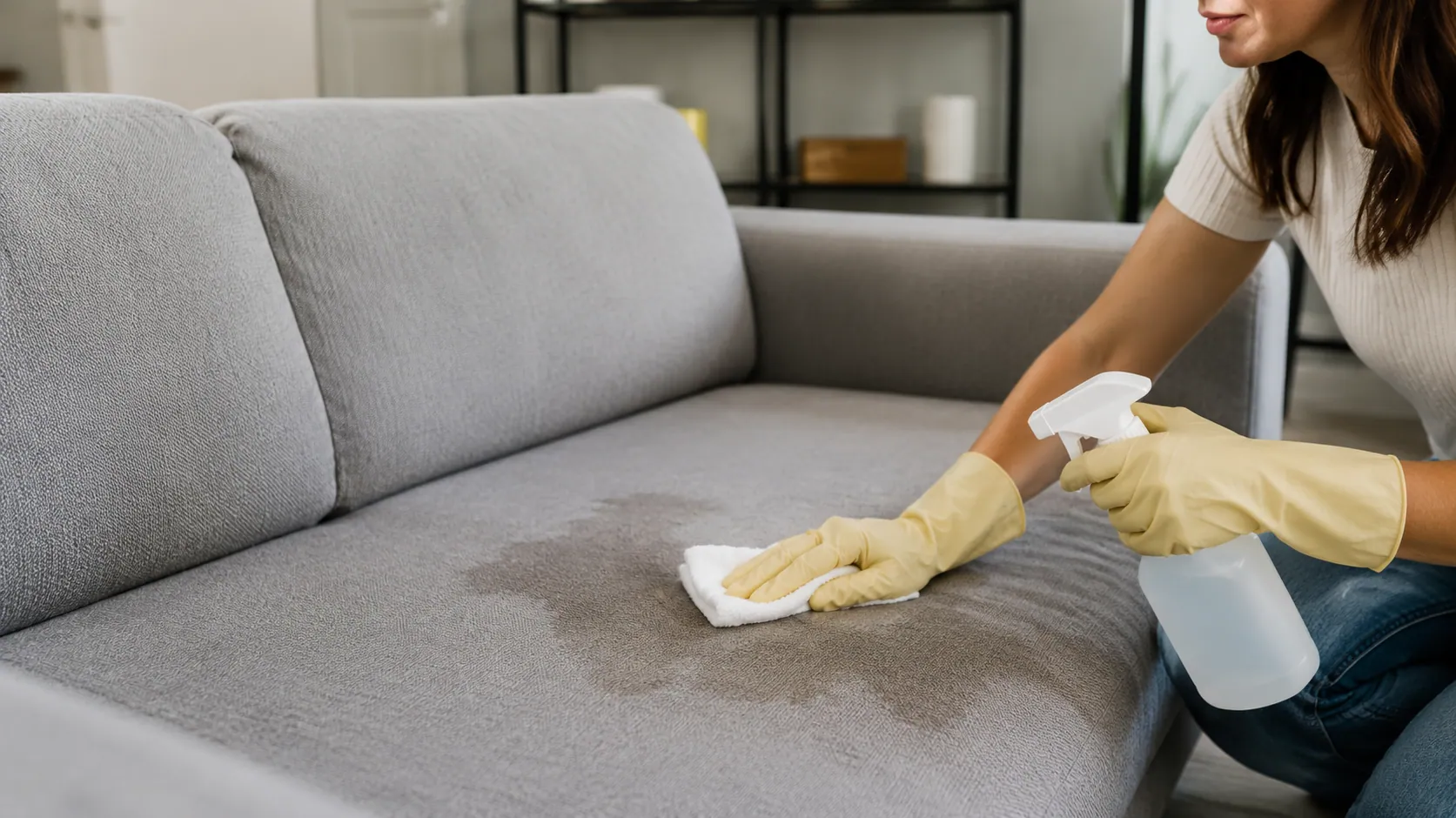
How to get pee smell out of the couch is one of those cleaning problems that feels urgent because urine odor can spread quickly through fabric, cushions, foam padding, and upholstery fibers. Whether the accident came from a dog, cat, toddler, or an adult dealing with urinary incontinence, the goal is the same: remove the smell at the source, not just cover it with fragrance.
The biggest mistake people make is cleaning only the surface. Urine contains urea, uric acid, ammonia, bacteria, and organic compounds that can soak deeper into the couch. That is why a couch may still smell like pee even after it looks clean. The safest solution is to blot, check the fabric care label, use the right cleaner, dry the couch completely, and repeat the treatment if needed.
Quick Answer: How to Remove Pee Smell From a Couch
To remove urine smell from couch fabric, start by blotting as much liquid as possible with paper towels or a microfiber cloth. Do not scrub, because rubbing can push urine deeper into the couch cushions and foam padding.
Next, check the couch’s cleaning code. If the fabric is water-safe, apply either an enzymatic cleaner or a light vinegar-water solution. For pet urine, especially dog urine on couch or cat urine on couch, an enzyme cleaner is usually the best choice because it helps break down urine molecules, urine proteins, and odor-causing organic matter.
After treating the area, sprinkle baking soda over the damp spot and let it sit for 8–12 hours or overnight. Then vacuum thoroughly with an upholstery attachment. Finally, let the couch air dry completely, ideally for 24–48 hours, using fans, open windows, or a dehumidifier if needed.
Why Urine Smell Stays in Couch Fabric and Cushions
If you are wondering why does my couch still smell like pee after cleaning, the answer usually comes down to depth. Urine rarely stays only on the surface. It can move through fabric, seams, cushion covers, inner stuffing, and even foam cushions.
Urine contains urea, which breaks down and can create an ammonia smell. It also contains uric acid and uric salts, which can cling to textile fibers and reactivate when exposed to moisture or humidity. This is why an old urine stain may smell worse on a humid day or after you clean it with too much water.
Basic surface cleaning may remove the visible pee stains on couch fabric, but the odor can remain trapped in upholstery and padding. That is why many regular cleaners, perfumes, and air fresheners fail. They may mask the smell for a few hours, but they do not fully neutralize odor or remove odor at the source.
For mild fresh accidents, white vinegar and baking soda can help. For dried urine, pet urine, or strong odor, an enzymatic cleaner is usually more effective because it targets the organic compounds behind the smell.
Check the Couch Cleaning Code Before You Start
Before using water, vinegar, peroxide, or an upholstery cleaner, check the couch’s fabric care label. Most couches have a small tag under the cushions or on the frame. This tag may show a cleaning code that tells you what type of cleaner is safe.
| Cleaning Code | Meaning | What It Means for Urine Cleaning |
| W cleaning code | Water-based cleaner allowed | You can usually use water-based enzyme cleaner or vinegar solution |
| S cleaning code | Solvent-based cleaner only | Avoid water-heavy DIY cleaning; consider professional help |
| WS cleaning code | Water or solvent cleaner allowed | Spot test first, then use a safe cleaner |
| X cleaning code | Vacuum only | Do not wet clean; call a professional upholstery cleaner |
Always do a spot test or patch test in an inconspicuous area before treating the main stain. This matters especially for microfiber, velvet, suede, leather, delicate fabrics, and dark-colored upholstery. A cleaner that works beautifully on one fabric couch may cause discoloration, water rings, or fabric damage on another.
What You Need to Clean Pee Smell Out of a Couch
You do not need a huge cleaning kit, but you do need the right tools. A strong couch urine smell removal method usually combines absorption, odor treatment, and thorough drying.
| Item | Best Use |
| Paper towels or microfiber cloth | Blotting fresh urine |
| Enzymatic cleaner | Breaking down pet urine and dried urine odor |
| White vinegar | Mild odor neutralizing on water-safe fabric |
| Baking soda | Absorbing remaining odor and moisture |
| Spray bottle | Applying cleaner evenly |
| Vacuum cleaner with upholstery attachment | Removing dried baking soda |
| UV blacklight flashlight | Finding old urine spots |
| Fan or dehumidifier | Helping the couch dry fully |
For stubborn pet urine on couch problems, choose a cleaner labeled as a pet urine odor remover or urine odor eliminator. For human urine, toddler accidents, or incontinence, a gentle enzyme-based upholstery cleaner can still be useful.
How to Get Fresh Pee Smell Out of the Couch
Fresh urine is easier to remove than dried urine, so act quickly. The faster you absorb the liquid, the less likely it is to reach the couch padding.
First, blot the spot with white paper towels, a dry towel, or a clean microfiber cloth. Press gently and keep switching to dry sections of the towel. Remember: blot, don’t rub. Scrubbing spreads urine and can push it deeper into the fibers.
Next, apply a cleaner. If you are using a DIY method on water-safe upholstery, mix a 1:1 mix of white vinegar and water in a spray bottle. Lightly mist the affected area. Do not soak the couch. Let it sit for 10–15 minutes, then blot again.
If the accident came from a dog or cat, an enzyme cleaner is often better than vinegar because pet urine can leave stronger odor markers. Apply the cleaner according to the product directions and give it enough contact time. Enzymes need time to work.
After blotting, sprinkle a generous layer of baking soda over the area. Baking soda acts as a natural deodorizer and helps absorb leftover moisture. Leave it for 8–12 hours or overnight, then vacuum thoroughly.
Finally, dry the couch completely with fans, open windows, and good airflow. Avoid heat from hair dryers, because heat can damage fabric and may set odors.
How to Get Dried Pee Smell Out of Couch Cushions
Dried urine is harder because the liquid has already moved into the fabric and may have formed uric-acid crystals or uric salts. If you need to know how to get urine smell out of couch after it has dried, the key is to treat the hidden source, not just the surface.
Start by locating the stain. Sometimes dried urine is invisible, especially on dark upholstery. A UV blacklight flashlight or black light urine detector can help reveal old urine spots. Mark the area lightly with masking tape so you know where to clean.
Next, apply a bio-enzymatic cleaner or enzyme-based cleaner. Lightly dampen the affected area according to the product instructions. The goal is to let the cleaner reach the same depth as the urine without over-wetting the couch. Let it sit long enough to break down urine molecules, digest proteins, and remove odor at the source. Some products need 30–60 minutes, while others work best when left longer.
For extra odor control, blot the area after treatment, then apply baking soda once the fabric is slightly damp, not soaking wet. Let it sit overnight, then vacuum.
If the smell remains, repeat the enzyme treatment. Old urine stains often need more than one round because the odor may be trapped in foam padding, seams, or inner cushion layers.
What If Pee Soaked Into Couch Foam or Padding?
If pee soaked into couch foam, surface cleaning will not be enough. This is one of the biggest reasons people say, “I cleaned it, but the urine smell in couch cushions keeps coming back.”
If your couch has removable cushion covers, unzip them and check whether the urine reached the foam insert. Wash the cover only if the care label allows it. For the foam, apply an enzyme cleaner carefully and evenly. You want the cleaner to reach the urine, but you do not want to flood the foam.
After treatment, press the foam with towels to remove excess moisture. Then stand the cushion upright and let it dry with airflow on both sides. Foam can take 24–48 hours to dry fully, sometimes longer in humid rooms. A fan or dehumidifier can help prevent a mildew smell.
For non-removable cushions, treat the area from the surface and give the enzyme cleaner time to penetrate. If the couch still smells after repeated cleaning, the urine may be deep in the sofa padding. In severe cases, you may need professional upholstery cleaning or even replacement foam.
If the foam is heavily soaked, has a sour smell, or stays damp too long, replacing the cushion insert may be cheaper and healthier than trying to save it.
Enzyme Cleaner vs. Vinegar vs. Baking Soda
Many people ask what works best: enzyme cleaner vs vinegar for urine smell, or baking soda vs enzyme cleaner for pee smell. The answer depends on how deep and old the urine is.
| Method | Best For | Limits |
| White vinegar | Mild fresh urine odor on water-safe fabric | May not fully break down pet urine compounds |
| Baking soda | Absorbing surface odor and moisture | Does not remove deep urine by itself |
| Enzymatic cleaner | Pet urine, dried urine, strong odor | Needs enough contact time to work |
| Steam cleaning | General deep cleaning | Heat may not be ideal before enzyme treatment |
| Professional cleaning | Severe contamination or delicate fabrics | Costs more but may be necessary |
Vinegar can help neutralize mild odor, especially when mixed with water. Baking soda can absorb leftover smell. But if the odor comes from uric acid, urine proteins, and bacteria deep in the fabric, an enzymatic cleaner is usually the strongest option.
Hydrogen peroxide can also help with some stains, but use caution. Even 3% hydrogen peroxide can bleach or discolor certain upholstery. Always spot test before using it on visible couch fabric.
How to Clean Different Couch Materials Safely
Different fabrics react differently to urine cleaners. A fabric couch with a water-safe label may handle vinegar or enzyme cleaner well, while suede or velvet may need professional care.
For a standard fabric or polyester couch, blot first, use an enzyme cleaner or vinegar solution, then dry fully. Avoid over-wetting because too much liquid can create water rings.
For microfiber couch urine smell, check the care code. Some microfiber couches are water-safe, while others need solvent-based cleaning. Use a light touch and avoid soaking the fabric.
For a leather couch pee smell, wipe the urine quickly with a dry cloth. Use a leather-safe cleaner rather than soaking the surface with vinegar or water. After cleaning, apply a leather conditioner if recommended by the manufacturer.
For velvet, suede, antique upholstery, or dry-clean-only fabric, do not experiment with strong DIY mixtures. These materials can stain, flatten, or discolor easily. In those cases, a professional upholstery cleaner is the safest choice.
What Not to Use on Couch Urine Smell
Some products can make the problem worse. Avoid ammonia-based products because urine already has an ammonia-like odor, and strong ammonia smells may confuse pets or encourage repeat accidents.
Avoid bleach on upholstery unless a manufacturer specifically says it is safe. Bleach can damage fabric, remove color, and create harsh fumes. Also avoid heavy fragrance sprays. Air fresheners, perfumes, and fabric sprays may cover the smell briefly, but they do not remove uric salts or bacteria.
Be careful with hydrogen peroxide, especially on dark or delicate fabric. It can help with stains, but it may also cause bleaching. Never apply it without a patch test.
Avoid using too much water. Over-wetting fabric can push urine deeper into the cushion and may cause mildew smell after cleaning couch urine. Also avoid using high heat from a hair dryer. Heat can damage upholstery and may make odors harder to remove.
How to Dry the Couch So the Smell Does Not Come Back
Drying is just as important as cleaning. If the couch stays damp, odor can return and moisture may create a musty smell. This is especially common when urine has reached foam cushions or deep padding.
After cleaning, press the area with dry towels to absorb as much moisture as possible. Then improve airflow. Open windows, turn on a fan, and lift removable cushions upright so air can reach both sides. In humid climates, use a dehumidifier.
Most couch fabric may feel dry on the surface before the inside is fully dry. For deeper cleaning, allow 24–48 hours if possible. Avoid sitting on the damp area during this time.
If the couch smells worse after cleaning, moisture may have reactivated old urine compounds. This does not always mean the cleaning failed. It may mean the urine was deeper than expected and needs another enzyme treatment plus better drying.
Dog, Cat, Toddler, and Human Urine: What Changes?
The source of the urine matters because different accidents create different cleaning and prevention needs.
For dog urine on couch, an enzyme cleaner is important because dogs may return to the same spot if odor remains. Pheromones, habit, stress, anxiety, or potty training issues can all play a role. If a trained dog suddenly starts peeing indoors, consider a vet check for urinary tract infection, arthritis, or incontinence.
For cat urine on couch, the odor is often stronger and more ammonia-like. Cat urine may also involve urine marking or litter box issues. Clean the spot deeply and address the behavior, not just the smell.
For toddler accidents, the smell may be milder, but urine can still soak quickly into couch cushions. Use a gentle cleaner, rinse lightly if safe, and dry well.
For adult or elderly urinary incontinence, prevention is key. Waterproof furniture covers, washable sofa covers, bed pads, booster pads, and high-quality incontinence supplies can protect the couch from repeated accidents.
What If the Couch Still Smells Like Pee After Cleaning?
If the couch still smells, do not panic. It usually means one of five things happened: the urine went deeper than the cleaner, the stain was larger than expected, the couch did not dry fully, the wrong cleaner was used, or the treatment did not sit long enough.
Use a UV blacklight flashlight to check for hidden urine spots. The original stain may have spread under the cushion or along a seam. Treat the full affected area, not just the visible spot.
If vinegar and baking soda did not work, switch to an enzyme-based cleaner. If you already used an enzyme cleaner, repeat the process and allow longer dwell time. Dried urine often needs more than one treatment.
If the smell comes back when the room is humid, the issue may be humidity reactivation of uric salts. In that case, focus on deep enzyme treatment and complete drying.
If the couch has a mildew smell, the problem may now be moisture as well as urine. Dry the cushion thoroughly and consider professional help.
When to Call a Professional Upholstery Cleaner
DIY cleaning works for many small accidents, but not every urine problem can be solved at home. Call a professional upholstery cleaner if the urine has soaked deeply into the couch, the stain is old, the couch is made of suede, velvet, leather, or dry-clean-only fabric, or the odor remains after repeated enzyme treatments.
Professional cleaners may use stronger extraction tools, moisture detection tools, and upholstery-safe products that reach deeper than surface cleaning. This is especially useful for repeated pet accidents, severe contamination, or expensive furniture.
Professional cleaning is also smart if the couch belongs to a household with babies, elderly adults, allergy-sensitive family members, or pets, because strong DIY chemical mixtures can sometimes create more problems than they solve.
How to Prevent Future Pee Smell on the Couch
Once the couch is clean, prevention matters. For pets, use positive reinforcement, consistent potty breaks, training pads, and vet care if accidents suddenly begin. A dog or cat that keeps peeing on the couch may be dealing with stress, marking behavior, litter box problems, or a health issue.
For furniture protection, use a waterproof pet couch cover, washable slipcovers, or stain-resistant covers. These are much easier to clean than foam cushions. If accidents are related to incontinence, use waterproof furniture covers, bed pads, adult diapers, or booster pads as needed.
You can also keep a pet-safe enzymatic cleaner nearby so fresh accidents are treated immediately. The faster you clean, the less likely urine is to soak into padding and create long-term odor.
FAQs About Getting Pee Smell Out of a Couch
Does vinegar remove pee smell from a couch?
Yes, white vinegar can help with mild urine odor on water-safe upholstery. A common option is a 1:1 mix of white vinegar and water, lightly sprayed onto the area. However, vinegar may not fully remove deep pet urine odor, especially if urine has dried inside the foam.
Is baking soda enough for urine odor?
Baking soda can absorb surface odor and moisture, but it is usually not enough for deep urine smell. It works best after blotting and cleaning. Let it sit for 8–12 hours or overnight, then vacuum thoroughly.
Can I use hydrogen peroxide on couch fabric?
You can use 3% hydrogen peroxide on some fabrics, but always spot test first. Hydrogen peroxide may bleach dark fabrics or damage delicate upholstery. Avoid using it on leather, suede, velvet, or dry-clean-only fabrics unless the manufacturer says it is safe.
Can steam cleaning remove urine smell?
Steam cleaning may help with general odor and dirt, but for urine, use caution. Heat can sometimes set odors if the urine has not been treated first. For pet urine or dried urine, use an enzymatic cleaner before considering steam cleaning.
Will urine smell eventually go away on its own?
Usually, no. The smell may fade temporarily, but uric acid, uric salts, and bacteria can remain in the fabric or foam. Humidity can reactivate the odor later.
Should I replace couch cushions if pee soaked into the foam?
Not always. Try an enzyme cleaner first and dry the foam completely. But if the foam is heavily soaked, smells sour, or still smells after repeated cleaning, replacing the foam may be the best solution.
Conclusion
Learning how to get pee smell out of the couch is mostly about cleaning deeply enough without damaging the fabric. For fresh urine, blot quickly, use a safe cleaner, apply baking soda, and dry the couch fully. For dried urine, pet urine, or odor trapped in foam padding, an enzymatic cleaner is usually the best option because it helps remove odor at the source.
Always check the couch cleaning code, spot test first, and avoid bleach, ammonia, heavy fragrance, and excess water. If the smell stays after repeated cleaning, professional upholstery cleaning or cushion foam replacement may be necessary.
Disclaimer: This article is for general informational and household cleaning purposes only. Cleaning methods for urine odor can vary depending on couch material, fabric care instructions, urine source, stain age, cushion depth, and cleaning products used. Always check the upholstery cleaning code, spot test cleaners first, and seek professional upholstery cleaning for delicate fabrics, severe contamination, or persistent odor problems.