

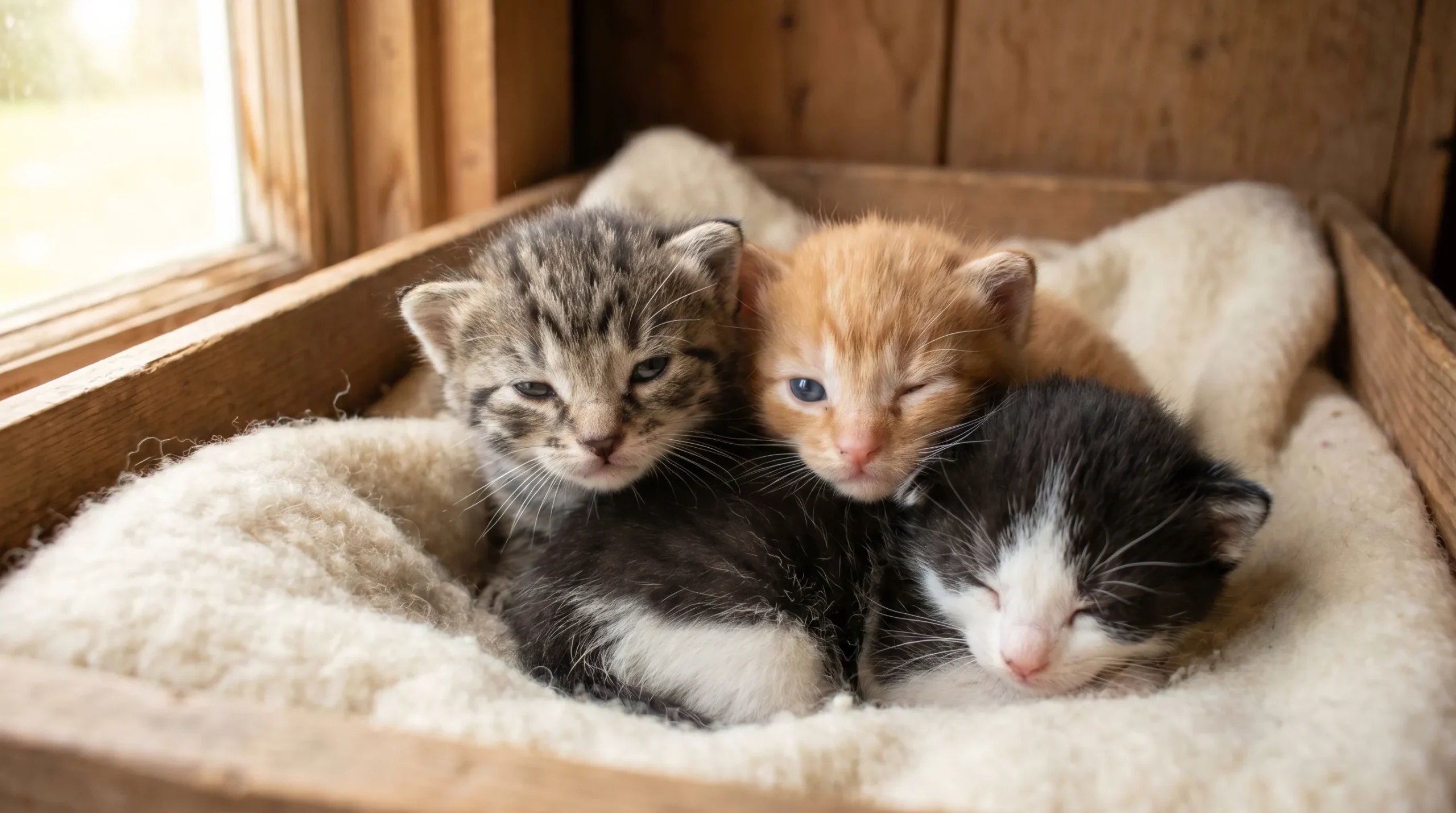
When do kittens open their eyes is one of the first questions people ask when they are caring for a newborn kitten, and the short answer is reassuring: most kittens begin opening their eyes at around 7 to 14 days old. In many litters, the change starts with a tiny slit, then the eyes open gradually over several days rather than all at once. It is also common for one eye to open a little sooner than the other. Sources aimed at pet parents and veterinarians consistently place the usual opening window in the first one to two weeks, with many noting that the eyes are often fully open by around 10 to 14 days.
That simple answer, though, is only part of what most people really want to know. They usually want to know what is normal, what looks abnormal, whether they should help the kitten, and when delayed eye opening might signal a health problem. If you are caring for an orphan kitten, a stray, or a very young litter, those questions matter even more. In this guide, you will learn the normal kitten eye development timeline, when kittens start to see clearly, when their eye color changes, what warning signs need a veterinarian, and how to safely support newborn kitten care during those fragile first weeks.
When do kittens open their eyes?
Most newborn kittens are born with their eyes closed at birth, and they usually begin opening them at about 7 to 14 days old. Some start closer to 7 to 10 days, while others take a little longer and do not have both eyes fully open until roughly 10 to 14 days. A few may still be progressing toward full opening near the end of the second week. The process is normally gradual, not dramatic.
This means the best answer to how old are kittens when they open their eyes is not a single exact day. It is a range, and that range matters. Healthy kittens do not all develop at exactly the same pace. Genetics, overall health, and early environment can all influence the timeline a little. That is why one kitten in a litter may show a narrow opening first, while a sibling stays closed a bit longer.
For people searching when do kittens open their eyes after birth, the most useful rule of thumb is this: expect the first changes during the second week of life, and watch for steady progress rather than instant full opening.
Why are kittens born with their eyes closed?
Kittens are born in what experts describe as an altricial state, which means they arrive underdeveloped and depend heavily on their mother or caregiver at the start of life. Their eyelids are fused shut at birth because their eyes are still delicate, and keeping them closed helps protect those developing structures during early life. Veterinary sources also note that this protects the eyes from dryness, irritation, and environmental exposure while the kitten is still extremely vulnerable.
In other words, closed newborn kitten eyes are not a problem. They are part of normal biology. During those first days, kittens rely more on touch, smell, and warmth than on sight. They find their mother by scent, crawl toward heat, and spend most of their time nursing and sleeping. Vision comes later, after the eyes and nervous system have had more time to develop.
This explanation is helpful because many new caretakers worry that a closed-eyed kitten is somehow “behind.” Usually, the opposite is true. Eyes closed at birth is exactly what you want to see in a normal newborn phase.
What the eye-opening process looks like day by day
The process of opening eyes usually begins with a very small slit or gap in the eyelids. At first, the opening may seem uneven or barely noticeable. The kitten’s eyes can look a little hazy, watery, or unfocused in those earliest moments, and that alone does not always mean something is wrong. The key is that the opening should continue to progress.
A useful way to think about the stages is this:
| Kitten age | What is often normal |
| 0–7 days | Eyes fully closed, kitten relies on smell and touch |
| 7–10 days | First tiny opening may appear |
| 8–12 days | More of the eye becomes visible |
| 10–14 days | Many kittens have eyes mostly or fully open |
| Up to 2–3 weeks | Some kittens finish more slowly, but should show progress |
This is why people asking what are the stages of kittens opening their eyes often feel relieved once they understand that it is not an on-off switch. Eyes open slowly. You are looking for gradual opening, not a sudden change overnight.
Can kittens see right away after their eyes open?
Not really. Even after a kitten’s eyes open, full vision does not arrive immediately. Early on, kittens may only respond to light and motion, and their visual awareness is still limited. Their eyesight becomes clearer over the following weeks, with better focusing and coordination developing as they mature. Several sources note that clearer visual function emerges around 3 weeks, while fuller vision develops later, often around 6 to 8 weeks.
So if you are wondering when do kittens start seeing clearly, the honest answer is that eye opening and useful vision are not the same milestone. First the eyes open. Then the brain and visual system continue catching up. That is why a kitten with newly opened eyes may still seem clumsy, sleepy, and only dimly aware of what is happening around it.
This also connects with broader kitten development milestones. As vision improves, kittens usually become more curious, better coordinated, and more responsive to movement in their environment.
Do kittens’ eyes change color?
Yes. Most kittens have blue eyes when they first open them. Over time, the final or true eye color becomes more visible as pigment develops. This shift is related to melanin, and many sources place visible changes in eye color at around 8 to 10 weeks, though timing varies.
That is why queries like what color are kittens’ eyes when they open and when do kittens’ eyes change to their true color often appear alongside the main keyword. The early blue or grey-blue look is usually temporary. As the kitten matures, the adult eye color gradually settles in.
For many pet owners, this is one of the sweetest parts of the timeline. A newborn that starts with sleepy, baby-blue eyes can look noticeably different just a few weeks later.
What is normal, and what is not?
A lot of pet-parent anxiety comes from not knowing the difference between a harmless variation and a real problem. The good news is that a few things are often normal:
A kitten may open one eye before the other. The eyes may not look perfectly wide right away. The first opening can be narrow and subtle. Vision can seem poor at first. These are all common parts of kitten eye development.
What is less normal is when there is no progress at all, especially once the kitten is well into or beyond the usual opening window, or when the eye area looks painful or infected. Signs like redness, swelling, thick discharge, cloudiness, bulging, or obvious discomfort deserve closer attention. Veterinary sources repeatedly flag those signs as reasons not to wait too long.
So if you are asking why do kittens’ eyes open at different rates, mild differences are normal. But if one eye looks inflamed, sealed shut by crust, or much more abnormal than the other, treat that as a warning sign rather than a harmless quirk.
When should you worry and call a vet?
You should contact a veterinarian if a kitten’s eyes are still firmly closed beyond the expected period without visible progress, or sooner if the eyes look abnormal. The biggest red flags include yellow or green discharge, marked swelling, crusting that seems to trap the eyelids shut, redness, cloudiness, squinting, pawing at the eyes, or a kitten that seems generally weak or unwell. These signs can point to infection, conjunctivitis, or other eye problems that should be checked professionally.
Common medical causes mentioned in veterinary-facing pet content include conjunctivitis, sometimes called pink eye, and infections associated with pathogens such as feline herpesvirus or feline calicivirus. Some kittens may also have structural or developmental eye issues that cannot be diagnosed accurately at home.
A useful practical rule is this: if you are not just seeing “late,” but also seeing pain, pus, pressure, crusting, or a kitten that seems to be declining overall, do not wait. The search query may start as when should I worry if my kitten’s eyes haven’t opened, but sometimes the more important question is whether the kitten is otherwise thriving. If the answer is no, urgent help matters.
Common eye problems in kittens
Not every eye issue is severe, but newborn kittens can develop genuine problems. One of the most common is conjunctivitis, which can cause discharge, redness, and eyelids that appear glued shut. Veterinary articles also mention more serious concerns such as third eyelid issues, abnormal swelling, and some less common congenital problems including microphthalmia, coloboma, and entropion.
This is why articles about common eye problems in kittens often sound more cautionary than owners expect. At this age, kittens are tiny, fragile, and quick to dehydrate or weaken if nursing becomes difficult. Even a localized eye problem can become more serious if it interferes with feeding, sleep, or comfort.
A short real-world example helps here. Imagine a 10-day-old orphan kitten whose eye area becomes crusted with thick discharge. At first glance, a rescuer might assume the eye is just “late opening.” But that same crust may be trapping bacteria against the eyelid and masking a true eye infection. In that case, the issue is not the timeline alone. It is the combination of delay plus abnormal symptoms.
How to care for a kitten’s eyes safely
The most important rule is simple: never pry a kitten’s eyes open. If you were specifically searching can you pry open a kitten’s eyes, the answer is no. Forced opening can hurt delicate tissues and make irritation or infection worse.
If you notice mild crust around the eyelids, the safest step is usually gentle observation and, if needed, contacting a vet for guidance. Some veterinarians may recommend a careful cleaning method depending on the cause, but home treatment should stay very conservative. The goal is to avoid adding friction, pressure, or contamination to a very sensitive area.
The broader principle in newborn kitten care is that less is often more. Keep the kitten warm, clean, and monitored. Do not experiment with drops, ointments, or force unless a professional tells you to.
Other kitten milestones that happen around the same time
Eye opening is only one part of the early timeline. Around the same period, ear canals begin opening too, and kittens start becoming more aware of the world around them. Soon after, they gain better coordination, begin making wobblier attempts at movement, and gradually work toward walking.
That is why many people also search when do newborn kittens open their eyes and start walking. These milestones cluster together, but they do not happen on the same exact day. A kitten may open its eyes in the second week, become more visually responsive in the third week, and only later look steadier and more mobile.
Here is a simple developmental snapshot:
| Milestone | Typical timing |
| Eyes begin opening | 7–14 days |
| Ears begin opening | Around the first 1–2 weeks |
| Focus improves | Around 3 weeks |
| Vision improves further | 6–8 weeks |
| True eye color becomes clearer | Around 8–10 weeks |
Newborn kitten care basics during the first two weeks
If you are caring for a kitten this young, warmth, feeding, and monitoring are far more important than trying to speed up eye opening. Neonatal kittens cannot regulate temperature well and may need environmental warmth. Guidance commonly used in kitten-care resources includes ranges such as 85 to 90 degrees Fahrenheit for very young kittens, with temperature needs gradually changing as they grow. Feeding schedules for bottle babies can be as frequent as every 2 hours or every 2–3 hours, including overnight, depending on age and condition.
Weight is another critical clue. A kitten age chart can help, but daily trends matter even more than single numbers. Healthy newborns should be feeding regularly, staying warm, and slowly gaining weight. If a kitten is not nursing, feels cool, seems weak, or is losing weight, the eye question becomes secondary to the bigger health picture.
For orphan kittens, this point cannot be overstated: a kitten who is not thriving needs help fast, even if the eyes are technically still within the normal opening window.
When delayed eye opening may signal a bigger emergency
This is where your article can go further than many competitor pages. Sometimes delayed or abnormal eye opening is part of a wider neonatal problem. A kitten that has not opened its eyes and also seems lethargic, cold, dehydrated, underfed, or unable to gain weight may be facing something more serious than a simple timing variation.
Rescue and foster communities often watch for patterns associated with failure to thrive or fading kitten syndrome, where a very young kitten declines rapidly. Those issues are not diagnosed by eye opening alone, but the eye problem can be one visible clue that something is off. If the kitten is weak, not eating, crying excessively, separating from littermates, or failing to gain weight, seek emergency veterinary or rescue help.
This section matters because it answers the deeper fear behind the search. People do not only want to know when do kittens open their eyes. They want to know whether the kitten is okay.
Quick week-by-week kitten timeline
To make the whole topic easier to visualize, here is a simple week-by-week kitten timeline:
| Age | What you may notice |
| Newborn to 1 week | Eyes closed, ears closed, crawling, nursing, sleeping most of the day |
| 1 to 2 weeks | Eyes begin opening, ears begin opening, more response to touch and scent |
| 2 to 3 weeks | Eyes more fully open, focus improves, early coordination increases |
| 3 to 4 weeks | More alertness, stronger movement, growing curiosity |
| 6 weeks | Vision much better, social play increasing |
| 8 weeks | More settled body control, clearer personality, eye color may continue changing |
This kind of timeline works well because it connects the main keyword to kitten growth timeline, how to tell how old a kitten is, and related development questions in a natural, helpful way.
FAQ: Common questions about kitten eyes
Can kittens take up to three weeks to open their eyes?
Sometimes a kitten may take longer than average to finish opening its eyes, but there should still be visible progress. If there is no progress or there are abnormal signs, call a vet.
What if only one eye is open?
That can be normal at first. But if one eye looks swollen, crusted, or very different from the other, get advice.
When do kittens get full vision?
Not immediately after the eyes open. Vision improves over weeks, with better focusing around 3 weeks and stronger visual function by 6 to 8 weeks.
Should I clean crust from a kitten’s eyes myself?
Only very cautiously, and ideally with veterinary guidance. Never force the lids apart.
How do kittens find their mother before their eyes open?
They rely mainly on smell, touch, warmth, and instinctive movement.
Conclusion
When do kittens open their eyes? In most cases, the answer is between 7 and 14 days, with the eyes often becoming fully open by around 10 to 14 days. The process is usually slow and normal, and mild differences between littermates can happen.
What matters most is not just the calendar. It is the overall picture. A warm, feeding, steadily progressing kitten is usually on track. But redness, swelling, thick discharge, cloudiness, or a kitten that seems weak or unwell should never be brushed off. When in doubt, get help from a veterinarian. For a newborn kitten, early action can make all the difference.
Disclaimer: