

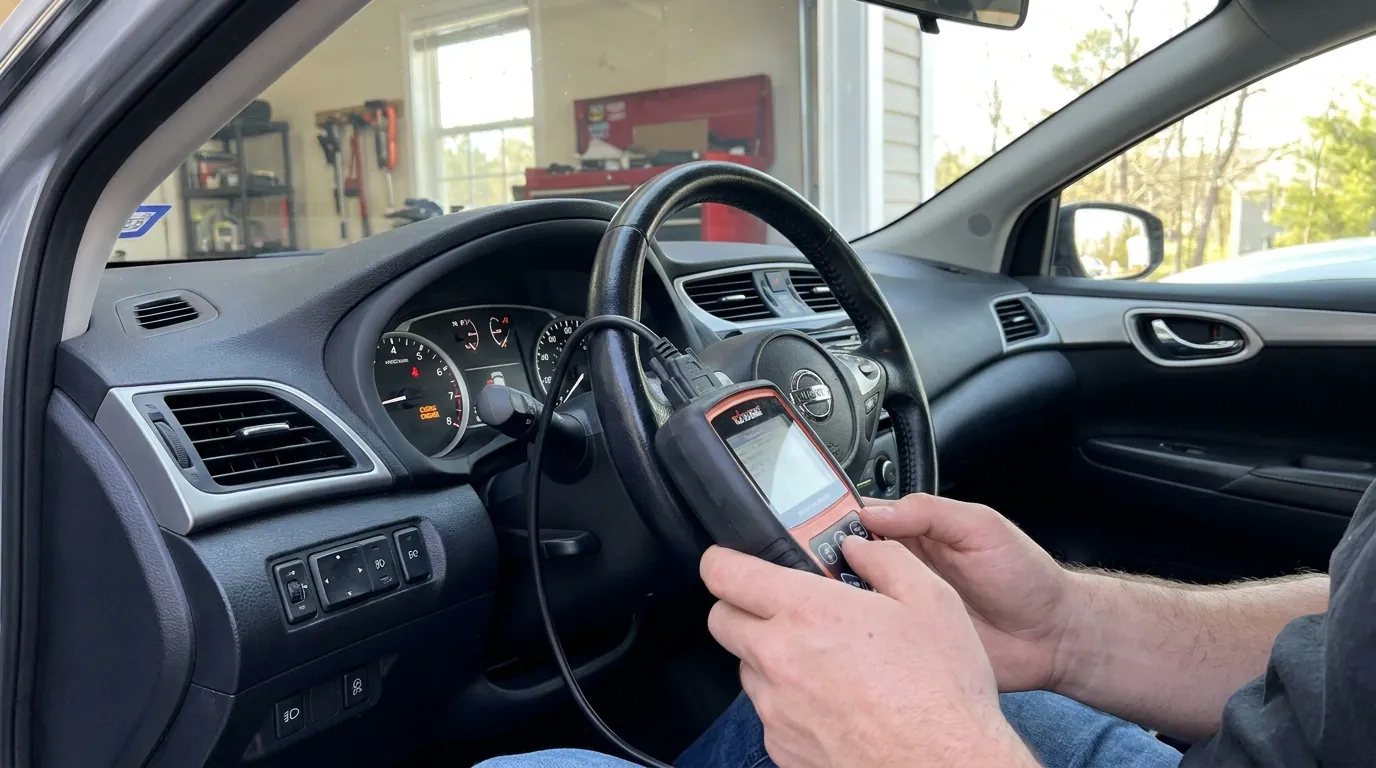
How to clear the codes of a check engine light is a question many drivers ask the moment that orange dashboard warning light appears and refuses to go away. In most cases, you can clear trouble codes and reset the check engine light, but there is an important catch: clearing codes is not the same as fixing the problem. If the underlying fault is still there, the Check Engine light, also called the CEL, will usually come back.
That is why the smartest approach is not to rush into a reset. First, understand what the diagnostic trouble codes mean. Then decide whether you should clear them with an OBD2 scanner, let the system complete a drive cycle, or get help from a repair shop, dealership, or professional mechanic. In this guide, you will learn the safest way to clear check engine light codes, the methods that work with and without a scanner, and what happens after the reset.
What the Check Engine Light Means Before You Clear Anything
The check engine light is part of your vehicle’s onboard diagnostics system, often called OBD-II or OBD2. When the vehicle onboard computer, ECU, or ECM detects a fault in the engine, emissions, fuel system, or related controls, it stores a diagnostic code or error code and turns on the dashboard warning light.
Sometimes the issue is small. A loose gas cap can trigger the light. Other times, the problem is more serious, such as a misfire, a bad oxygen sensor, a failing mass airflow sensor, weak ignition coils, worn spark plugs, or even a damaged catalytic converter. That is why asking only how to reset your check engine light is not enough. You also need to know what causes the check engine light to come on.
Think of the light as a message, not the problem itself. The message says the car found something worth checking. When you erase trouble codes too early, you may also erase useful clues that would have helped you diagnose the issue faster.
Blinking vs. Steady Check Engine Light: Know the Difference
Before you try any method to clear check engine light warnings, look at how the light behaves.
A steady check engine light usually means the problem is important, but not always urgent. You may still be able to drive carefully for a short time while you diagnose it.
A blinking check engine light or flashing warning light is different. This often points to a more serious problem, especially an active engine misfire that can damage the catalytic converter. In that situation, pulling over safely and getting the vehicle checked is usually the best move.
Here is a simple rule:
| Light behavior | What it usually means | Best action |
| Steady CEL | Ongoing fault stored in system | Read codes first, then diagnose |
| Blinking CEL | Potentially serious fault, often misfire | Stop hard driving and seek help quickly |
If you are wondering what to do if your check engine light is blinking, the answer is simple: do not focus on clearing it first. Focus on preventing engine damage.
Read the Codes First: The Safest Way to Clear a Check Engine Light
The safest answer to how to clear a check engine light properly is this: read the codes before you erase them.
This step matters because stored codes, pending codes, and permanent trouble codes can tell you a lot. A stored code usually means the car has confirmed a fault. A pending code means the system saw something suspicious but has not fully confirmed it yet. A permanent code may stay in memory until the vehicle completes enough successful checks after repair.
Before you reset anything, do these three things:
- Scan the car
- Write down or photograph the trouble codes
- Save any freeze frame data or notes you can
That information is valuable. It helps you understand whether the problem is a gas cap code, oxygen sensor code, misfire code, EVAP leak code, or catalyst efficiency code. It also helps if you later visit a repair shop or dealership and need to explain what happened.
Many drivers ask, “Can I reset the check engine light myself?” Yes, usually. But smart DIY work starts with preserving the evidence before clearing it.
Best practice: Diagnose → record code → repair issue → clear code → recheck
How to Clear the Codes With an OBD2 Scanner
If you want the cleanest and most precise method for how to clear the codes of a check engine light with an OBD2 scanner, this is it. Using an OBD-II scanner, code reader, or wireless scanner is usually safer than guessing.
Step-by-step process
First, find the OBD-II port. In most vehicles built from 1996 model year onward, the diagnostic port is under the dashboard, often below the steering column.
Then follow this process:
- Plug the OBD2 scanner into the OBD port
- Turn the ignition to the ON position
- Let the scanner connect to the vehicle onboard computer
- Read the diagnostic trouble codes
- Record the code numbers and descriptions
- Choose Clear, Erase, or a similar option
- Turn the car off, then restart it
- Check whether the warning light stays off
This method works well because it lets you read the fault and clear it in the same session. It is the most reliable answer to how to clear trouble codes without risking as much guesswork.
Code reader vs. scan tool
Not all tools do the same job.
| Tool type | What it does best | Good for |
| Basic code reader | Reads and clears codes | Fast DIY resets |
| Bluetooth/app scanner | Reads codes, live data, phone use | Casual users with iPhone or Android |
| Advanced scan tool | Reads live data, tests systems, deeper diagnosis | Serious DIY or shop-level use |
A simple check engine light code reader may cost under $25 or around $20 to $100, while more advanced tools can cost hundreds of dollars or even thousands of dollars. For most everyday drivers, a basic reader or a phone-based scanner is enough.
Where Is the OBD-II Port?
A lot of people ask how to use an OBD2 scanner without first knowing where to plug it in. The OBD-II port location is usually under the dashboard on the driver’s side. In some cars, it may be behind a small cover panel.
If you cannot find it, check the owner’s manual. The port is standardized in post-1996 car and truck models, but the exact position still varies. Once you locate it, the rest of the process becomes much easier.
Can You Clear Check Engine Codes Without a Scanner?
Yes, but this is where caution matters. If you are searching how to clear my check engine light without a scanner, there are a few methods people try. Some work better than others. Some are less precise and can wipe out useful information from the ECM or ECU memory.
The main no-scanner methods are:
- Letting the car complete a drive cycle
- Disconnecting the battery
- Cycling the ignition on and off
- Removing the ECU/ECM fuse
These methods may reset the light, but they do not replace a proper diagnosis. In many cases, the most practical and safest route is still to use an OBD2 scanner or get a free scan from an auto parts store.
Method 1: Let the Light Clear on Its Own After the Repair
Sometimes the best answer to will the check engine light clear itself is yes. If the issue has truly been fixed, the vehicle may turn the light off after it completes enough successful drive cycles.
A drive cycle is a series of driving conditions the car uses to test its systems. That is why people ask how long does it take for a check engine light to reset or how far do you have to drive to reset the check engine light. The answer varies by make, model, and fault. In some cases it may happen after a few trips. In others it can take up to three days or longer.
This method is useful when you already repaired something obvious, such as tightening or replacing a gas cap. But if the light stays on, comes back, or the car runs badly, do not keep guessing. Scan it.
Method 2: Disconnect the Battery
Disconnecting the battery is a common answer to how to reset a check engine light manually. It can work, but it has drawbacks.
To try it, turn off the vehicle, loosen the negative battery terminal with a wrench, and disconnect the negative battery cable. Some people wait 10 to 15 minutes, while others wait 15 minutes or more. Then reconnect the cable and restart the vehicle.
This method may clear some stored data, but it can also reset radio presets, clock settings, and other saved settings, including parts of the infotainment system. It may also clear evidence you actually needed for diagnosis.
So while how to disconnect the negative battery cable to reset check engine light is a real search term, it should not be your first choice unless you understand the tradeoffs. It is often less precise than using a scanner.
Method 3: Turn the Ignition On and Off
Another common DIY idea is to cycle the ignition. If you have heard advice like turn the car on and off three times to reset trouble codes, this is the method people mean.
Usually, the driver turns the ignition to the ON position for 1–2 seconds, switches it off, and repeats the sequence three times. The idea is to help the system reboot or clear a temporary saved state.
Sometimes it helps with a minor glitch. Sometimes it does nothing. This is why it is better to think of it as a light reset attempt, not a true fix. If you want a dependable way to clear check engine light codes, a scanner is still the better route.
Method 4: Remove the ECU or ECM Fuse
Some vehicles allow a reset by removing the ECU fuse or ECM fuse from the fuse box. This is more technical than the other methods and should be done carefully. You may need a fuse puller or needle-nose pliers, and you need to know exactly which fuse controls the right system.
This method can work, but it also creates risk. Pulling the wrong fuse can lead to confusion or new electrical issues. For that reason, it is best used only if you are comfortable reading the fuse diagram and following the owner’s manual.
For most drivers, this is not the first answer to how to clear the codes of a check engine light. It is more of a backup method.
What Happens After You Clear the Codes?
This is one of the most misunderstood parts of the topic.
When you clear the codes, several things can happen:
- The check engine light may turn off immediately
- The monitor status may reset
- Some stored codes may disappear
- The real problem may still remain
- The light may come back after the next trip or test cycle
That is why people often ask why the check engine light comes back after reset. The answer is usually simple: the vehicle detected the same fault again.
Clearing the light does not repair a bad oxygen sensor, solve an EVAP leak, fix worn spark plugs, or stop an active misfire. It only removes the warning until the system tests itself again.
This is also where pending codes vs stored codes matter. A vehicle may have a code that is still being evaluated, and once the conditions repeat, the light returns. That is also why permanent trouble codes can be especially confusing. Some cars need multiple successful checks before those fully disappear.
Will Clearing Codes Affect Emissions or Inspection?
Yes, and this is a major reason not to clear codes right before a test.
When you reset the system, the vehicle often resets its readiness monitors. That means emissions-related checks may show not ready, even if the light is off. In practical terms, that can make you fail or delay an inspection.
So if you are wondering can you pass emissions after clearing codes, the answer is often not right away. The car may need enough normal driving and successful drive cycles to complete those emissions checks again.
This is why emissions readiness matters so much. A driver may clear the light, see an empty dashboard, and assume everything is fine, only to discover the system is still not ready for an inspection test or smog test.
Common Check Engine Codes People Try to Clear
A lot of drivers do not just want to know how to get the check engine light to go away. They also want to know what they are clearing.
Here are some common code categories:
| Code type | Typical meaning | Will clearing help? |
| EVAP leak code | Fuel vapor leak, often gas cap related | Only if the leak is fixed |
| Misfire code | Combustion problem, possible spark plugs or ignition coils issue | Usually temporary unless repaired |
| Oxygen sensor code | Sensor or mixture problem | Light returns if fault remains |
| Mass airflow sensor code | Airflow measurement issue | Reset alone rarely solves it |
| Catalyst efficiency code | Possible catalytic converter issue | Often comes back without repair |
This is why common check engine codes and P0xxx codes are useful to understand. If you know the category, you have a much better idea whether clearing the light is reasonable or just temporary.
Best Tools for Clearing Check Engine Codes
You do not need shop-level gear to handle basic code reading and clearing. For most people, one of these three options works well:
A basic code reader is simple, cheap, and easy for reading and clearing codes. A Bluetooth scan tool connects to a smartphone and often shows more data in an app. A more advanced scan tool can show live data, deeper system information, and more detailed diagnostics.
If you only want to clear a code after a confirmed repair, a basic tool is fine. If you want more insight into sensor behavior, a Bluetooth or advanced unit is better. This is where terms like scanner app for clearing check engine light, wireless scanner, and code reader vs scan tool become relevant.
A practical quote for most drivers is this:
“The best scanner is the one that helps you read the code before you erase it.”
That mindset saves time, money, and repeat problems.
When to Seek Professional Help
Even if you like DIY fixes, there are times when the best decision is not another reset attempt.
Get professional help if:
- The blinking check engine light stays on
- The car is stalling, shaking, or running rough
- The light comes back immediately after clearing
- You smell fuel fumes or suspect an EVAP leak
- You do not know how to interpret the code
A trusted repair shop, dealership, or professional mechanic can do deeper testing and confirm whether the issue is electrical, mechanical, or emissions-related. If your goal is long-term reliability, sometimes diagnosis matters far more than a fast reset.
FAQ: Quick Answers About Clearing Check Engine Codes
Can I reset the check engine light myself?
Yes, in many cases. The best way is with an OBD2 scanner. It is more accurate than guessing.
How do I clear my check engine light without a scanner?
You can try a battery disconnect, ignition cycling, or let the car complete a drive cycle, but these methods are less precise.
How long does it take for a check engine light to reset?
It depends on the fault and the vehicle. Sometimes it happens after several successful trips. Sometimes it takes up to three days or more.
How far do you have to drive to reset the check engine light?
There is no universal distance. The car needs enough operating conditions to complete its tests.
Will the check engine light clear itself?
Yes, sometimes, but usually only after the fault is repaired and the vehicle passes enough checks.
What is the safest way to clear engine codes?
Use a scanner, read the codes first, record them, repair the issue, then clear and recheck.
Why does the light come back after reset?
Because the underlying issue is still present or the vehicle detected the problem again.
Final Takeaway
The best answer to how to clear the codes of a check engine light is not just erase the warning. It is understand the code, fix the cause, then clear it correctly. A basic OBD-II scanner or check engine light code reader is usually the safest and smartest tool because it lets you preserve the information before you reset the system.
If the car has a minor issue, such as a loose gas cap, the light may stay off after repair. But if the root problem is still there, the CEL will likely return. So do not treat code clearing like a cure. Treat it like the last step in a proper diagnosis.
Disclaimer: This article is for general informational purposes only. It is not a substitute for professional mechanical advice or diagnosis. Vehicle systems and procedures can vary by make, model, and year. Always refer to your owner’s manual or consult a qualified mechanic before attempting repairs or resetting diagnostic codes.