

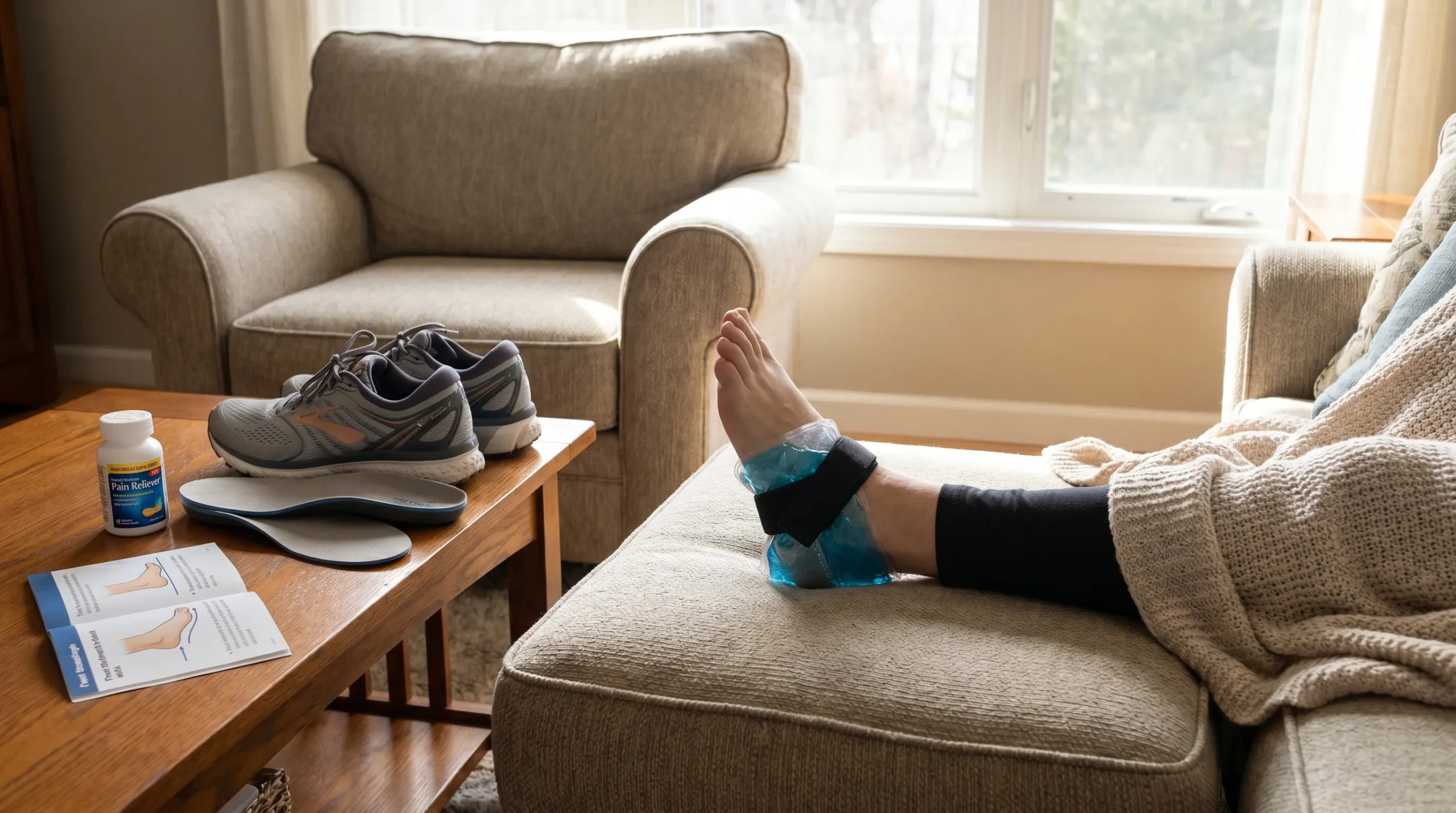
The fastest way is to combine heel spur pain relief, ice therapy, rest, supportive shoes, orthotics, and daily plantar fascia stretches so the irritated tissue around the heel can calm down as quickly as possible.
Here is the important truth: a heel spur is a bony growth or calcium deposit on the heel bone, also called the calcaneus. The spur itself usually does not “melt away” naturally. What often heals is the inflammation, soft tissue irritation, and plantar fascia strain around it. That is why the best heel spur treatment focuses on reducing pressure, improving foot support, and helping the plantar fascia and Achilles tendon move better.
If your heel pain feels sharp when you take your first steps in the morning, or if it gets worse after standing, walking, or resting, you are not alone. Many people searching for heel spur pain relief are really dealing with a mix of heel spurs, plantar fasciitis, tight calves, poor footwear, and repeated stress on the foot.
This guide explains the fastest practical way to relieve heel spur pain, what to do at home, which shoes and supports help, when to see a podiatrist, and what not to do if you want long-term recovery.
The Fastest Way to Heal Heel Spur Pain
The fastest way to heal a heel spur is not one magic treatment. It is a smart combination of steps that reduce inflammation and protect the heel from further stress.
The best starting plan is simple: ice the heel, reduce painful activities, wear supportive footwear, avoid walking barefoot, use heel cups or custom orthotics if needed, stretch the calf muscles and plantar fascia, and consider NSAIDs such as ibuprofen or naproxen if they are safe for you.
For many people, the quickest relief comes from treating the pain in stages. In the first few days, the goal is to calm acute inflammation. That means using ice packs or a frozen water bottle for about 15–20 minutes, several times per day. Rolling the foot over a frozen water bottle can combine cold therapy with gentle plantar fascia massage.
Next, you need to reduce the strain that caused the pain. This means wearing shoes with arch support, heel cushioning, and a firm heel counter. If your pain is worse in the morning, night splints may help by keeping the plantar fascia and Achilles tendon stretched overnight.
The key is consistency. A heel spur usually forms because of repetitive stress, microtrauma, or poor foot mechanics. So, quick relief may begin in days, but lasting recovery often takes weeks 1 to 6, and chronic cases may need 6 to 8 weeks or longer.
What Is a Heel Spur?
A heel spur is a small bony growth that forms on the heel bone. It often develops where soft tissue, such as the plantar fascia, attaches to the heel. Heel spurs are sometimes called bone spurs, plantar heel spurs, or inferior calcaneal spurs.
A heel spur can look like a pointed or hook-shaped calcium deposit on an X-ray. Some heel spurs may grow up to half an inch, but size does not always match pain level. A person can have a large heel spur with little pain, while another person may have severe heel pain from irritated tissue even if the spur is small.
This is why it is important to understand that heel spur pain relief is usually about treating the surrounding tissue, not removing the spur. The spur itself usually does not disappear without surgery. However, most people do not need surgery because their symptoms improve with conservative treatment, activity modification, stretching, and better footwear.
Heel spurs are commonly linked with plantar fasciitis, which is one of the most common reasons people feel pain at the bottom of the heel. When the plantar fascia is repeatedly stretched, strained, or irritated, it can pull on the heel bone and contribute to spur formation over time.
Heel Spur vs Plantar Fasciitis: What Is the Difference?
A heel spur and plantar fasciitis are related, but they are not the same thing. A heel spur is a bone growth. Plantar fasciitis is irritation or inflammation of the plantar fascia, the thick band of connective tissue that runs along the bottom of the foot.
This difference matters because many people ask, “Can heel spurs go away without surgery?” The better question is often, “Can heel spur pain go away without surgery?” In many cases, yes. The pain can improve when the inflamed tissue becomes less irritated, even if the spur remains on the bone.
Think of it this way: the spur may show up on an X-ray, but the actual pain may come from soft tissue inflammation, tight calf muscles, overpronation, flat feet, high arches, or shoes that do not support your foot properly.
That is why the best heel spur treatment often looks very similar to plantar fasciitis treatment. It includes calf stretches, plantar fascia stretches, orthotic devices, heel pads, supportive shoes, and sometimes physical therapy. The goal is to reduce strain at the plantar fascia insertion and improve how pressure moves through the foot.
What Does a Heel Spur Feel Like?
A heel spur can cause different symptoms depending on how irritated the surrounding tissue is. Some people have no pain at all, while others feel intense discomfort during daily activities.
The most common symptom is sharp stabbing pain in the heel, especially with the first steps in the morning. This is often called post-static dyskinesia, which simply means pain after a period of rest. When you sleep or sit for a while, the plantar fascia can tighten. When you stand up again, the tissue is suddenly stretched and loaded, causing pain.
Heel spur symptoms may include pain concentrated at the bottom of the heel, tenderness, swelling, inflammation, or a feeling like stepping on a sharp stone or tack. Some people feel pain after long standing, walking on hard floors, or doing high-impact exercise such as running and jumping.
Pain may also extend toward the arch of the foot, especially when plantar fasciitis is involved. If you feel numbness, tingling, sudden severe pain, or you are unable to bear weight, that may point to another issue such as nerve entrapment, stress fractures, or injury, and it should be checked by a healthcare professional.
What Causes Heel Spurs?
Heel spurs usually develop over time because of repetitive stress on the heel. When the foot absorbs repeated strain, the body may respond by forming extra bone near the irritated attachment point.
Common causes include chronic tension, microtrauma, standing on hard surfaces, running, jumping, sudden activity increases, and wearing poorly fitted shoes or worn-out shoes. People with flat feet, high arches, or overpronation may be more likely to develop heel pain because their foot mechanics place extra strain on the heel.
Tight calf muscles and a shortened Achilles tendon are also important. When the calf and Achilles are tight, they can pull on the heel and increase pressure on the plantar fascia. Over time, this can make morning pain and heel inflammation worse.
Excess body weight can also increase load on the heel. So can jobs that require prolonged standing, such as teaching, nursing, factory work, retail, or food service. In these cases, supportive footwear, anti-fatigue mats, and regular stretching can make a big difference.
The fastest recovery happens when you identify the cause. If your heel spur pain comes from unsupportive shoes, stretching alone may not fix it. If it comes from tight calves, shoes alone may not be enough. Most people need a combined plan.
7-Day Heel Spur Pain Relief Plan
A 7-day heel spur pain relief plan can help you reduce pain quickly while building a foundation for long-term healing. This plan is not a cure for the bony spur, but it can help calm the inflammation around it.
| Timeframe | Main Goal | What to Do |
| Days 1–2 | Calm inflammation | Ice, rest, avoid barefoot walking, reduce painful activity |
| Days 3–5 | Add mobility and support | Gentle stretching, supportive shoes, heel cups or insoles |
| Days 6–7 | Build consistency | Track pain, continue stretching, slowly return to walking |
During Days 1 to 2, focus on immediate pain relief. Use ice therapy for 15–20 minutes, three to four times per day. Wrap ice in a cloth barrier to protect the skin. You can also roll your foot over a frozen water bottle for gentle cold massage. Avoid long walks, running, jumping, and standing barefoot on hard floors.
During Days 3 to 5, add gentle calf stretches and plantar fascia stretches. Stretch before your first steps in the morning if that is when pain is worst. Wear shoes with arch support, heel cushioning, and a stable sole inside and outside the house.
During Days 6 to 7, check your progress. If pain is improving, continue the plan and slowly increase walking in supportive shoes. If pain is severe, getting worse, or not improving, it may be time for a podiatric evaluation.
Best Home Remedies for Heel Spur Pain Relief
The best home remedies for heel spur relief are simple, but they only work when done consistently. The goal is to reduce inflammation, protect the heel, and improve flexibility.
Ice therapy is one of the fastest options for pain. Use an ice pack, gel pack, or frozen water bottle for about 15–20 minutes. This can help reduce heel tissue inflammation after walking, standing, or exercise.
Rest is also important, but rest does not mean lying down all day. It means avoiding activities that make the pain worse. Replace running or jumping with low-impact alternatives such as swimming, cycling, or water aerobics.
NSAIDs such as ibuprofen or naproxen may reduce pain and inflammation for some people. However, they are not safe for everyone. People with stomach ulcers, kidney problems, blood thinner use, pregnancy, or certain medical conditions should ask a clinician before using them. Acetaminophen may help pain but does not reduce inflammation in the same way.
Foot elevation, supportive slippers, and avoiding barefoot walking at home can also help. Many people make heel spur pain worse by walking on tile, concrete, or hardwood floors without support.
A simple case example: someone who works eight hours on hard floors may not improve with icing alone. But when they combine ice, calf stretching, cushioned work shoes, and a heel cup, pain may begin to reduce within the first week.
Best Stretches and Exercises for Heel Spurs
Heel spur exercises work best when they target the calf muscles, Achilles tendon, and plantar fascia. These areas are connected, so tightness in one area can increase strain on the heel.
A good starting exercise is the calf stretch against a wall. Stand facing a wall, place the painful foot behind you, keep the heel down, and lean forward gently. Hold for 30 seconds, then repeat three times. This helps reduce pulling on the heel.
A plantar fascia stretch before getting out of bed can help morning pain. Sit up, cross the painful foot over the opposite knee, and gently pull the toes back toward the shin until you feel a stretch under the foot. Hold for 15 to 20 seconds and repeat a few times before standing.
You can also try a towel stretch, towel toe curls, foot rolling, and gentle single-leg heel raises once pain improves. These movements help support the intrinsic foot muscles and improve flexibility.
Do not force painful stretches. Stretching should feel like mild tension, not sharp pain. If stretching makes symptoms worse, reduce intensity or speak with a physical therapist.
Best Shoes, Heel Cups, Orthotics, and Night Splints
Footwear can make or break your recovery. If you keep wearing thin, worn-out, or unsupportive shoes, your heel may stay irritated even if you stretch every day.
The best shoes for heel spurs usually have a firm heel counter, good arch support, soft heel cushioning, a stable midsole, and shock-absorbing soles. Avoid shoes with thin hard soles, old running shoes, unsupportive flats, and walking barefoot on hard floors.
Heel cups and heel pads can help cushion the painful area. They are useful for people who feel direct pressure under the heel. Orthotic devices or custom orthotics go further by supporting the arch and improving load distribution. This may help people with flat feet, high arches, or overpronation.
Night splints are especially helpful for people with morning heel pain. They keep the plantar fascia and Achilles tendon gently stretched overnight, so the first steps in the morning may be less painful. A night splint does not remove the spur, but it can reduce tightness and improve symptoms over time.
For a quick comparison:
| Support Option | Best For | Main Benefit |
| Heel cups | Direct heel pressure | Cushioning |
| Orthotics | Flat feet, high arches, overpronation | Better foot mechanics |
| Night splints | Morning heel pain | Overnight stretching |
| Supportive shoes | Daily walking and standing | Less repeated strain |
Medical Treatments and Recovery Timeline
If home care does not help after a few weeks, medical treatment may be needed. A podiatrist can examine your foot, review your medical history, check your gait, and order X-rays or MRI scans if needed. Imaging can confirm a heel spur and help rule out stress fractures, arthritis, or nerve entrapment.
Physical therapy is often one of the best next steps. A physical therapist may use stretching, strengthening, manual therapy, taping, ultrasound, and progressive loading exercises. Therapy can also correct movement patterns that keep irritating the heel.
Corticosteroid injections may provide targeted pain relief for some people, especially when inflammation is severe. However, injections do not fix poor footwear, tight calves, or faulty mechanics, so they should usually be part of a broader treatment plan.
For chronic cases, shockwave therapy, also called Extracorporeal Shockwave Therapy or ESWT, may be considered. It uses targeted acoustic energy or sound waves to stimulate blood flow and tissue repair. It is often described as a non-invasive outpatient treatment with minimal downtime.
Recovery depends on severity. Mild heel spur pain may improve in a few weeks. Moderate cases may take four to eight weeks. Chronic pain may take three to six months of consistent conservative management. Surgery is usually a last resort and may involve bony growth removal or plantar fascia release, followed by a rehabilitation plan.
What Not to Do with Heel Spurs
Knowing what not to do is just as important as knowing what helps. Many people delay healing by repeating the same habits that caused the pain.
Do not walk barefoot on hard floors, especially first thing in the morning. Do not keep wearing worn-out shoes with poor heel cushioning. Do not run through sharp pain or suddenly increase mileage. Do not try to “break up” or “dissolve” a heel spur with aggressive massage, unsafe supplements, or extreme home remedies.
Also avoid overstretching. Gentle stretching can help, but forcing the foot into painful positions can irritate the plantar fascia even more.
You should also avoid ignoring red flags. See a podiatrist or healthcare provider if you have severe heel pain after an injury, numbness, tingling, redness, warmth, fever, swelling, diabetes, poor circulation, or pain that makes you unable to bear weight. These symptoms may require more than standard heel spur treatment at home.
Is Walking or Exercise Good for Heel Spurs?
Walking can be good or bad for heel spurs depending on your pain level, shoes, and activity amount. Gentle walking in supportive shoes may help circulation and prevent stiffness. But long walks on hard surfaces, running, jumping, or walking barefoot can make inflammation worse.
If you want to stay active, choose low-impact alternatives. Swimming, cycling, and water aerobics allow you to move without repeatedly pounding the heel. Short walks may be okay if pain stays mild and does not worsen afterward.
A good rule is this: if walking causes sharp pain, limping, or increased pain the next morning, reduce your activity. Focus on ice, stretching, support, and gradual return to walking. This is called load management, and it is one of the most important parts of long-term recovery.
Frequently Asked Questions
What is the fastest way to heal a heel spur at home?
The fastest at-home method is to combine ice therapy, rest, supportive footwear, heel cups or orthotics, and daily plantar fascia stretches. Use ice for 15–20 minutes, avoid barefoot walking, and stretch before your first steps in the morning.
Can heel spurs go away without surgery?
The pain can often improve without surgery, but the bony growth usually does not disappear naturally. Most people focus on symptom relief vs spur removal because surgery is rarely needed.
Should I use ice or heat for heel spur pain?
Use ice when the heel is painful, swollen, or irritated. Heat may relax tight muscles, but ice is usually better for active inflammation and sharp heel pain.
Are night splints good for heel spurs?
Yes, night splints can help if your pain is worst in the morning. They keep the plantar fascia and Achilles tendon stretched overnight.
What shoes are best for heel spurs?
Choose shoes with arch support, heel cushioning, a firm heel counter, and shock-absorbing soles. Avoid thin, hard, worn-out, or unsupportive shoes.
When should I see a podiatrist?
See a podiatrist if pain lasts more than a few weeks, gets worse, follows an injury, causes numbness, or makes walking difficult. People with diabetes should seek care sooner.
Conclusion
The fastest way to heal a heel spur is to treat the pain and inflammation around the spur with a consistent plan: ice therapy, activity modification, supportive shoes, orthotics, calf stretches, plantar fascia stretches, and medical care when needed. The spur itself may remain, but your heel pain can often improve without surgery.
For the best results, do not rely on one remedy. Combine smart home care with better footwear, gentle stretching, and a gradual return to activity. If pain persists, a podiatrist can help confirm the cause and guide you toward the right treatment.