

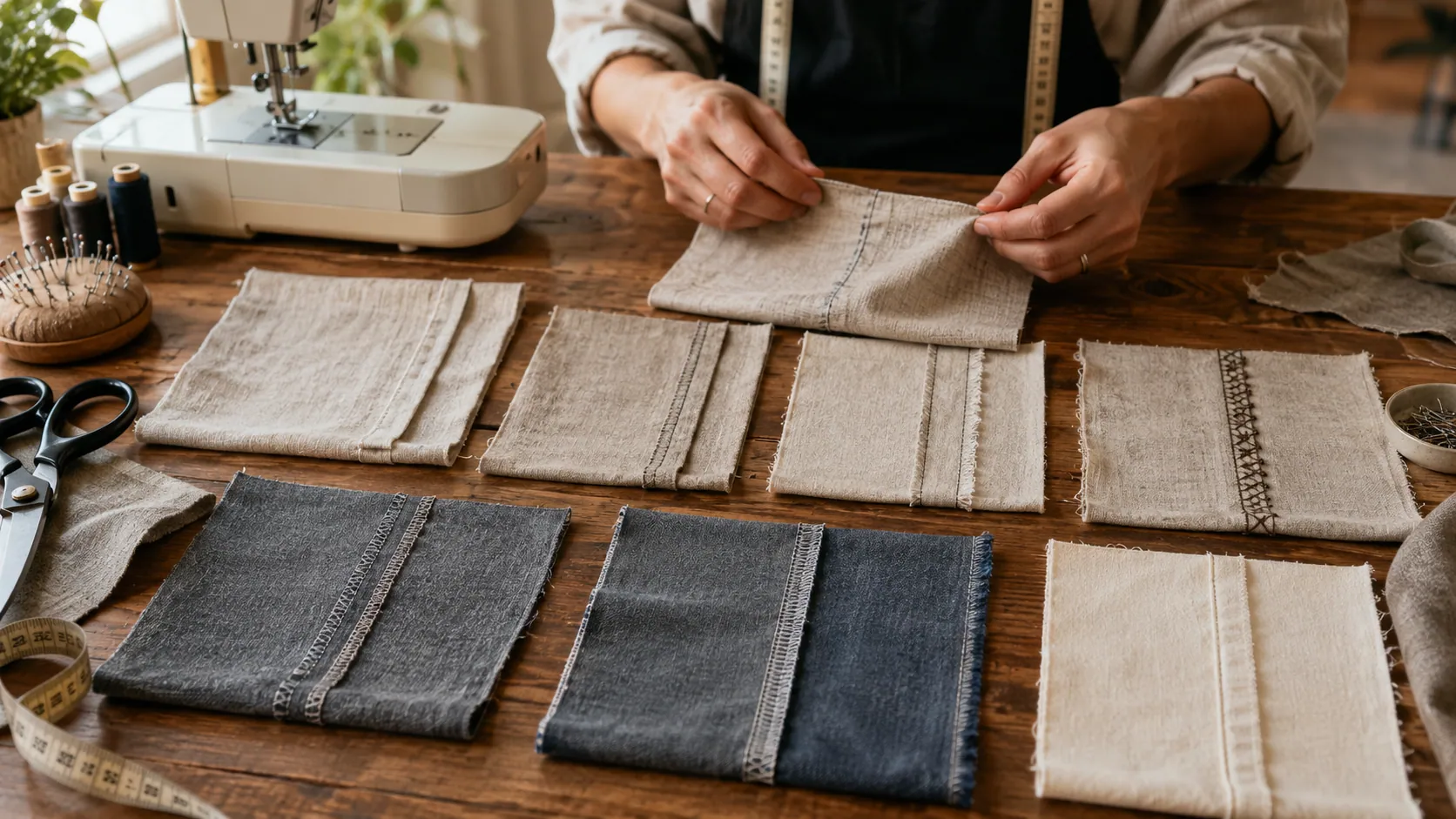
Nahttypen are the different types of seams used to join, strengthen, finish, or decorate fabric in sewing and garment construction. Whether you are a beginner, hobby sewist, fashion designer, tailor, or textile student, understanding seam types helps you choose the right construction method for every fabric and project.
A seam is not just a line of thread. It affects durability, comfort, fit, flexibility, appearance, and the overall quality of a finished garment. A T-shirt needs an elastic seam. A pair of jeans needs a strong seam. A silk blouse needs a clean and delicate seam finish. That is why learning the most important nahttypen, or seam types, is essential for better sewing results.
In this guide, you will learn what nahttypen means, the difference between seam types and stitch types, which seams work best for different fabrics, and how to avoid common sewing mistakes.
What Are Nahttypen?
Nahttypen is a German word that means seam types. In sewing, it refers to the different ways two or more layers of fabric are joined together with stitches.
A seam can be simple, strong, decorative, elastic, invisible, enclosed, or waterproof. The right seam type depends on the fabric, the purpose of the garment, the amount of stress the seam will face, and the finish you want.
For example, a plain seam is commonly used for basic sewing projects. A French seam is used for delicate fabrics like silk and chiffon. A flat-felled seam is used for jeans and workwear because it is strong and durable. An overlock seam is often used for knit fabrics and stretch garments because it finishes the raw edge while keeping the seam flexible.
In simple terms, nahttypen help answer one important question: Which seam should I use for this fabric and project?
Difference Between Seam Types, Seam Styles, and Stitch Types
Many beginners confuse seam types with stitch types, but they are not the same.
A seam is the finished connection between two or more pieces of fabric. A seam type describes how that connection is constructed. Examples include plain seam, French seam, flat-felled seam, bound seam, and lapped seam.
A stitch type describes the actual stitch pattern made by a sewing machine or by hand. Examples include straight stitch, zigzag stitch, chain stitch, blind hem stitch, and stretch stitch.
A simple way to understand it is this: the stitch is the method of forming thread loops, while the seam is the final fabric construction. One seam type can use different stitch types depending on the fabric and the result you want.
For example, a basic seam may be sewn with a straight stitch on cotton, but a stretch fabric seam may need a zigzag stitch or stretch stitch so it does not break when the fabric stretches.
Understanding this difference helps you avoid weak seams, puckering, fraying, and broken stitches.
Why Choosing the Right Seam Type Matters
Choosing the correct seam type affects the strength, comfort, appearance, and lifespan of your sewing project. A poorly chosen seam can make a garment uncomfortable, unattractive, or easy to damage.
For everyday clothing, the seam must handle movement and washing. For sportswear, activewear, and jersey, the seam must stretch without breaking. For denim, canvas, bags, and workwear, the seam must be strong enough for heavy use. For silk, chiffon, and other delicate fabrics, the seam should look clean and prevent fraying.
The right seam also improves the professional finish of a project. Even if the outside of a garment looks beautiful, messy raw edges on the inside can make it look unfinished. Seam finishing is especially important for fabrics that fray easily.
Other technical details also matter, including seam allowance, thread tension, needle size, stitch length, and fabric weight. A strong seam is not only about the seam type. It is also about matching the right needle, thread, stitch setting, and finishing method to the fabric.
Main Types of Nahttypen in Sewing
There are many different seam types, but some are more common and useful than others. These are the most important nahttypen every sewist should know.
Plain Seam
The plain seam is the most basic and commonly used seam type. It is usually the first seam beginners learn. Two fabric pieces are placed right sides together and stitched along the seam line, often using a straight stitch.
Plain seams are used in shirts, skirts, dresses, pillowcases, linings, and many beginner sewing projects. They are simple, fast, and versatile. However, if the fabric frays, the raw edges must be finished with a zigzag stitch, overlock seam, pinking, or binding.
French Seam
The French seam is a clean enclosed seam used for lightweight and delicate fabrics. It hides the raw edges inside the seam, creating a neat finish on both the inside and outside of the garment.
French seams are ideal for silk, chiffon, organza, lightweight cotton, lingerie, blouses, and fine dresses. They take more time than a plain seam, but they create a polished and professional result.
Flat-Felled Seam
The flat-felled seam is one of the strongest seam types. It is commonly used in jeans, denim shirts, workwear, uniforms, and durable garments. The raw edges are enclosed and stitched down, creating a flat and reinforced seam.
If you are asking, “What is the strongest seam type?”, the flat-felled seam is one of the best answers. It is designed for repeated wear, washing, and stress.
Overlock Seam
The overlock seam is made with an overlock machine, also called a serger. It trims the raw edge, stitches the seam, and finishes the edge at the same time.
Overlock seams are common in knitwear, T-shirts, leggings, jersey garments, sportswear, and mass-produced clothing. They are fast, clean, and flexible, making them useful for stretch fabrics.
Zigzag Seam
A zigzag stitch is technically a stitch type, but it is often used as a seam-finishing method. It is useful for preventing raw edges from fraying and for sewing fabrics that need a little stretch.
If you want to sew jersey without an overlock machine, a narrow zigzag stitch can be a practical alternative. It gives the seam more flexibility than a straight stitch.
Blind Hem Seam
The blind hem stitch is used when you want an almost invisible hem. It is often used on trousers, skirts, dresses, curtains, and formal clothing.
This seam type is useful when you want a clean finish without visible topstitching on the outside of the fabric.
Bound Seam
A bound seam is finished with bias tape or another fabric strip. It covers the raw edge and gives a clean, decorative, and durable finish.
Bound seams are often used in unlined jackets, bags, quilts, blankets, and high-quality sewing projects where the inside of the garment or product may be visible.
Lapped Seam
A lapped seam is made by overlapping two pieces of fabric and stitching them together. It is often used for leather, heavy fabrics, technical textiles, and decorative construction.
This seam can reduce bulk compared to traditional seams, especially when working with thick materials.
Decorative Seam
A decorative seam adds visual interest while also serving a functional purpose. It may use contrast thread, topstitching, special stitch patterns, or visible seam construction.
Decorative seams are common in jeans, jackets, bags, children’s clothing, fashion garments, and creative sewing projects.
Nahttypen Table: Which Seam Type Fits Which Fabric?
Choosing the right seam depends heavily on fabric type. The table below gives a practical overview.
| Fabric / Material | Best Seam Types | Why It Works |
| Cotton / Woven fabric | Plain seam, zigzag finish, French seam | Easy to sew and simple to finish |
| Jersey / Stretch fabric | Overlock seam, zigzag stitch, stretch stitch | Keeps the seam flexible |
| Denim / Jeans fabric | Flat-felled seam, double-stitched seam, topstitched seam | Strong and durable for heavy wear |
| Silk / Chiffon | French seam, fine straight seam | Protects delicate raw edges |
| Linen | Plain seam with finishing, flat-felled seam | Helps prevent fraying |
| Leather | Lapped seam, topstitched seam | Reduces bulky seam allowances |
| Canvas | Double-stitched seam, flat-felled seam, reinforced seam | Strong for bags and home projects |
| Technical fabrics | Flatlock seam, taped seam, bonded seam | Useful for outdoor and performance clothing |
This table is a starting point. Always test your seam on a scrap piece of fabric before sewing the final project.
Seam Types by Project
Different sewing projects need different seam types. A seam that works well for a cotton pillowcase may not work for a pair of jeans or a jersey T-shirt.
For everyday clothing, a plain seam with proper seam finishing is often enough. For delicate garments such as blouses and lightweight dresses, a French seam creates a cleaner and more elegant finish.
For jeans, workwear, aprons, and strong garments, a flat-felled seam or double-stitched seam is more suitable. These seams handle stress and repeated washing better than a basic seam.
For jersey, knitwear, and sportswear, use an overlock seam, zigzag stitch, or stretch stitch. These options allow the seam to move with the fabric.
For bags, canvas projects, quilts, and home décor, use stronger seams such as reinforced seams, bound seams, or double rows of stitching. For formal garments, a blind hem seam gives a clean and nearly invisible finish.
Seam Finishing: How to Prevent Fraying
Fraying is one of the most common sewing problems. It happens when raw fabric edges begin to unravel. Woven fabrics such as cotton, linen, chiffon, and viscose often need proper edge finishing.
The simplest way to finish a raw edge is with a zigzag stitch. It wraps thread around the edge and helps stop the fabric from unraveling. An overlock seam is even cleaner because it trims and finishes the edge at the same time.
A French seam is another excellent option because it completely encloses the raw edges. It works especially well for delicate fabrics. A bound seam is useful when the inside of the garment or project should look neat and decorative.
If you do not own an overlock machine, you can still finish seams beautifully. Use a zigzag stitch, French seam, bias binding, pinking shears, or a folded edge finish. The key is to choose a method that matches the fabric weight and final use of the project.
Sewing Jersey Without an Overlock Machine
Many beginners think they need an overlock machine to sew jersey. While an overlock machine is helpful, it is not the only option.
You can sew jersey on a regular sewing machine if you use the right stitch and needle. A narrow zigzag stitch, stretch stitch, or sometimes a triple straight stitch can work well. These stitches allow the seam to stretch without breaking.
Use a jersey needle or stretch needle. These needles are designed for knit fabrics and help prevent skipped stitches. Polyester thread is usually a good choice because it has a little more flexibility than stiff cotton thread.
Thread tension and presser foot pressure also matter. If the fabric becomes wavy, the presser foot pressure may be too high or the stitch length may be wrong. Always test your settings on a scrap piece of jersey before sewing the final garment.
Seam Allowance, Stitch Length, and Thread Tension
Even the best seam type can fail if the technical settings are wrong. Important factors include seam allowance, stitch length, stitch width, needle size, and thread tension.
Seam allowance is the distance between the fabric edge and the stitching line. Some sewing patterns include seam allowance, while others require you to add it. A consistent seam allowance helps keep the garment size and shape accurate.
Stitch length should match the fabric. Fine fabrics usually need shorter stitches. Thick fabrics such as denim or canvas often look better with longer stitches. If stitches are too short, they may weaken or pucker the fabric.
Thread tension controls how the upper and lower threads meet. If the tension is too tight, the seam may pucker. If it is too loose, loops or weak stitches may appear.
Needle choice is also important. Use a universal needle for many woven fabrics, a jersey or stretch needle for knit fabrics, a jeans needle for denim, and a leather needle for leather projects.
Common Mistakes When Choosing Seam Types
One of the most common mistakes is using the same seam type for every fabric. A plain seam may work well on cotton but fail on stretch fabric or heavy denim.
Another mistake is ignoring seam allowance. If the seam allowance is too narrow, the seam may pull apart. If it is too wide and bulky, the garment may feel uncomfortable or look uneven.
Incorrect thread tension can also cause problems. Tight tension may create puckering. Loose tension may create loops or weak seams. If the seam looks messy, check the threading, tension, needle, and stitch length.
Many beginners skip the test seam. This is a major mistake. A test seam on scrap fabric helps you check stitch quality, tension, needle choice, and seam strength before working on the final project.
Using the wrong needle is another common issue. A dull or incorrect needle can damage fabric, cause skipped stitches, or break the thread. Match the needle to the fabric for cleaner results.
Industrial Seam Types and Modern Sewing Methods
In industrial sewing, seam types are chosen for speed, durability, cost, fabric behavior, and function. Large-scale garment manufacturing depends on consistent seam quality and efficient construction.
The overlock seam is widely used because it sews and finishes edges quickly. The lockstitch seam is used for strong, straight seams. Flatlock stitching is common in sportswear, underwear, and activewear because it lies flat against the skin.
Modern technical garments may use seam taping, bonded seams, or ultrasonic welding. These methods are common in outdoor gear, waterproof jackets, medical textiles, protective clothing, and performance fabrics.
These advanced methods are not always needed for home sewing, but they show how seam technology changes depending on the purpose of the product. A fashion dress, a pair of jeans, and a waterproof jacket all need different seam solutions.
Best Seam Types for Beginners
Beginners should start with seam types that are easy to control and useful in many projects.
The plain seam is the best first seam to learn. It teaches you how to sew straight lines, keep an even seam allowance, and join fabric pieces accurately.
Next, learn the zigzag stitch for edge finishing. This helps prevent fraying and is useful on many fabrics.
After that, practice the French seam. It is excellent for lightweight fabrics and teaches clean finishing. Then try the blind hem stitch for hems and the flat-felled seam for stronger projects.
A good beginner learning order is: plain seam, zigzag finish, French seam, blind hem, and flat-felled seam. With these five techniques, you can complete many sewing projects with a cleaner and more professional result.
Practical Checklist: How to Choose the Right Seam Type
Before choosing a seam type, look at the fabric first. Is it woven or stretchy? Does it fray easily? Is it light, heavy, slippery, delicate, or thick?
Next, think about the project. A bag needs more strength than a blouse. A sports shirt needs more stretch than a cotton pillowcase. A formal skirt may need an invisible hem, while jeans may need visible topstitching.
Also consider the finish. Should the seam be hidden, decorative, strong, flat, elastic, or waterproof? Do you need to finish raw edges? Do you have an overlock machine, or are you using a regular sewing machine?
Finally, test everything. A small test seam can save your fabric, time, and frustration.
FAQs
What does nahttypen mean?
Nahttypen means seam types in German. It refers to the different ways fabric pieces are joined, finished, strengthened, or decorated in sewing.
What is the strongest seam type?
The flat-felled seam is one of the strongest seam types. It is commonly used in jeans, workwear, uniforms, and durable garments. Double-stitched seams are also strong for heavy-use projects.
Which seam is best for jersey?
For jersey, use an overlock seam, zigzag stitch, or stretch stitch. A jersey needle and proper thread tension are also important.
Which seam prevents fraying?
An overlock seam, zigzag finish, French seam, or bound seam can help prevent fraying. The best choice depends on the fabric.
What is the difference between an overlock seam and a zigzag seam?
An overlock seam is made with an overlock machine and trims, stitches, and finishes the edge. A zigzag stitch can be made on many regular sewing machines and is often used as a simple edge finish.
Which seam types are best for beginners?
Beginners should learn the plain seam, zigzag finish, French seam, blind hem, and flat-felled seam first.
What is the difference between a seam type and a stitch type?
A seam type describes the construction of the finished seam. A stitch type describes the stitch pattern, such as straight stitch, zigzag stitch, or chain stitch.
Conclusion:
Nahttypen are essential for clean, strong, and professional sewing. Once you understand the main seam types, you can choose better techniques for different fabrics, avoid common mistakes, and improve the quality of every sewing project.
The most important seam types to know are the plain seam, French seam, flat-felled seam, overlock seam, zigzag finish, blind hem seam, bound seam, and decorative seam.
The best seam always depends on the fabric, stretch, strength, appearance, seam allowance, thread tension, and final purpose of the project. When you match the right seam type to the right fabric, your sewing becomes stronger, cleaner, and more professional.
Disclaimer:
This article is for general informational purposes only. Sewing results may vary depending on fabric type, tools, skill level, machine settings, and personal preferences. Always test techniques on scrap fabric before applying them to your final project.