

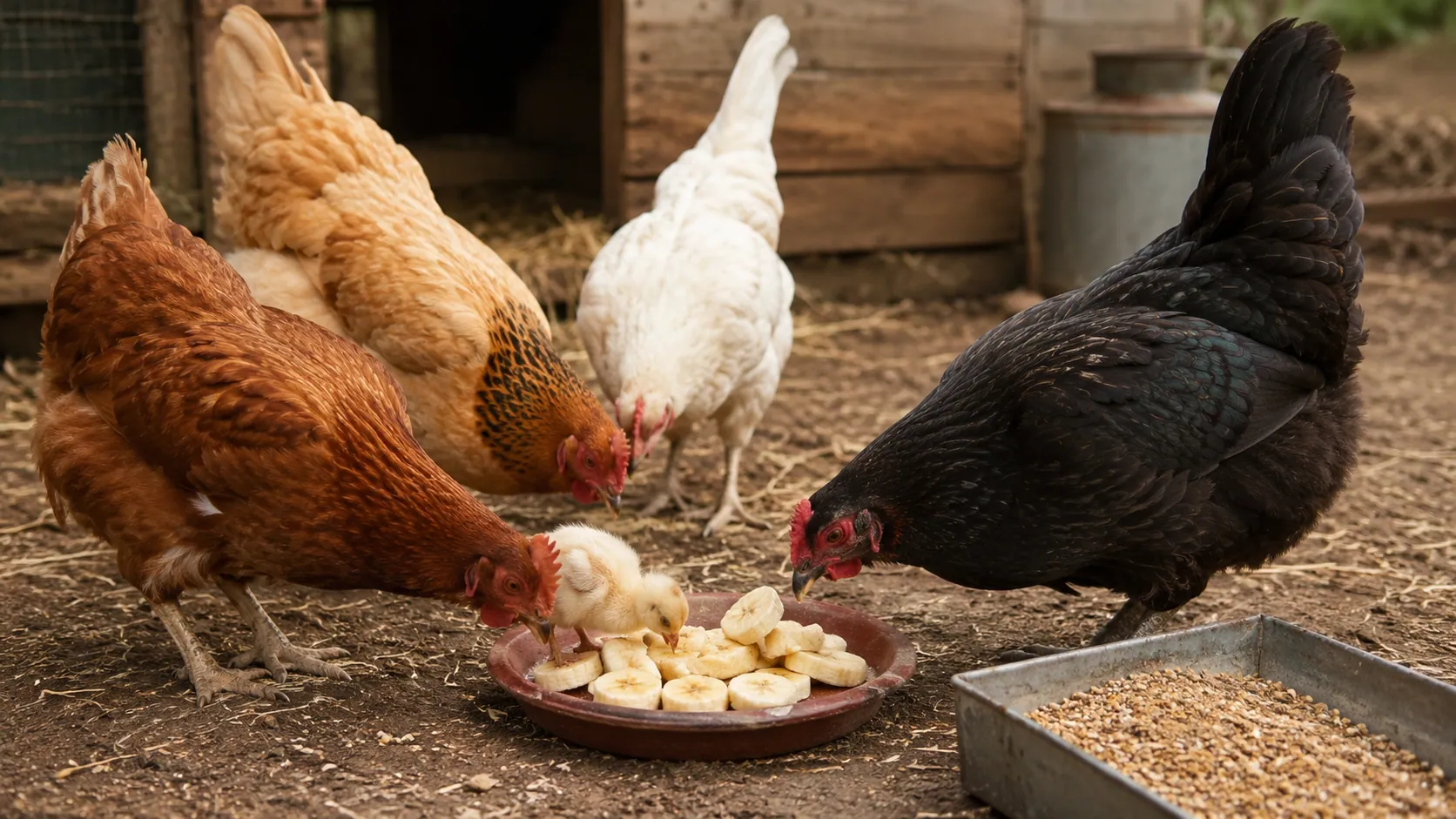
Yes, chickens can eat bananas safely as an occasional treat. Bananas are soft, sweet, easy to peck, and many backyard chickens enjoy them. They can be a fun snack for a flock, especially when served in small pieces, but they should never take the place of a balanced poultry feed.
The main thing to remember is that bananas for chickens are safe only when they are fed in moderation. Portion size, feeding frequency, ripeness, cleanliness, and the overall condition of your flock all matter. A healthy adult hen may enjoy a few banana slices without any issue, while a chick, overweight bird, or chicken with digestive problems may need extra caution.
Bananas can offer some useful nutrients, but they are still a treat. Chickens need complete feed for daily nutrition, strong egg production, healthy feathers, and steady energy. In this guide, we’ll look at the benefits, possible risks, banana peels, baby chicks, laying hens, safe serving methods, and the times when bananas may not be the best choice.
Are Bananas Good for Chickens or Just a Treat?
Bananas can be a healthy chicken treat, but they are not a complete food. They contain useful nutrients such as potassium, carbohydrates, fiber, vitamin B6, vitamin C, magnesium, and natural sugars. These nutrients can make bananas a soft, quick-energy snack when your chickens need a little variety in their routine.
However, good chicken nutrition depends on balance. A banana may contain helpful nutrients, but it does not provide everything chickens need each day. Chickens still require a complete poultry feed that supplies enough protein, calcium, amino acids, vitamins, and minerals. These are especially important for laying hens because egg production places a steady demand on the body.
This is where the common 90/10 rule is helpful. Around 90% of a chicken’s diet should come from complete poultry feed, while treats should make up no more than about 10%. That includes bananas, vegetables, grains, mealworms, kitchen scraps, and any other extras.
So, are bananas good for chickens? Yes, in small amounts. But they are best viewed as a treat, not a major part of the diet. Poultry nutrition is not about finding one “superfood.” It is about giving chickens the right foundation every day, then using safe treats like bananas to add variety without upsetting that balance.
How Much Banana Can Chickens Eat?
When it comes to feeding bananas to hens, small portions are best. A few small slices per chicken are usually enough. For a small backyard flock, half a banana to one whole banana shared occasionally is often plenty, depending on the number of birds.
Some chicken keepers use about 1 tablespoon of banana per adult chicken as a simple treat-size estimate. You do not need to measure perfectly every time, but this gives you a helpful idea of what “moderation” looks like.
Chickens should not eat bananas every day. Bananas contain natural sugar, and too much sugar can reduce the quality of the overall diet. If chickens fill up on sweet fruit, they may eat less of their balanced feed. Over time, this can affect protein intake, calcium levels, body weight, digestion, and egg production.
Too much banana may also cause loose droppings or digestive upset, especially if the fruit is very ripe or served in large amounts. Laying hens, in particular, need steady nutrition from layer feed because they require enough protein and calcium to support eggshell strength and overall health.
A simple rule is this: if bananas are more than a small treat, it is probably too much. Serve a little, watch how your flock responds, and keep their main diet focused on complete feed and clean water.
Can Chickens Eat Banana Peels?
Can chickens eat banana peels? Yes, chickens can sometimes eat banana peels, but the peel is not as easy to eat as the soft banana fruit. Banana peel is tougher, more fibrous, and usually less appealing to chickens. Some birds may peck at it, while others may ignore it completely.
If you want to offer banana peel for chickens, prepare it carefully first. Banana peels should be washed well, free from stickers, and chopped into small pieces. Store-bought banana skins may have dirt, handling residue, or possible pesticide residue on the outside, so washing is important. If possible, organic bananas are a better choice when you plan to feed the peel.
Some chicken keepers boil or soften banana peels before feeding them. This can make the peel easier for chickens to peck, swallow, and digest. You do not have to do this every time, but it can help if your birds are not interested in raw peel or if the peel feels especially tough.
When feeding banana skins to chickens, keep the amount small. A few chopped pieces are enough to test whether your flock likes them. Banana peels should be treated like other chicken-safe scraps: useful in moderation, but not something that should fill the feeder.
If your chickens ignore the peel, do not leave it sitting in the run or coop for too long. Old banana peel can spoil, attract flies, draw ants, or encourage rodents. Remove leftovers before they become messy or unsafe.
The Safest Way to Feed Bananas to Chickens
The best way to feed chickens bananas is to keep things clean, simple, and controlled. Bananas are soft, sticky, and sweet, so preparation matters more than many people think.
Start with a fresh or slightly overripe banana. A few brown spots are fine, but avoid anything moldy, rotten, fermented, or sour-smelling. Remove stickers and cut away any spoiled areas. You can peel the banana if you only want to offer the soft fruit, or you can wash and chop the peel separately if you plan to feed that too.
Slice or mash the banana into small pieces before serving. Smaller pieces are easier for chickens to peck and reduce the chance that one bossy hen grabs a large chunk and runs off with it. If you have a mixed flock, spread the pieces out in different areas instead of placing everything in one pile. This gives shy hens and lower-ranking birds a fair chance to enjoy the treat.
Bananas are better served outside the coop when possible. Mashed banana can stick to bedding, feeders, feathers, and dirt. It can also attract flies, ants, and other pests if leftovers are not removed. A clean plate, shallow dish, or dry feeding spot in the run works well.
Here is a simple method:
- Choose a fresh or slightly overripe banana.
- Remove stickers and spoiled areas.
- Peel it if preferred.
- Slice or mash it into small pieces.
- Spread pieces out so dominant hens do not eat everything.
- Remove leftovers after feeding.
A practical backyard flock tip is to scatter tiny banana pieces around the run instead of dumping them in one spot. Chickens naturally enjoy pecking and searching, and this method turns a small snack into light enrichment. It also helps quieter birds get a few bites without being pushed away.
Always keep fresh water nearby. Bananas are sticky, and chickens may drink after eating them. Clean feeding habits, small portions, and quick cleanup make bananas one of the easier safe treats for chickens to offer.
When Bananas May Not Be a Good Idea for Chickens
Bananas are not toxic to chickens, but they are not right for every situation. Like many backyard chicken treats, they can cause problems when they are fed too often, served in large amounts, or given to birds that need a stricter diet.
Avoid or limit bananas if your chickens are overweight, having diarrhea, eating less of their regular feed, recovering from illness, or already getting several sugary fruits. Chickens on a controlled diet should also avoid extra treats unless recommended by a poultry-savvy veterinarian or experienced flock adviser.
Very young chicks need extra caution. Their bodies are growing quickly, and they need the nutrients in chick starter more than fruit. A tiny taste of mashed banana may not harm an older, healthy chick, but treats should not become part of their daily routine.
Never feed chickens bananas that are moldy, fermented, rotten, or smell like alcohol. Spoiled fruit can upset digestion and may expose birds to harmful organisms. If a banana looks slimy, fuzzy, leaking, or unusually sour-smelling, throw it away instead of adding it to the flock’s treat pile.
It is also best to avoid processed banana foods. Banana bread, banana chips, sweetened dried bananas, banana pudding, and banana desserts are not ideal for chickens. These foods may contain added sugar, salt, oil, butter, dairy, preservatives, or ingredients that chickens do not need. Some baked goods may also include chocolate or artificial sweeteners, which should never be treated as safe flock snacks.
If a chicken is sick, weak, losing weight, or showing signs of digestive upset, treats should not replace proper care. Bananas may be soft and easy to eat, but they are not treatment for illness. In those cases, focus on clean water, correct feed, safe housing, and qualified veterinary guidance when needed.
Can Baby Chicks Eat Bananas?
Can baby chicks eat bananas? Baby chicks can peck at a tiny amount of soft banana, but it is better to be cautious. Chicks grow quickly, and their main diet should come from a good-quality chick starter feed, not fruit or kitchen scraps.
Chick starter is made to support early growth. It gives young chicks the protein, vitamins, minerals, and energy they need for strong bones, feather development, immune health, and healthy digestion. Bananas may be soft and easy to eat, but they do not provide the same balanced nutrition that chicks need during their first weeks of life.
Too many treats for baby chicks can dilute essential nutrition. If chicks fill up on banana, they may eat less starter feed, which can affect growth and strength. This is why banana should only be offered as a very small taste, not a regular part of their diet.
If you do offer bananas for chicks, mash a tiny amount until it is soft and easy to peck. Do not give large chunks. Also, make sure chicks have access to chick grit if they are eating anything beyond their starter feed. Grit helps chickens grind and digest foods that are not crumble or mash feed.
The safest approach is to wait until chicks are older, active, and eating their starter feed well before introducing treats. Even then, keep banana portions tiny and occasional. For young birds, the best “treat” is still proper feed, clean water, warmth, and a safe brooder.
Do Bananas Help Laying Hens, Eggs, or Molting Chickens?
Bananas can provide quick energy, but they do not directly boost egg production. They are a soft, sweet treat that laying hens may enjoy, but they are not a replacement for complete nutrition.
For steady egg production, laying hens need enough protein, calcium, phosphorus, vitamin D, amino acids, and complete layer feed. Calcium supports strong eggshells, while protein helps maintain body condition and feather quality. If hens eat too many treats, including bananas, they may not get enough of these important nutrients from their regular feed.
During molt, chickens often need extra nutritional support because they are replacing old feathers with new ones. Since feathers are mostly protein, a good molting chickens diet should focus more on quality protein than sugary fruit. Bananas can still be offered as a small treat, but they should not become a major food during molt.
Bananas may be helpful in a simple, practical way because they are soft and easy to eat. If a hen is slightly stressed, picky, or recovering her appetite, a small amount of mashed banana may encourage interest in food. Still, this should not replace high-quality feed or proper care.
If your hens stop laying or egg production drops, bananas are usually not the solution. Poor laying is more often linked to age, shorter daylight, stress, molt, illness, parasites, heat, poor nutrition, or lack of calcium. In that case, look at the full flock environment and diet instead of relying on one treat.
Fresh, Frozen, Ripe, or Overripe Bananas: Which Is Best?
Fresh bananas are one of the easiest options for chickens. They are simple to slice, soft enough to peck, and less messy than very mushy fruit. If you are feeding bananas for the first time, fresh banana slices are a good place to start.
Ripe bananas are also safe for chickens. They are sweeter, softer, and usually more appealing to the flock. Many chickens prefer ripe bananas because they are easy to break apart and eat. Just keep the portion small because ripe bananas contain natural sugars.
Can chickens eat overripe bananas? Yes, slightly overripe bananas are usually fine as long as they are not moldy, rotten, fermented, or alcohol-smelling. Brown spots are not a problem, but fuzzy mold, slime, leaking liquid, or a sour smell means the banana should be thrown away.
Can chickens eat frozen bananas? Yes, frozen banana slices can be used as a cooling summer treat. Slice the banana before freezing so the pieces are easier to serve. On hot days, a few frozen pieces can give chickens something refreshing to peck at, but they should still have shade and plenty of clean water.
Can chickens eat dried bananas? Only rarely, and only if they are plain and unsweetened. Dried fruit is more concentrated in sugar than fresh fruit, so a small piece goes a long way. Avoid banana chips that are fried, salted, sweetened, or coated.
It is best to avoid processed banana products made for people. Do not feed chickens banana foods that contain chocolate, xylitol, syrup, artificial flavorings, salt, preservatives, or heavy added sugar. Fresh, ripe banana in small amounts is the safer and more natural choice.
Conclusion: Can Chickens Eat Bananas?
Can chickens eat bananas? Yes, chickens can safely eat bananas in moderation. Bananas are soft, sweet, and usually safe as an occasional treat, but they should never replace complete poultry feed.
The main takeaway is simple: bananas are fine when served in small amounts. Complete feed should remain the main diet because chickens need steady protein, calcium, vitamins, minerals, and clean water to stay healthy. Too much banana can add excess sugar, reduce balanced nutrition, and sometimes lead to digestive upset.
Banana peels can also be offered, but they need to be washed, chopped, and served carefully. Baby chicks need extra caution because their diet should focus on chick starter feed. Moldy, fermented, processed, sweetened, or dessert-style banana foods should be avoided completely.
Bananas can be a fun flock snack, but the healthiest chickens are still built on clean water, balanced feed, safe housing, and thoughtful treat habits.
Quick FAQ About Chickens and Bananas
Can chickens eat bananas every day?
No. Bananas should be an occasional treat, not a daily food. They are soft, sweet, and easy for chickens to enjoy, but too much can add extra sugar and reduce how much balanced feed your flock eats.
Can chickens eat banana peels?
Yes, chickens can eat banana peels, but they should be prepared properly. Wash the peel well, remove stickers, chop it into small pieces, and offer only a small amount. Some chickens may ignore banana peels because they are tougher and more fibrous than the fruit.
Can chickens eat overripe bananas?
Yes, chickens can eat overripe bananas as long as they are not moldy, fermented, rotten, or alcohol-smelling. A banana with brown spots is usually fine, but anything fuzzy, slimy, sour, or spoiled should be thrown away.
Can chickens eat banana chips?
Chickens can eat banana chips only rarely if they are plain, unsweetened, and not fried or salted. Fresh banana is a better choice because it has more moisture and is easier for chickens to peck and digest.
Can chickens eat banana bread?
It is better to avoid banana bread. It may contain sugar, butter, oil, salt, dairy, chocolate, nuts, spices, or other ingredients chickens do not need. Even if a small crumb may not harm a healthy adult chicken, banana bread is not a good flock treat.
Will bananas give chickens diarrhea?
Bananas may cause loose droppings or digestive upset if chickens eat too much. This is because bananas are soft, sweet, and rich compared with regular poultry feed. Small portions are usually easier on digestion.
Do chickens like bananas?
Many chickens like bananas, but not every bird will. Some chickens rush toward soft fruit, while others may peck once and walk away. Flock preferences vary, and that is normal with chickens eating fruit or trying new safe fruit for chickens.
Disclaimer
This article is for general informational purposes only and is not a substitute for professional poultry, veterinary, or animal-care advice. Individual flock needs, chicken health, diet tolerance, and feeding preferences may vary. For concerns about illness, digestion, or special dietary needs, consult a qualified veterinarian or poultry expert.