

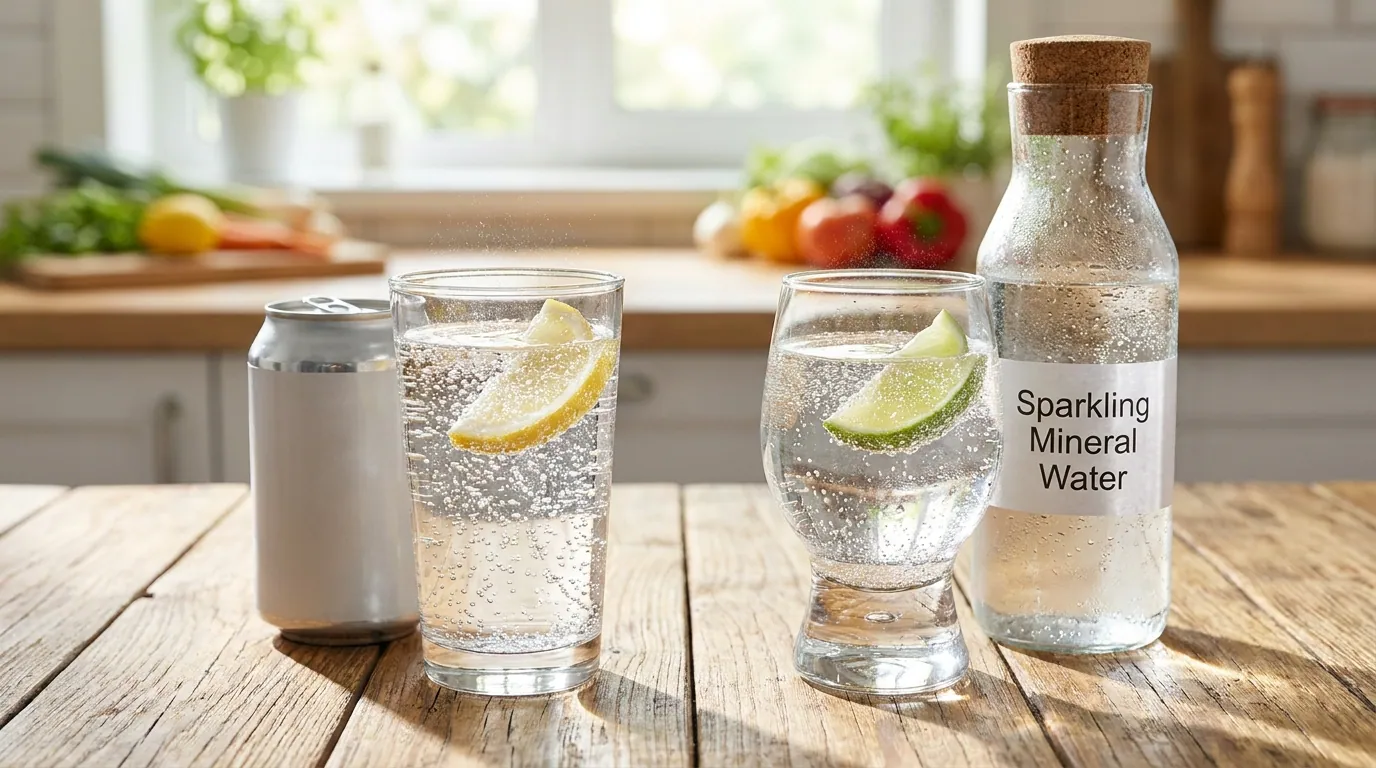
Not exactly, although the two are very similar. Both are forms of carbonated water, which means they contain dissolved carbon dioxide, also called CO₂, that creates bubbles and fizz. In everyday conversation, many people use sparkling water and seltzer water interchangeably, especially when talking about a plain, bubbly drink with 0 calories and no added sugar.
The main difference usually comes down to carbonation source, mineral content, and taste. Seltzer is typically plain water that has been artificially carbonated with added CO₂. Sparkling water, especially sparkling mineral water, may come from a natural spring or contain natural minerals like calcium, magnesium, sodium, or bicarbonate.
So, when comparing seltzer vs sparkling water, the answer is simple: they are both bubbly waters, but they are not always the same drink.
The Short Answer: Are Sparkling Water and Seltzer the Same?
In casual use, sparkling water and seltzer are often treated as the same thing because both are clear, fizzy, and usually unsweetened. If you order one at a restaurant or buy a can from the store, you may not notice a big difference unless you check the label or taste them side by side.
But in a more specific sense, seltzer water usually means plain carbonated water made by adding carbon dioxide gas to still water. It is generally mineral-free, neutral in flavor, and often used as a drink mixer for cocktails, mocktails, or flavored beverages.
Sparkling water is a broader term. It can mean any water with bubbles, but it often refers to water that either comes from a natural source or contains trace minerals. This is why some sparkling waters taste slightly salty, earthy, crisp, or mineral-like.
A simple way to remember it is this:
| Drink | Basic Meaning |
| Seltzer | Plain water carbonated with added CO₂ |
| Sparkling water | Carbonated water that may contain natural minerals |
| Sparkling mineral water | Sparkling water with minerals from a natural source |
So, is seltzer water the same as sparkling water? Sometimes in everyday language, yes. But when looking at ingredients, source, and taste, there can be clear differences.
What Is Seltzer Water?
Seltzer water is water that has been carbonated by adding CO₂. It is usually made from plain, filtered, or purified water. The carbonation gives it bubbles, a sharp fizz, and a refreshing bite.
Most plain seltzer does not contain added minerals, sugar, sweeteners, or calories. That is why many people choose it as a sugar-free alternative to soda. It gives the mouthfeel of a fizzy drink without the sweetness, color, or heavy flavor of soft drinks.
The phrase “seltzer is plain water carbonated with carbon dioxide” is the simplest definition. This makes it different from club soda, which usually contains added mineral salts, and different from tonic water, which contains quinine and often sugar or sweeteners.
Seltzer has a clean taste and neutral profile, so it is especially useful in drinks where you do not want the water to change the flavor. For example, plain seltzer works well in cocktails, mocktails, spritzers, homemade soda, and fruit-infused drinks.
Flavored seltzer may include fruit essences, natural flavors, or citric acid, but the healthiest options are usually labeled zero-calorie, sugar-free, and no added sugar.
What Is Sparkling Water?
Sparkling water is water that contains dissolved carbon dioxide, which creates bubbles. Like seltzer, it can be artificially carbonated. However, the term sparkling water is often used for water that has a more natural or mineral-rich profile.
Some sparkling water comes from underground springs or natural mineral sources. In those cases, the water may contain natural minerals such as calcium, magnesium, sodium, potassium, or bicarbonate. These minerals can affect the flavor, texture, and mouthfeel.
This is why sparkling mineral water often tastes different from plain seltzer. It may have a mineral-like taste, a slightly salty finish, or a smoother bubble structure. Some people enjoy this more complex flavor with meals, while others prefer the clean neutrality of seltzer.
It is important to note that not all sparkling water is naturally carbonated. Some brands add CO₂ to still water and still label the product as sparkling water. That is why label reading matters. The best way to understand what you are buying is to check the ingredient label, nutrition facts label, and mineral content.
Seltzer vs Sparkling Water: Main Differences
The difference between seltzer and sparkling water is easiest to understand in a side-by-side comparison.
| Feature | Seltzer Water | Sparkling Water |
| Carbonation | Usually artificially carbonated with CO₂ | May be naturally or artificially carbonated |
| Mineral Content | Usually no added minerals | May contain natural minerals or added minerals |
| Taste | Clean, crisp, neutral | Can be mineral-like, salty, earthy, or smooth |
| Calories | Usually 0 calories | Usually 0 calories if plain |
| Sugar | Usually no sugar if plain | Usually no sugar if plain |
| Best Use | Mixing drinks, daily sipping, flavored beverages | Sipping, meals, mineral taste, premium drinks |
| Label Clues | “Seltzer,” “carbonated water” | “Sparkling water,” “sparkling mineral water” |
The biggest practical difference is mineral content. Seltzer is typically mineral-free, while sparkling water may be mineral-rich. That can change both taste and sodium level.
The second big difference is source of carbonation. Seltzer is normally made with artificial carbonation, meaning CO₂ is added to water. Sparkling water may have natural carbonation, especially if it comes from a spring, though many bottled sparkling waters are also carbonated with added CO₂.
If you want a clean, simple bubbly drink, seltzer is often enough. If you want more taste and a mineral profile, sparkling mineral water may be better.
Carbonation, Minerals, and Taste: Why They Matter
The bubbles in both drinks come from carbon dioxide. When CO₂ dissolves in water, it forms a weak acid called carbonic acid. This gives carbonated water its slightly tangy bite and refreshing fizz.
In seltzer, the main sensory experience is the carbonation itself. The bubbles may feel sharp, crisp, or soda-like. Since there are usually no minerals, seltzer often has a neutral taste that works well with lemon, lime, fruit juice, herbs, or flavored syrups.
In sparkling water, the minerals can add another layer. Calcium and magnesium may create a smoother mouthfeel. Sodium and bicarbonate can add a slight salty note. Trace minerals can make the water taste earthy, delicate, or premium.
This is why two bottles of sparkling water can taste very different, even if both are just “water with bubbles.” The source of water, carbonation intensity, and mineral content all shape the final flavor.
For users wondering why sparkling water tastes salty, the answer is usually sodium or other mineral salts. For users wondering why seltzer tastes bitter, the reason may be strong carbonation, carbonic acid, or flavoring ingredients.
Sparkling Water vs Seltzer vs Club Soda vs Tonic Water
Many people confuse sparkling water, seltzer, club soda, soda water, and tonic water. They are all fizzy, but they are not identical.
| Beverage | What It Is | Key Ingredients | Best Use |
| Seltzer | Plain carbonated water | Water + CO₂ | Daily drinking, cocktails, mocktails |
| Sparkling Water | Carbonated water, sometimes mineral-rich | Water + CO₂ + possible minerals | Sipping, meals, hydration |
| Sparkling Mineral Water | Sparkling water with natural minerals | Water + CO₂ + calcium, magnesium, sodium | Premium sipping |
| Club Soda | Carbonated water with added mineral salts | CO₂ + sodium bicarbonate or potassium sulfate | Cocktails |
| Tonic Water | Carbonated drink with quinine | CO₂ + quinine + sugar/sweeteners | Gin and tonic, bitter mixers |
| Soda Water | Regional term; may mean seltzer or club soda | Varies by country or brand | Depends on label |
Club soda usually has added salts such as sodium bicarbonate or potassium sulfate, which gives it a stronger mineral bite. Tonic water contains quinine, which gives it a bitter taste, and it often contains sugar. Because of that, tonic water is usually not calorie-free unless it is specifically labeled diet or sugar-free.
For cocktails, seltzer gives a clean fizz. Club soda adds more flavor and body. Tonic water adds bitterness and sweetness. Sparkling mineral water can work in simple drinks but may change the taste because of its minerals.
Is Sparkling Water or Seltzer Healthier?
Plain sparkling water and plain seltzer are generally very similar from a health perspective. Both can be zero-calorie, sugar-free, and hydrating. If the label says only carbonated water or water plus CO₂, it is usually a simple drink.
The health differences appear when the product includes added sugar, artificial sweeteners, sodium, citric acid, or flavoring. A plain seltzer with 0 calories is very different from a sweetened carbonated drink. A sparkling mineral water with higher sodium may not be ideal for someone on a sodium-restricted diet.
For many people, plain seltzer or sparkling water can be a helpful healthy soda alternative. It gives the sensation of drinking something fizzy without the sugar intake found in regular soda.
A useful rule is:
“The healthiest carbonated water is the one with the simplest label: water, carbonation, and no added sugar.”
Does Sparkling Water Count as Water Intake?
Yes, plain sparkling water and plain seltzer can generally count toward daily hydration. They are mostly water, and the bubbles do not cancel out their hydrating effect.
However, check the label if you drink flavored options. Some drinks may include sugar, caffeine, sodium, citric acid, or artificial sweeteners. These ingredients do not automatically make the drink bad, but they can matter depending on your diet, teeth sensitivity, digestion, or health needs.
Teeth, Bloating, and Digestion
Some users worry about tooth enamel, bloating, or stomach discomfort. These concerns are reasonable, but context matters.
Carbonated water contains carbonic acid, which makes it slightly acidic. Plain sparkling water is usually much less concerning than sugary soda, but frequent sipping all day may expose teeth to acidity for longer periods. To reduce enamel exposure, drink it with meals, avoid holding it in your mouth, and consider using a straw if you are sensitive.
Carbonation can also cause gas or bloating in some people. If you have IBS, acid reflux, or digestive issues, strong fizz may make symptoms worse. In that case, choose lightly carbonated water, drink smaller amounts, or switch to still water when needed.
Flavored Seltzer and Flavored Sparkling Water: What to Check
Flavored seltzer and flavored sparkling water can be refreshing, but flavoring changes the label. Some products use only natural fruit essences, while others include citric acid, sweeteners, juice, or added sugar.
Before buying, check whether the drink is:
- 0 calories
- No added sugar
- No artificial sweeteners
- Sodium-free or low sodium
- Free from ingredients you personally avoid
A plain lemon or berry seltzer may still be a simple low-calorie beverage, but not all flavored waters are the same. Some flavored sparkling drinks look like water but behave more like soft drinks because they contain sweeteners, sugar, or acids.
If you are choosing carbonated water for health reasons, the nutrition facts label is more important than the front of the can. Words like “natural,” “sparkling,” “pure,” or “refreshing” do not always tell the full story.
When to Choose Seltzer, Sparkling Water, Club Soda, or Tonic Water
Choosing between seltzer water vs sparkling water depends on how you plan to use it.
Choose seltzer if you want a clean, neutral, budget-friendly fizzy drink. It is ideal for mixing with fruit, making mocktails, or replacing soda. Because seltzer usually has no minerals, it does not compete with other flavors.
Choose sparkling water if you want a more premium sipping experience. It is a good choice with meals, especially if you enjoy mineral-rich water with a smoother or more layered taste.
Choose club soda for cocktails that need extra bite. The added mineral salts can give drinks more structure.
Choose tonic water only when you want its bitter-sweet flavor. It is not the same as seltzer or sparkling water because quinine and sweeteners change the taste and nutrition profile.
If you are asking, can you use seltzer and sparkling water interchangeably? The answer is usually yes for casual drinking and many recipes. But in cocktails, mineral content and sweetness can change the final result.
How to Read Labels Before Buying
A good label-reading habit can help you avoid confusion. When comparing sparkling water vs seltzer, look beyond the front label and check the ingredients.
Look for:
| Label Item | Why It Matters |
| Calories | Plain options usually have 0 calories |
| Sugar | Added sugar makes it more like soda |
| Sweeteners | Some people avoid artificial sweeteners |
| Sodium | Important for sodium-restricted diets |
| Minerals | Affects taste and mouthfeel |
| Quinine | Means it is tonic water |
| Citric Acid | Adds tartness and acidity |
| Natural Flavors | Common in flavored seltzer |
| Carbonation Source | Helps explain taste and bubbles |
If the ingredient list says only carbonated water, it is likely seltzer or plain sparkling water. If it lists minerals like sodium bicarbonate or potassium sulfate, it may be club soda. If it includes quinine and sugar, it is tonic water.
Regional Names and Common Confusion
Part of the confusion comes from regional language. In the United States, especially in some areas, people often say seltzer. In the United Kingdom, people are more likely to say sparkling water or fizzy water. In restaurants, “still or sparkling” usually means non-carbonated water or carbonated bottled water.
In some places, soda water can mean seltzer. In others, it may mean something closer to club soda. That is why the label matters more than the name.
A person asking for seltzer, fizzy water, bubbly water, or sparkling water may be asking for nearly the same experience: cold water with bubbles. But brands and regions may use these words differently.
Bottled, Canned, or Homemade: Which Is Better?
Sparkling water and seltzer come in bottles, cans, and home carbonation systems. Each option has trade-offs.
Bottled sparkling mineral water can taste premium, but it may cost more and create more packaging waste. Canned seltzer is convenient and portable, but aluminum production and shipping still have an environmental impact. Home carbonation systems use a CO₂ cartridge or CO₂ tank to carbonate water at home, which can reduce single-use bottles if used regularly.
A home carbonator may be useful if you drink carbonated water daily and want customizable carbonation levels. You can use filtered water, adjust the fizz, and add fruit infusions without buying multiple cans or bottles.
From a sustainability angle, the best option depends on your habits. If you drink fizzy water only occasionally, cans or bottles may be fine. If you drink it every day, home carbonation may be more practical.
FAQs About Sparkling Water and Seltzer
Is sparkling water the same as carbonated water?
Sparkling water is a type of carbonated water. Carbonated water is the broad category for water that contains dissolved CO₂. Sparkling water, seltzer, club soda, and tonic water all fall under the broader fizzy beverage family, but they are not always the same.
Is seltzer the same as carbonated water?
Seltzer is usually plain carbonated water. It is typically water with added carbon dioxide and no added minerals, sugar, or sweeteners unless the brand adds flavoring.
Is seltzer healthier than sparkling water?
Not always. Plain seltzer and plain sparkling water are both usually zero-calorie and sugar-free. Sparkling mineral water may contain helpful minerals, but it may also contain more sodium. The healthiest choice depends on the label.
Does sparkling water have sugar?
Plain sparkling water does not usually contain sugar. However, flavored sparkling drinks may include added sugar, juice, or sweeteners. Always check the nutrition facts label.
Is sparkling water bad for teeth?
Plain sparkling water is mildly acidic because of carbonic acid. It is generally a better choice than sugary soda, but frequent sipping may not be ideal for tooth enamel. If you are concerned, drink it with meals and avoid sweetened acidic versions.
Can sparkling water cause bloating?
Yes, it can for some people. The bubbles may lead to gas, bloating, or stomach discomfort, especially for people with IBS or reflux. If that happens, reduce the amount or choose still water more often.
Can you use seltzer in cocktails and mocktails?
Yes. Seltzer is one of the best carbonated waters for cocktails and mocktails because it has a clean taste and does not add sweetness. Club soda may be better when you want a stronger mineral bite.
Is tonic water the same as sparkling water?
No. Tonic water is carbonated, but it contains quinine and often sugar or sweeteners. It has a bitter taste and is usually used as a mixer, not as plain drinking water.
Final Words: Similar, But Not Always Identical
So, is sparkling water the same as seltzer? They are very similar, but not always identical. Both are types of carbonated water, and both get their bubbles from CO₂. The difference is that seltzer is usually plain water with added carbon dioxide, while sparkling water may contain natural minerals, come from a spring source, or have a more mineral-rich taste.
For a clean, neutral, everyday fizzy drink, choose seltzer water. For a more complex flavor or mineral profile, choose sparkling water or sparkling mineral water. For cocktails, consider seltzer or club soda. For bitter-sweet mixed drinks, tonic water has its own role.
The best choice is the one that fits your taste, label preferences, health needs, and how you plan to use it.
Disclaimer: This article is for general informational and educational purposes only. Sparkling water, seltzer, club soda, and tonic water can vary in carbonation, mineral content, sodium levels, sweeteners, and ingredients depending on the brand and product type. Always read product labels carefully, especially if you have dietary restrictions, digestive sensitivities, or specific health concerns.