

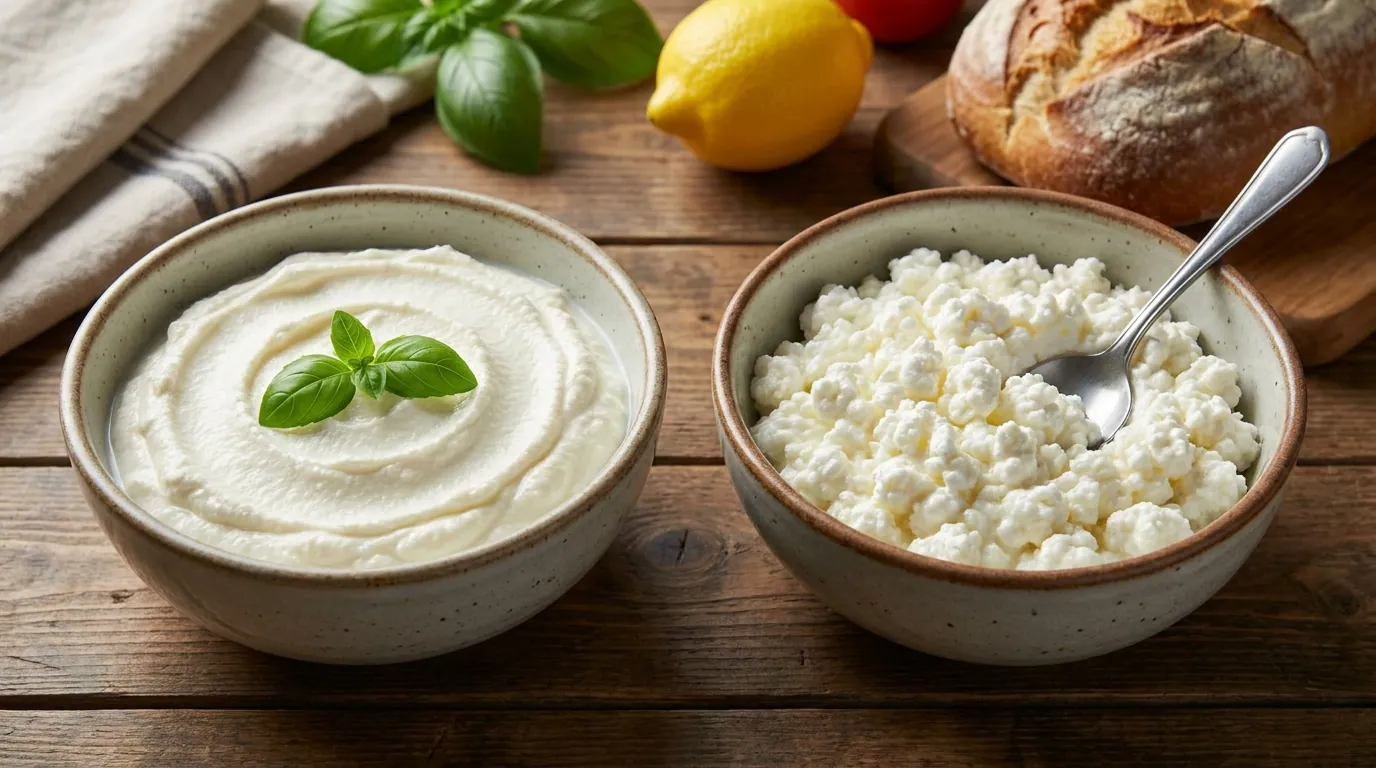
Is ricotta cheese the same as cottage cheese? No, ricotta cheese and cottage cheese are not the same, even though they are both soft, white, fresh dairy products often used in similar recipes. The main difference between ricotta and cottage cheese comes down to how they are made, how they taste, how they feel in your mouth, and how they behave in cooking.
Ricotta is usually smooth, creamy, mildly sweet, and slightly grainy, while cottage cheese is lumpy, curdy, wetter, tangier, and often saltier. Cottage cheese is also commonly known for being high in protein, while ricotta is often chosen for its creamy texture and classic role in dishes like lasagna, ravioli, stuffed shells, cannoli, and cheesecake.
If you are comparing ricotta vs cottage cheese because you are cooking, dieting, shopping, or trying to fix a recipe, this guide explains exactly when they are interchangeable and when they are not.
Quick Answer: Ricotta and Cottage Cheese Are Not the Same
Ricotta and cottage cheese are not the same thing. They may look similar because both are fresh cheeses, but they have different textures, flavors, and cooking uses.
Ricotta cheese is usually smoother and creamier. It has a mild, milky, slightly sweet flavor and is often used in Italian-inspired dishes such as lasagna, ravioli, manicotti, cannoli, and baked pasta. Traditional ricotta is linked to whey, the liquid left behind during cheesemaking, although many modern versions may also include whole milk.
Cottage cheese, on the other hand, is made from curds. It has visible lumps, more liquid, and a tangier flavor. It is often eaten as a snack, added to breakfast bowls, spread on toast, blended into smoothies, or used as a lighter substitute for ricotta in dishes like lasagna.
Here is the simple answer:
| Feature | Ricotta Cheese | Cottage Cheese |
| Texture | Smooth, creamy, slightly grainy | Lumpy, curdy, wetter |
| Flavor | Mild, milky, slightly sweet | Mild, tangy, often saltier |
| Made from | Traditionally whey | Milk curds |
| Protein | Moderate | Often higher |
| Best use | Lasagna, cannoli, pasta, desserts | Snacks, bowls, dips, lighter lasagna |
So, while cottage cheese vs ricotta is a fair comparison, they are not identical ingredients.
Ricotta vs Cottage Cheese: Main Differences at a Glance
The easiest way to understand ricotta cheese vs cottage cheese is to compare them side by side. Both belong to the broad family of fresh cheese, but they serve different purposes in the kitchen.
| Category | Ricotta Cheese | Cottage Cheese |
| Cheese type | Fresh soft cheese | Fresh curd cheese |
| Texture | Creamy, smooth, slightly grainy | Lumpy, curdy, wetter |
| Taste | Mild, sweet, milky | Tangy, salty, dairy-forward |
| Main structure | Fine curds / whey-based style | Larger milk curds |
| Moisture | Moist but usually thicker | Often wetter with more liquid |
| Common nutrition strength | Calcium, creamy richness | Protein, lower-calorie options |
| Common concern | Can be richer and higher in fat | Can be saltier and watery |
| Best recipes | Lasagna, stuffed shells, ravioli, cheesecake, cannoli | Toast, snacks, bowls, dips, high-protein recipes, lighter pasta bakes |
The biggest difference is texture and flavor. Ricotta feels more like a soft, creamy filling. Cottage cheese has separate curds, so it can feel chunky unless you blend it.
This matters because texture changes recipes. A lasagna made with whole milk ricotta will usually taste creamier and smoother. A lasagna made with cottage cheese may taste lighter and tangier, but it can become watery if the cottage cheese is not drained.
What Is Ricotta Cheese?
Ricotta cheese is a soft, fresh cheese known for its creamy texture, mild flavor, and slightly sweet taste. The word “ricotta” is often connected to the idea of being “recooked,” because traditional ricotta is made by reheating leftover whey from the cheesemaking process.
Ricotta can be made from different types of milk, including cow’s milk, sheep milk, goat milk, or water buffalo milk. In many grocery stores, you will usually find ricotta made from cow’s milk. It may come as whole milk ricotta, part-skim ricotta, or low-fat ricotta.
Ricotta is especially popular in Italian cuisine and Italian-American dishes. It is often used in:
- Lasagna
- Ravioli
- Stuffed shells
- Manicotti
- Cannoli
- Cheesecake
- Lemon-ricotta desserts
- Pizza topping
- Whipped ricotta spreads
Because ricotta is smoother than cottage cheese, it works well when a recipe needs a soft, creamy filling. It also blends nicely with eggs, herbs, Parmesan, mozzarella, sugar, citrus, or chocolate, depending on whether the dish is savory or sweet.
Ricotta is not just “blended cottage cheese.” It has its own production style, flavor, and cooking behavior.
What Is Cottage Cheese?
Cottage cheese is a fresh cheese made from milk curds. It has a soft but lumpy texture because the curds remain visible instead of being fully blended into a smooth cheese.
Cottage cheese can come in several forms, including small-curd cottage cheese, medium-curd cottage cheese, and large-curd cottage cheese. You may also see full-fat cottage cheese, low-fat cottage cheese, fat-free cottage cheese, 2% cottage cheese, and low-sodium cottage cheese.
Its taste is usually mild, tangy, and a little salty. Some brands are creamier, while others are wetter or more curd-heavy. That is why one container of cottage cheese may feel very different from another.
Cottage cheese is popular because it is often high in protein and easy to use in quick meals. People eat it with fresh fruit, crackers, vegetables, toast, or breakfast bowls. It is also blended into high-protein smoothies, pancake batter, dips, sauces, and meal-prep recipes.
In cooking, cottage cheese can sometimes act as a ricotta substitute, especially in baked pasta dishes. However, because it contains more noticeable curds and moisture, it often needs to be drained, strained, or blended before it can mimic ricotta’s creamy texture.
How Ricotta and Cottage Cheese Are Made Differently
One of the clearest answers to what is the difference between ricotta and cottage cheese is found in the cheesemaking process.
Traditional ricotta is associated with whey, which is the liquid left after milk has been curdled and strained during cheesemaking. The whey is heated, often with acid, so fine proteins gather into soft curds. These delicate curds are then drained to create ricotta’s creamy, slightly grainy texture.
Cottage cheese is made differently. It starts with milk that forms curds through culturing or acidification. The curds are cut, cooked gently, drained, and often rinsed. Then cream or a creamy dressing may be added back in to create the final product. Traditional cultured cottage cheese can take 16 hours or more to develop, although modern commercial methods may be faster.
This difference matters because ricotta and cottage cheese do not behave the same way in recipes. Ricotta has a finer, smoother body. Cottage cheese has separate curds and more liquid, which can affect moisture in baked dishes.
Think of it this way:
Ricotta is usually smoother because its curds are finer; cottage cheese is lumpier because its curds stay more visible.
That is why is ricotta made from leftover whey and is cottage cheese made from curds are such important questions. The answer explains why these cheeses may look similar but are not the same.
Texture and Flavor: Smooth Ricotta vs Lumpy Cottage Cheese
Texture is one of the most important differences in the ricotta vs cottage cheese comparison.
Ricotta has a smooth, creamy, slightly grainy texture. It spreads easily, mixes well into fillings, and creates a soft mouthfeel in baked recipes. It is not perfectly silky like cream cheese or mascarpone, but it is much smoother than cottage cheese.
Cottage cheese has a lumpy texture because of its curds. Some people love that texture, especially in snacks and breakfast bowls. Others find it too chunky for recipes that need a smooth filling. If you are asking, does cottage cheese taste like ricotta, the answer is: not exactly. Cottage cheese is usually tangier and saltier, while ricotta is milder and slightly sweeter.
Flavor also matters. Ricotta has a mild, milky flavor that works well in both sweet and savory recipes. It can sit comfortably in a lasagna filling or a dessert filling. Cottage cheese has more of a tangy flavor, which can be great in savory dishes but less ideal in delicate desserts.
Moisture is another key point. Cottage cheese often contains more liquid, which can create a watery texture in baked dishes if it is not drained first. Ricotta also contains moisture, but it usually holds together better in fillings.
Ricotta vs Cottage Cheese Nutrition: Which Is Healthier?
When people ask which is healthier, ricotta or cottage cheese, the best answer is: it depends on your goal. Neither cheese is automatically “better” for everyone.
Cottage cheese is often the better choice for people who want more protein and a lighter meal. Many cottage cheese varieties are known for being high in protein, and low-fat or fat-free versions are widely available. This makes cottage cheese popular for weight loss, muscle gain, high-protein breakfasts, and meal prep.
Ricotta cheese can be a better choice for people who want a creamier texture, a milder flavor, and often less sodium. Ricotta may also provide useful amounts of calcium, along with nutrients such as vitamin B12, vitamin B2, phosphorus, and selenium, depending on the brand and milk type.
Here is a simple goal-based guide:
| Goal | Better Choice | Why |
| More protein | Cottage cheese | Often higher in protein |
| Fewer calories | Cottage cheese | Low-fat options are common |
| Lower sodium | Ricotta | Cottage cheese is often saltier |
| Creamier texture | Ricotta | Smoother and richer |
| Lasagna filling | Ricotta | Traditional, creamy, less lumpy |
| High-protein snack | Cottage cheese | Easy to eat plain or with fruit |
If you are comparing ricotta vs cottage cheese for weight loss, cottage cheese often wins because of its protein-to-calorie ratio. If you are comparing ricotta vs cottage cheese sodium, ricotta often has the advantage, but always check the nutrition label. Some cottage cheese brands offer low-sodium or no salt added cottage cheese, which can change the comparison.
Can You Use Cottage Cheese Instead of Ricotta?
Yes, you can use cottage cheese instead of ricotta in many recipes, but it is not always a perfect swap.
Cottage cheese works best as a ricotta substitute in savory, baked dishes where a little texture difference will not ruin the recipe. It can work well in lasagna, baked ziti, stuffed shells, casseroles, dips, and some pasta fillings. It is especially useful if you want a lighter or higher-protein option.
However, cottage cheese should usually be adjusted before replacing ricotta. Because it is wetter and lumpier, it can make a dish watery or uneven if used straight from the container.
To make cottage cheese more like ricotta:
- Drain it to remove excess liquid.
- Use small-curd cottage cheese for a finer texture.
- Blend it if you want a smoother filling.
- Choose full-fat cottage cheese for a richer result.
- Reduce added salt because cottage cheese can be saltier than ricotta.
In many baked recipes, cottage cheese can be used as a 1:1 substitute, meaning one cup of cottage cheese can replace one cup of ricotta. But this works best when the cottage cheese is drained or blended.
For desserts like cannoli or smooth cheesecake, ricotta is usually better because cottage cheese can taste tangy and feel curdy.
Ricotta vs Cottage Cheese in Lasagna
One of the most common questions is: can cottage cheese replace ricotta in lasagna? Yes, it can, and many home cooks use cottage cheese in lasagna successfully. But the final texture and flavor will be different.
Ricotta creates a classic creamy lasagna filling. It mixes well with eggs, herbs, mozzarella, Parmesan, and seasoning. It gives the lasagna layers a rich, soft texture that feels traditional in many Italian-American recipes.
Cottage cheese creates a lighter, tangier filling. It can be a good choice if you want more protein or fewer calories, but it needs some preparation. If you use watery cottage cheese straight from the container, your lasagna may turn out loose or watery.
To avoid watery cottage cheese in lasagna, drain it first. You can place it in a fine mesh strainer or cheesecloth for several minutes. For a smoother texture, blend it before mixing it with eggs and seasonings. Small-curd cottage cheese usually works better than large-curd cottage cheese because it blends more easily into the filling.
Use ricotta if you want a smooth, creamy, traditional lasagna. Use cottage cheese if you want a lighter, higher-protein version and do not mind a slightly tangier flavor.
| Choose Ricotta If… | Choose Cottage Cheese If… |
| You want a creamy traditional filling | You want more protein |
| You dislike lumps | You like a lighter texture |
| You are making classic lasagna | You want a budget-friendly swap |
| You are making stuffed pasta | You will drain or blend it first |
Best Uses for Ricotta and Cottage Cheese
Ricotta and cottage cheese both have useful roles, but they shine in different ways.
Ricotta cheese is best when a recipe needs a smooth, creamy, mild filling. It works beautifully in lasagna, ravioli, stuffed shells, manicotti, cannoli, cheesecake, lemon-ricotta desserts, pizza, crostini, and whipped ricotta spreads. It also pairs well with herbs, garlic, spinach, tomato sauce, honey, citrus, and berries.
Cottage cheese is best when you want a quick, high-protein food or a lighter substitute. It works well in breakfast bowls, toast, crackers, dips, smoothies, pancakes, casseroles, baked pasta, stuffed peppers, and protein-packed snacks. It also pairs nicely with pineapple, blueberries, melon, grapefruit, vegetables, black pepper, and herbs.
If your recipe needs a creamy dessert filling, ricotta is usually the safer choice. If your recipe is flexible and you want a protein boost, cottage cheese can be a smart option.
For example, in a savory baked pasta, blended cottage cheese can work well. But in cannoli filling, ricotta gives a better classic texture and flavor.
When Not to Substitute Cottage Cheese for Ricotta
Cottage cheese can replace ricotta in some recipes, but not all. The biggest problems are lumpy texture, extra moisture, tangier flavor, and saltiness.
Avoid using cottage cheese as a direct ricotta substitute in recipes where smooth texture is essential. This includes cannoli filling, delicate cheesecakes, smooth dessert fillings, pastries, and some cakes. Even when blended, cottage cheese may still taste tangier than ricotta, which can change the flavor of sweet recipes.
You should also be careful in stuffed pasta recipes such as ravioli or manicotti. Cottage cheese can work, but if it is too wet, the filling may become loose. Draining and blending helps, but ricotta usually gives a more reliable texture.
Cottage cheese is also not ideal when you need a mild, slightly sweet dairy flavor. Ricotta’s creamy consistency and slightly sweet flavor make it better for desserts, while cottage cheese’s tangy flavor is better suited to snacks and savory dishes.
In short: cottage cheese is a useful substitute, but it is not a perfect copy of ricotta.
Which Should You Buy: Ricotta or Cottage Cheese?
Choosing between ricotta and cottage cheese depends on what you are making.
Buy whole milk ricotta if you want the creamiest texture for lasagna, stuffed shells, ravioli, or desserts. Choose part-skim ricotta if you want something lighter but still smooth. If you are making cannoli, cheesecake, or whipped ricotta, ricotta is usually the better choice.
Buy small-curd cottage cheese if you plan to use it as a ricotta substitute. The smaller curds blend more easily and create a smoother result. Choose low-fat cottage cheese or 2% cottage cheese if you want a lighter, high-protein option. Choose low-sodium cottage cheese if you are watching your salt intake.
For snacking, cottage cheese is often more convenient. For classic Italian-inspired cooking, ricotta is often more reliable.
A good rule is simple:
Choose ricotta for creaminess. Choose cottage cheese for protein and lighter meals.
FAQs About Ricotta and Cottage Cheese
Is ricotta just blended cottage cheese?
No. Ricotta is not just blended cottage cheese. Even if you blend cottage cheese until smooth, it is still made differently and usually tastes tangier and saltier than ricotta.
Can I use cottage cheese instead of ricotta in lasagna?
Yes. You can use cottage cheese instead of ricotta in lasagna, but it works best when drained and blended. Small-curd cottage cheese is usually the best option.
Which has more protein, ricotta or cottage cheese?
Cottage cheese often has more protein, especially low-fat or high-protein varieties. This is why it is popular for weight loss, muscle gain, and high-protein meals.
Which has less sodium, ricotta or cottage cheese?
Ricotta is often lower in sodium than cottage cheese, but brands vary. If sodium matters to you, choose low-sodium or no-salt-added cottage cheese.
Does cottage cheese taste like ricotta?
Not exactly. Cottage cheese is usually tangier and saltier, while ricotta is milder, creamier, and slightly sweet.
Does ricotta melt? Does cottage cheese melt?
Neither melts like mozzarella or cheddar. Ricotta softens and becomes creamy when baked. Cottage cheese softens too, but its curds may remain noticeable and can release moisture.
Can you freeze ricotta or cottage cheese?
You can freeze both, but the texture may change. Because they are fresh cheeses with moisture, freezing can make them grainier or more watery after thawing. They are usually better in cooked dishes after freezing rather than eaten plain.
Conclusion: Ricotta and Cottage Cheese Are Similar, But Not the Same
So, is ricotta cheese the same as cottage cheese? No. They are similar fresh dairy products, but they are not identical. The key difference between ricotta and cottage cheese is that ricotta is usually smoother, creamier, milder, and slightly sweeter, while cottage cheese is lumpier, wetter, tangier, and often higher in protein.
When comparing ricotta vs cottage cheese, think about the recipe first. Ricotta is better for creamy lasagna, stuffed pasta, cannoli, and cheesecake. Cottage cheese is better for high-protein snacks, breakfast bowls, toast, dips, and lighter baked dishes.
Disclaimer: This article is for general informational and educational purposes only and should not be taken as professional dietary, nutritional, or medical advice. Always consult qualified nutritionist or healthcare professional before making dietary changes or decisions based on food comparisons.