

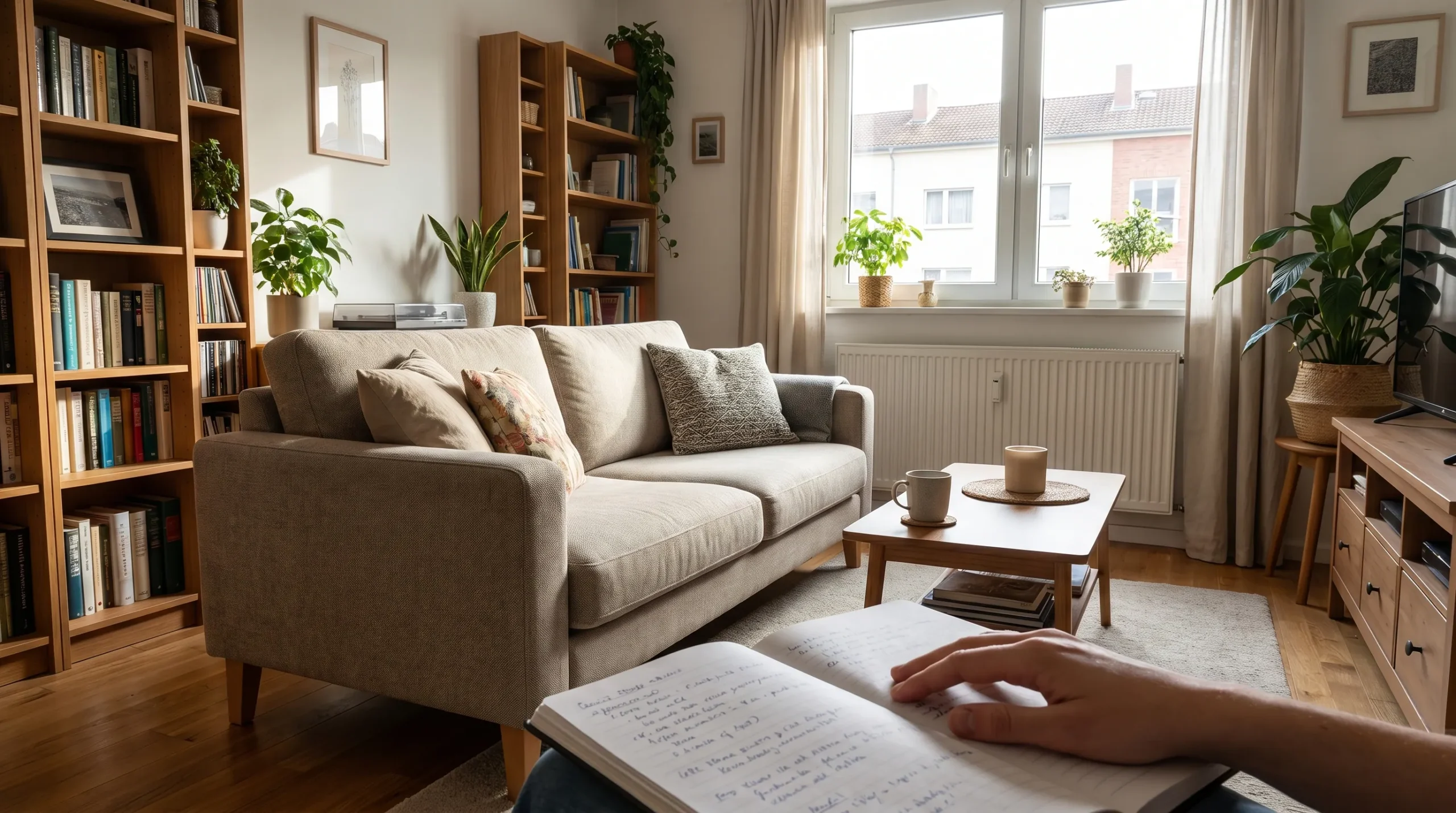
Tell me about the kind of accommodation you live in is a common IELTS Speaking Part 1 accommodation question that asks you to describe your current home in a simple, natural way. The examiner is not looking for a perfect or expensive house. They want to see if you can talk clearly about a familiar topic using good IELTS accommodation vocabulary, correct grammar, and a personal answer.
In the IELTS Speaking Part 1 test, questions about home and accommodation are very common because everyone can usually talk about where they live. You may be asked about your house, flat, apartment, hostel, dormitory, rented accommodation, or family home. A strong IELTS accommodation answer should include the type of place, where it is, who you live with, what features it has, and how you feel about it.
This guide will help you understand the question, build your own answer, learn useful vocabulary, and avoid common mistakes.
What Does “Accommodation” Mean in IELTS Speaking?
In IELTS Speaking, the word accommodation usually means the place where you live. Some students think accommodation only means a hotel or a place for travelers, but in this question, it means your regular home.
Your accommodation could be a house, flat, apartment, rented room, shared flat, hostel, dormitory, student accommodation, or hall of residence. For example, if you live with your parents in a family house, that is your accommodation. If you live alone in a one-bedroom apartment, that is also your accommodation. If you live on campus in a dormitory, you can describe that too.
When the examiner asks, “What kind of accommodation do you live in?” or “Could you tell me about the type of accommodation you live in?”, they are asking you to describe your living situation. You do not need to give private details. You only need to give a clear and natural answer.
A simple answer can mention the type of accommodation, the location, the rooms, the neighborhood, and your personal opinion. For example, you might say you live in a small but cozy apartment in a quiet residential area, close to public transportation and local amenities.
How to Answer “Tell Me About the Kind of Accommodation You Live In”
A good IELTS Speaking Part 1 answer should not be too short or too long. The best way to answer this question is to use a simple structure:
Type of accommodation + location + who you live with + key features + personal opinion
This formula helps you give enough detail without sounding memorized. Here is a basic IELTS accommodation answer template:
I live in a [type of accommodation] in [area or city]. It has [rooms or features], and I live there with [family, friends, or alone]. I like it because [reason], and overall, it is a [positive description] place to live.
For example:
I live in a two-bedroom apartment in a quiet part of the city. I live there with my family, and the apartment has a small balcony, a comfortable living room, and a well-lit kitchen. I like it because it is close to shops and public transportation, so it is very convenient.
This answer is clear because it gives specific details. It also uses natural words like two-bedroom apartment, balcony, well-lit kitchen, shops, and public transportation. These words improve your lexical resource, which is one of the scoring areas in IELTS Speaking.
You do not need to use difficult words. A natural answer is better than a robotic Band 9 sample answer that sounds memorized.
Sample Answers for IELTS Speaking Part 1 Accommodation
Below are different IELTS accommodation answers for different levels. Use them as models, not as scripts. The best answer is always one that fits your real life.
Short Sample Answer
I live in an apartment with my family. It has two bedrooms, a living room, a kitchen, and a small balcony. It is not very large, but it is comfortable and close to many shops.
This is a simple answer. It is good for basic communication because it answers the question directly. However, it could be improved with more detail and better vocabulary.
Band 7 Sample Answer
I live in a two-bedroom apartment in a peaceful residential area. It is not extremely spacious, but it is comfortable, well-lit, and easy to maintain. I live there with my parents, and the best thing about it is the location because we have shops, cafes, and public transportation nearby.
This answer is stronger because it includes more specific vocabulary, such as peaceful residential area, spacious, well-lit, and public transportation. It also gives a personal reason, which makes the answer sound more natural.
Band 9 Sample Answer
I currently live in a fully furnished apartment in a quiet neighborhood near the city center. It has two bedrooms, a compact kitchen, a cozy living room, and a small balcony where I like to relax in the evening. Although it is not huge, it is very practical because it is close to local amenities, public transportation, and my workplace. Overall, I would say it is a comfortable and convenient place to live.
This Band 9 sample answer accommodation IELTS speaking response works well because it sounds fluent, specific, and personal. It uses natural phrases like fully furnished apartment, quiet neighborhood, cozy living room, local amenities, and convenient place to live. It also shows balance by saying the apartment is not huge but still practical.
Band 5 vs Band 7 vs Band 9: What Makes the Answer Better?
Many students search for Band 9 IELTS speaking sample answers, but it is important to understand why one answer sounds better than another. A high-scoring response is not just longer. It is clearer, more natural, and more specific.
| Level | Example | Why It Scores This Way |
| Band 5 | I live in a house. It is good. I like it. | The answer is clear but too short and uses basic words. |
| Band 7 | I live in a comfortable apartment in a quiet area. It has two bedrooms and a balcony, and I like it because it is close to shops. | The answer has better detail, stronger vocabulary, and a clear reason. |
| Band 9 | I live in a fully furnished apartment in a peaceful residential area. It is compact but very practical, with good natural light, a cozy living room, and easy access to local amenities. | The answer sounds fluent, natural, and precise, with flexible vocabulary. |
The difference is not about using difficult words. It is about using the right words naturally. Instead of saying big, you can say spacious. Instead of saying nice, you can say cozy, comfortable, or welcoming. Instead of saying near shops, you can say close to local amenities.
A good answer also uses correct grammar. For example, if you talk about how long you have lived there, say:
I have lived there for almost 8 years.
This is better than saying:
I am living there since 8 years.
Sample Answers for Different Living Situations
Every student has a different living situation. Your answer should match your real life as much as possible. Below are examples for different types of accommodation.
If You Live in an Apartment
I live in an apartment on the 2nd floor of a small apartment block. It has two bedrooms, a living room, a kitchen, and a small balcony. The best thing about it is the location because it is close to public transportation, supermarkets, and a few cafes.
This answer naturally uses apartment, 2nd floor, balcony, apartment block, and public transportation.
If You Live in a House
I live in a detached house with my family in a quiet neighborhood. It has three bedrooms, a kitchen, a living room, and a small garden. I like it because there is enough space for everyone, and the area feels peaceful and safe.
This is a good IELTS accommodation answer for house because it includes the type of house, rooms, family, and opinion.
If You Live in a Hostel or Dormitory
I live in a student hostel near my university. I have a single room, but I share the common room and kitchen with other students. It is not very spacious, but it is affordable, and I enjoy the social life there.
This answer works well for students who live in student accommodation, a dormitory, or a hall of residence.
If You Live in a Rented Room or Shared Flat
I live in a rented room in a shared flat. The room is small but comfortable, and I share the kitchen and bathroom with two other people. It is a practical option for me because the rent is affordable and the location is convenient.
This answer is useful for students living in rented accommodation, shared accommodation, or paying guest accommodation.
If You Live With Your Family
I live in a family home with my parents and siblings. It is a warm and welcoming place, and my favorite part is the living room because that is where we spend time together in the evening. It may not be very modern, but it has a comfortable atmosphere.
This sounds personal and natural because it includes family bonding, living room, and warm atmosphere.
IELTS Accommodation Vocabulary to Use Naturally
Good IELTS accommodation vocabulary can help you give a better answer, but you should use vocabulary that fits your real home. Do not force advanced words into every sentence.
| Basic Word | Better IELTS Word or Phrase | Example |
| big | spacious | My living room is quite spacious. |
| small | compact | The kitchen is compact but practical. |
| nice | cozy / comfortable | It is a cozy apartment. |
| bright | well-lit | My bedroom is well-lit during the day. |
| near shops | close to local amenities | It is close to local amenities. |
| quiet area | peaceful residential area | I live in a peaceful residential area. |
| modern things | modern amenities | The building has modern amenities. |
| place I rent | rented accommodation | I live in rented accommodation. |
| good location | convenient location | The apartment is in a convenient location. |
| many facilities | useful facilities | The hostel has useful facilities like free Wi-Fi. |
You can also use phrases like fully furnished apartment, public transportation nearby, quiet neighborhood, spacious balcony, family home, shared flat, student accommodation, and comfortable living space.
A strong answer does not need every word from this table. Choose two or three natural phrases and use them correctly.
Flat or Apartment: Which Word Should You Use in IELTS?
Many students ask, “Can I say flat in IELTS Speaking?” Yes, you can. Both flat and apartment are acceptable in IELTS.
The word flat is more common in British English, while apartment is more common in American English. IELTS accepts both British English and American English, so you can use either word. The important thing is to use the word naturally and consistently.
For example, you can say:
I live in a flat with my family.
Or:
I live in an apartment with my family.
Both are correct. However, avoid switching too much between flat and apartment in the same answer unless it sounds natural. Choose the word you are most comfortable with.
You can also mention the type of building, such as a block of flats, apartment block, high-rise building, or 25-storey block of flats, if that matches your real situation.
Common Mistakes in IELTS Accommodation Answers
Students often make small grammar and vocabulary mistakes when answering this question. These mistakes can affect clarity, so it is useful to learn the correct forms.
| Common Mistake | Better Version | Why |
| I live in apartment. | I live in an apartment. | Use an before singular countable nouns. |
| I am living there since five years. | I have lived there for five years. | Use present perfect with for. |
| My house has three room. | My house has three rooms. | Use plural nouns after numbers. |
| It is very facilities. | It has many useful facilities. | Facilities is a noun, not an adjective. |
| My home is very good. | My home is comfortable and convenient. | Use more specific adjectives. |
Another common mistake is giving an answer that is too short. For example:
I live in a house. It is nice.
This answer is understandable, but it does not show much vocabulary or fluency. A better answer would be:
I live in a small house with my family in a quiet neighborhood. It has three bedrooms and a comfortable living room, and I like it because it feels peaceful.
Some students also memorize a full Band 9 sample answer and repeat it exactly. This can sound unnatural. It is better to memorize useful phrases, not full answers. The examiner wants to hear your natural speaking ability, not a rehearsed script.
Common Follow-Up Questions About Home and Accommodation
The examiner may ask more questions after “tell me about the kind of accommodation you live in.” These follow-up questions are usually simple, but you should answer them with enough detail.
How long have you lived there?
You can answer with the present perfect tense:
I have lived there for almost 8 years.
Or:
I have been living there since I was a child.
If the time is not exact, you can say for several years, for around 3 years, or since 2014.
What do you like about living there?
You can talk about the location, comfort, family, or facilities:
I like it because it is close to public transportation and local shops. It is also a peaceful place, so I can relax after work or study.
Would you like to move in the future?
You can give a balanced answer:
Yes, maybe in the future. I like my current accommodation, but I would prefer a bigger place with more natural light and a small garden.
What kind of accommodation would you like to live in?
You can describe your dream house or preferred accommodation:
I would like to live in a spacious house in a quiet suburb. Ideally, it would have a garden, a modern kitchen, and enough space for my family.
Do most people in your country live in houses or apartments?
You can answer generally:
It depends on the area. In big cities, many people live in apartments because they are more practical and affordable. In smaller towns or villages, houses are more common.
Practice Template: Build Your Own Answer
Here is a simple template you can use to create your own IELTS accommodation answer:
I live in a [type of accommodation] in [area or city]. It has [rooms or features], and I live there with [family/friends/alone]. I like it because [reason]. Overall, it is [your opinion].
Example:
I live in a rented apartment in a quiet residential area. It has two bedrooms, a small kitchen, and a cozy living room. I live there with my family, and I like it because it is close to shops and public transportation. Overall, it is a comfortable and convenient place to live.
To personalize your answer, change the details. If you live in a hostel, mention the common room, free Wi-Fi, and social life. If you live in a house, mention the garden, parking space, or family atmosphere. If your home is small, you can say it is compact but practical.
The goal is not to sound perfect. The goal is to sound clear, natural, and confident.
FAQs About “Tell Me About the Kind of Accommodation You Live In”
What is the best answer to “Tell me about the kind of accommodation you live in?”
The best answer is clear and personal. Mention your type of accommodation, location, features, and opinion. For example, say you live in a two-bedroom apartment in a quiet neighborhood, close to local amenities.
Can I say flat in IELTS Speaking?
Yes. Flat is common in British English, and apartment is common in American English. IELTS accepts both.
How long should my IELTS Speaking Part 1 answer be?
Most IELTS Speaking Part 1 answers should be around 2–4 sentences. Avoid one-word answers, but do not give a long speech.
What if I live in a small room?
That is fine. You can say, “I live in a small rented room. It is compact but comfortable, and the location is convenient.” The examiner cares about your English, not the size of your home.
Should I memorize a Band 9 sample answer?
No, you should not memorize a full answer. It is better to learn useful phrases and adapt them to your own life. A natural answer is usually stronger than a copied answer.
What vocabulary should I use for accommodation?
Useful words include spacious, cozy, well-lit, fully furnished, modern amenities, quiet neighborhood, rented accommodation, student accommodation, balcony, garden, and public transportation.
Conclusion
A strong answer to “tell me about the kind of accommodation you live in” should be specific, natural, and easy to understand. You can talk about a house, flat, apartment, hostel, dormitory, rented room, or family home. The most important thing is to answer clearly, use correct grammar, and include a few useful details.
For a better IELTS accommodation answer, follow the simple structure: type, location, people, features, and opinion. Use natural IELTS accommodation vocabulary, avoid memorized answers, and practice with your own real details. This will help you sound more confident in the IELTS Speaking Part 1 accommodation topic.
Disclaimer:
This article is for informational purposes only. IELTS speaking tips and sample answers may vary. Readers should adapt guidance to their personal situation and practice independently. Results may differ based on individual skills and preparation.